By Jerry Maleek Gearin and Jason Jackson
Belvagene Davis
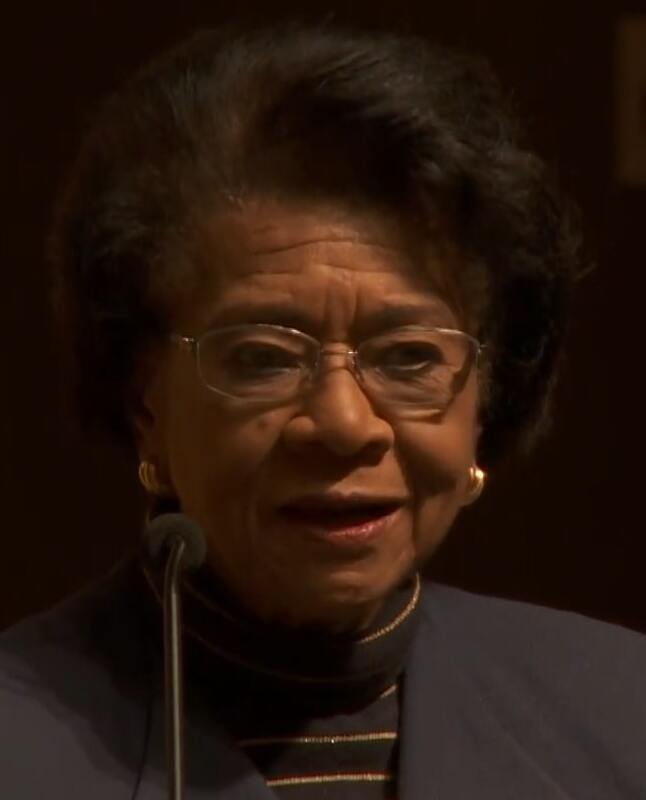
Belvagene Davis’ journalistic determination through education, adversity, and racism left behind a legacy of respect and admiration.
In 1932, Davis was born in Monroe, Louisiana, the eldest of four children. When Davis was a child, her family lived with numerous relatives throughout the Eastern Bay Area, eventually finding an apartment in West Oakland, Calif., according to Wikipedia: The Free Encyclopedia.
“I learned to survive. As I moved from place to place, I learned to adapt,” Davis said. “When I got older, I just figured I could become whatever it was that I needed to become.”
Davis attended Berkeley High School in Berkeley, Calif. She graduated in 1951, the first in her family to earn a high school diploma.
Davis was accepted at San Francisco State University but could not afford the tuition. Instead, she took a job as a typist for the Oakland Naval Supply Depot, earning $2,000 a year, according to Wikipedia.
Over the next several years, Davis worked as a freelance reporter for several Black publications. From 1961 to 1968 she edited the Sun Reporter.
Davis’ reporting interests were racial and gender issues, which included the Jonestown mass suicide-murders, and the 1990s crack epidemic.
In the mid-1960s she covered the Republican National Convention in San Francisco; some of the attendees chased her and a colleague while yelling racial slurs.
Around the same time in Forsyth County, Georgia, Davis covered the Civil Rights Movement. A white woman spat in her face as Davis attempted to interview her, noted the Free Encyclopedia.
In the face of adversity Davis persevered, becoming known for her calm demeanor.
“Belva knew instinctively how to keep everyone in check. Amid all these prima donnas, she had so much class, so much presence, and so much intuition,” said KTVU reporter Rita Williams.
In 1966, Davis worked for KNEW radio station in Oakland, Calif., and then was hired by KPIX-TV, a CBS affiliate in San Francisco, becoming the first Black woman TV journalist on the West Coast, noted the free encyclopedia.
During her career Davis received eight Emmy Awards and a lifetime achievement award from the American Women in Radio and Television and the National Association of Black Journalists.
Davis had symbolic value to the Black TV audience, wrote Bill Cosby in the forward of her autobiography Never in My Wildest Dreams.
“[She was] someone who sustained us, who made us proud,” Cosby wrote. “We looked forward to seeing her prove the stereotypical ugliness of those days to be wrong.”
On September 24, 2025, in the city of Oakland, Calif., America lost an accomplished journalist. Belvagene Davis was 92.
Viola Ford-Fletcher
Viola Ford-Fletcher, the oldest living survivor of a violent massacre, died over 100 years after a prosperous community was destroyed.
Ford-Fletcher was born on May 10, 1914, in Comanche, Okla., to Lucinda Ellis and John Wesley Ford. Seven years after her birth, Ford-Fletcher’s mother woke her up in response to the violent attacks, according to Wikipedia.
The family fled the city of Tulsa to escape the violence; they lost everything except the clothes on their backs.
“I will never forget the violence of the White mob when we left our home,” said Ford-Fletcher. “…I still see … Black bodies lying in the street. I still see Black businesses being burned. … I [still] hear the screams.”
Her family lived in Tulsa’s Greenwood district, known as “Black Wall Street.” The community had nice homes and Black owned grocery stores and banks; the neighborhood was a refuge for Black people during segregation, according to Wikipedia.
As a result of the attacks, hundreds of people were killed and 30 blocks of a vibrant community were burned to the ground.
The attacks were a result of a Black man accused of assaulting a White woman. A group of people gathered outside a Tulsa courthouse to prevent the man from being lynched.
White residents responded with overwhelming force, which began the destruction of the Greenwood neighborhood, according to abcnews.go.com.
“I could never forget the charred remains of our once-thriving community, the smoke billowing in the air, and the terror-stricken faces of my neighbors,” Ford-Fletcher wrote in her memoir, “Don’t let them bury my story.”
The attacks had been forgotten for decades until 1997, when Oklahoma lawmakers formed a commission to investigate the incident. Ford-Fletcher said the City of Tulsa used the victims’ names to generate profit for the city, according to Wikipedia.
Ford-Fletcher spent much her life advocating for reparations and testified before the United States Congress in 2021 to heal the damage caused by the racial incursion. Ford-Fletcher and her brother subsequently received $1 million from New York philanthropist Ed Mitzen, noted Wikipedia.
“Mother Fletcher endured more than anyone should, yet she spent her life lighting a path with purpose,” said Tulsa’s Mayor Monroe Nichols.
In 2021, Ford-Fletcher visited the African country of Ghana with her brother. They met Nana Akufo-Addo, the sitting President. Ford-Fletcher was crowned “Queen Mother.” She was also given a Ghanian name, Naa Lamiley, which translates as “somebody who is strong, somebody who stands the test of time,” according to Wikipedia.
Ford-Fletcher said her faith and the close-knit Black community gave her the support she needed.
Surrounded by family at a Tulsa hospital, she died on Nov. 24, 2025 at the age of 111.
Assata Olugbala Shakur
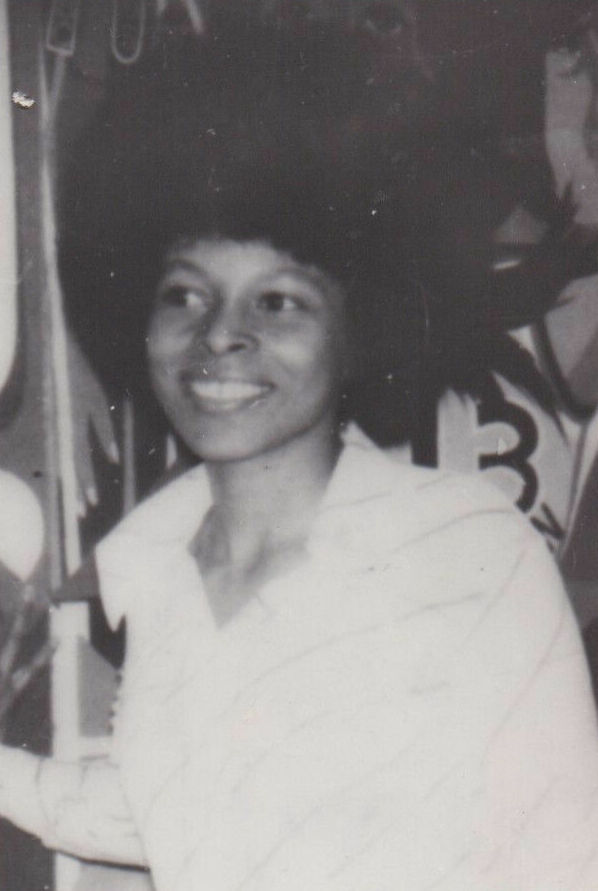
Assata Olubala Shakur is known to many as the face of revolutionary resistance.
Born JoAnne Byron in the Queens borough of New York City on July 16, 1947, Shakur changed her name in 1971 as her identity continued to evolve through her studies of Black history.
“I wanted a name that had something to do with struggle. I didn’t feel like no JoAnne, or no Negro, or no amerikan. I felt like an African woman,” Shakur wrote in her memoir Assata: A Biography.
Assata grew up with a voracious appetite for knowledge and credits her aunt Evelyn for educating her with books and trips to museums, theaters, and art galleries. She attended City College of New York, where she became increasingly involved in civil rights organizing and political studies, according to her autobiography.
After college, Assata moved to Oakland, Calif., and joined the Black Panther Party. She would eventually return to New York and lead the Party’s chapter in Harlem, NY. She worked with the Black Panther’s Free Breakfast for Children program and with community-based health clinics. She left the Black Panther Party in 1971 and joined the Black Liberation Army.
It was during Assata’s time with the BLA that she, along with two other members, were charged in 1973 with the murder of a New Jersey State Trooper. She was convicted for the crime in 1977.
BLA members helped Assata escape from prison in 1979, and she became a fugitive of justice. She became one of the FBI’s most wanted before making her way to Cuba, where she was granted asylum in 1984.
Assata remained in exile until her passing on September 25, 2025.
She is remembered by many as a political activist and revolutionary thinker who fiercely advocated for the education and empowerment of oppressed people around the world.
“I believe that the priorities of this planet have to be completely changed and instead of policies that destroy the earth, that destroy the water, that destroy human beings, I believe in a policy that protects people, that makes people live in a community; a world community,” Assata said in a 1996 interview with reporter Dorsey Nunn.
Willie Mae “Big Mama” Thornton
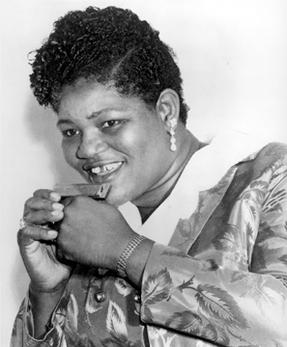

Many remember Willie Mae “Big Mama” Thornton as being a uniquely talented artist whose influence is imprinted across jazz, blues, and rock and roll.
Born in Montgomery, Alabama on December 11, 1926, Thornton was raised in the church, surrounded by the gospel music that she says helped spark her interest in singing.
Thornton also studied singers of her time, including Bessie Smith and Memphis Minnie. She would eventually teach herself how to sing, play the harmonica and drums.
“My singing comes from my experience. I never had no one teach me nothin’”, said Thornton. “I never went to school for music or nothin’.”
Thornton began her music career in 1940 at the age of 14, after winning a talent show where she was awarded a spot with the band Sammy Green’s Hot Harlem Revue. She sung with the band throughout Alabama and Georgia for eight years.
Thornton left the Band and settled in Houston, TX. While in Houston she began singing for music producer Don Robey, and later signed a record contract in 1950 with his Peacock Records where she recorded some of her first songs.
Thornton’s big break came in 1952 with her standout performance at the famed Apollo Theater. It was at that time she recorded her biggest hit, “Hound Dog.” The song sold 500,000 copies and spent several months on the top music charts.
New York University music professor Maureen Mahon credited the song as “an important beginning of rock-and-roll, especially in its use of the guitar as the key instrument.
Many people are familiar with Elvis Presley’s 1955 recording of the song, but few realize that a Black woman did the song three years before him.
Over the years, Thornton would go on to write and record several albums and other hits, including the song ‘Ball & Chain’, which was made famous by Janis Joplin.
Big Mama made her name during a time when racial inequalities contributed to the lack of credit many Black artists, including Little Richard, Muddy Waters, and Chuck Berry did not receive for their contributions to the musical genres that would change the world, according to Wikipedia.
Thornton’s biggest recognition would come in 2024 when she was inducted into the Rock and Roll Hall of Fame.
Thornton passed away in 1984, leaving a legacy of musical genius behind.
“I’ve been happy. There have been dull moments, but you have to take as worst as you are going to get it or else you may never see it. I’ve been happy and I’d like to stay that way,” Big Mama said about her life before her passing.