En Estados Unidos, hay muchas personas encarceladas cumpliendo condena en régimen de aislamiento y sometidas a condiciones inhumanas diariamente.
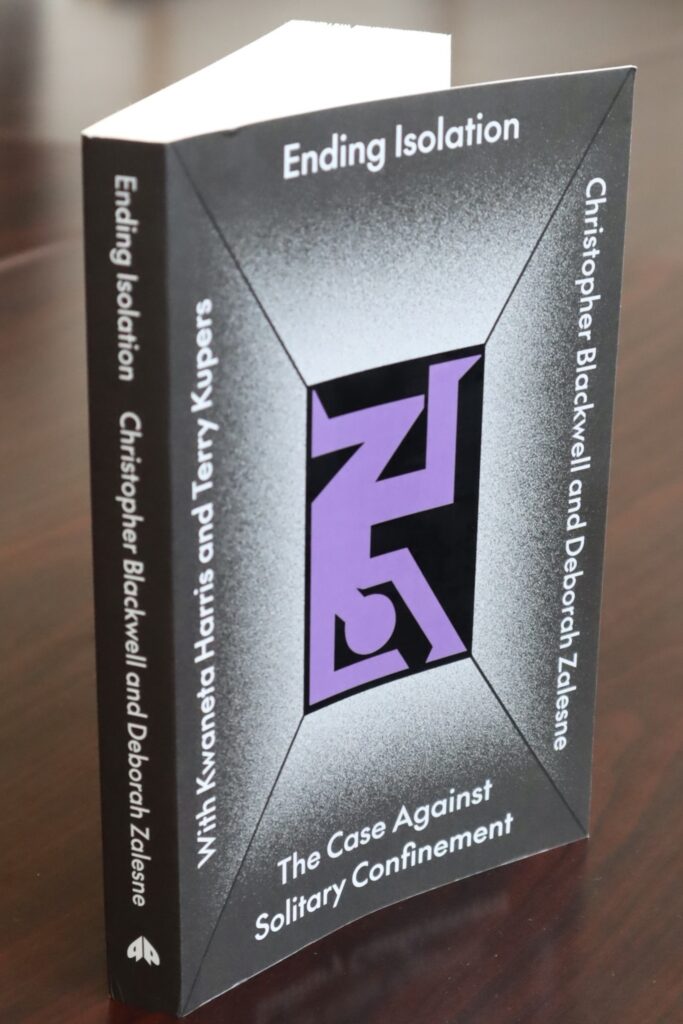
“En el libro Terminando Aislamiento, El Caso Contra Confinamiento Aislado”, los autores Christopher Blackwell —un periodista anteriormente encarcelado— y la profesora de leyes Deborah Zalesne recopilaron historias de hombres y mujeres que cumplieron condena en aislamiento o que pasaron años tras las ventanas de seguridad sin contacto humano real.
“Cuando estaba en el centro de detención juvenil, [yo] me negaba a seguir las reglas y a dejarme controlar por las figuras de autoridad; me revelaba constantemente. Eso me llevó a mi primer confinamiento solitario a los 12 años, una experiencia que consolidó para siempre mi desconfianza hacia la autoridad y despertó en mí un profundo odio hacia “el sistema”. Me tuvieron allí almacenado hasta que terminó mi condena”, relató el coautor Blackwell.
A través de relatos personales, este libro aborda puntos claves sobre cómo los administradores penitenciarios de todo el país utilizan el aislamiento para castigar y tomar represalias contra los reclusos.
Además, ofrece la perspectiva profesional sobre el aislamiento y la de antiguos empleados que decidieron abandonar sus puestos tras presenciar de primera mano las condiciones espantosas que las personas soportaban a diario dentro de estas mazmorras modernas.
Jeremy Busby es un periodista encarcelado en Texas. Habló de su propia experiencia personal y señaló que en Texas es un lugar brutal para cumplir condenas. Afirmó que gran parte del mundo lo sabe al ver la frecuencia con la que se llevan a cabo ejecuciones allí.
“Allí, miles de personas encarceladas son sometidas a un… cóctel mortal de tres ingredientes: aislamiento severo, condiciones de vida extremadamente deplorables y una atención sanitaria física y mental inadecuada, lo que deriva en un asesinato a sangre fría sancionado por el Estado”, escribió Busby.
De acuerdo a Blackwell y Zalesne, el confinamiento solitario se introdujo por primera vez a finales de la década de 1790 en la Penitenciaría Estatal del Este (o Cherry Hill). En 1826 se consolidó lo que llegó a conocerse como el modelo de Pensilvania, en el cual los reclusos permanecían confinados en sus celdas, sin posibilidad de hablar ni comunicarse con otras personas.
De acuerdo a este modelo, se creía que aislar a los hombres bajo las duras condiciones de una celda fría de hormigón les daría tiempo para reflexionar, estudiar e incluso rezar, permitiéndoles así dejar atrás su “conducta delictiva”. Esta práctica bárbara e inhumana sigue siendo uno de los métodos punitivos letales del sistema penitenciario. Según los expertos, siglos después esta práctica sigue vigente.
“Una vez hecho esto, los guardias colocaban un ventilador frente a la puerta, lo ponían a máxima potencia y lo dirigían directamente hacia la celda de aislamiento donde yo me encontraba. No se imaginan el frío que pasé durante esas horas… Tuve que ganarme de nuevo el derecho a mi humanidad, a la ropa y, finalmente, a una celda normal con colchón” relató en el libro Steve Nall después de estar cinco años en aislamiento.
Ejemplos como este, extraídos en “Ending Isolation” (Poner Fin al Aislamiento), hace hincapié al lector que ningún ser humano debería verse obligado a soportar condiciones tan abusivas o bárbaras, independientemente de lo que hayan hecho para acabar en “el agujero”.
Jeremiah Bourgeois es un ejemplo de cómo sobrevivió a siete años y medio de aislamiento. Relató cómo se le privó de la mayoría de sus comidas durante tres semanas enteras. Recordaba que podía oler los huevos a primera hora de la mañana, a medida que el carrito de la comida se acercaba.
Kwaneta Harris periodista encarcelada en el estado de Texas, escribe sobre las condiciones horribles y el daño de aislamiento que ha tenido hacia ella y otras mujeres encarceladas. Ella se enfoca en los efectos negativos del confinamiento aislado y como se alejó su relación con su hija Summer Knight, quien se la pasó toda su adolescencia con su madre en la prisión y en confinamiento aislado.
De acuerdo a Harris, como madre, se enfrentó a llamadas de teléfono por cinco minutos después de la media noche, cuando su hija estaba dormida. Esto duró por siete años y en ocasiones las llamadas eran solo permitida dos veces al año.
Este libro resalta las torturas físicas y mentales que muchas persona han y continúan experimentando durante su encarcelamiento.
English translation by Google Translate
In the United States, many incarcerated individuals are serving their sentences in isolation, subjected to inhumane conditions on a daily basis.
In the book Ending Isolation: The Case Against Solitary Confinement, authors Christopher Blackwell—a formerly incarcerated journalist—and law professor Deborah Zalesne have compiled the stories of men and women who served time in isolation or spent years behind secure windows, devoid of any real human contact.
“When I was in a juvenile detention center, I refused to follow the rules or submit to authority figures; I was constantly rebelling. This led to my first stint in solitary confinement at age 12—an experience that permanently cemented my distrust of authority and ignited a deep-seated hatred for ‘the system.’ They kept me stashed away there until my sentence ended,” recounted co-author Blackwell.
Through personal accounts, the book addresses key issues regarding how prison administrators across the country use isolation to punish and retaliate against inmates.
It also provides professional perspectives on isolation, as well as accounts from former staff members who chose to leave their jobs after witnessing, firsthand, the appalling conditions that individuals endured daily within these modern-day dungeons.
Jeremy Busby, an incarcerated journalist in Texas, shared his own personal experience, noting that Texas is a brutal place to serve a sentence—a fact, he suggests, that is widely recognized, given the frequency with which executions are carried out there.
“Thousands of incarcerated people there are subjected to a… deadly, three-ingredient cocktail: severe isolation, extremely deplorable living conditions, and inadequate physical and mental healthcare—all of which amounts to state-sanctioned, cold-blooded murder,” wrote Busby. According to Blackwell and Zalesne, solitary confinement was first introduced in the late 1790s at the Eastern State Penitentiary (also known as Cherry Hill). By 1826, what came to be known as the “Pennsylvania model” was firmly established; under this system, inmates were kept confined in their cells, with no opportunity to speak or communicate with anyone else.
The rationale behind this model was that isolating men within the harsh conditions of a cold, concrete cell would provide them with time to reflect, study, and even pray—thereby enabling them to leave their “criminal behavior” behind. This barbaric and inhumane practice remains one of the punitive methods—often with lethal consequences—employed by the prison system. Experts note that, centuries later, this practice persists.
“Once that was done, the guards would place a fan in front of the door, turn it to its highest setting, and aim it directly into the isolation cell where I was being held. You cannot imagine the cold I endured during those hours… I had to earn back my right to humanity, to clothing, and, eventually, to a standard cell with a mattress,” recounted Steve Nall in the book, following five years spent in isolation.
Examples such as this, featured in Ending Isolation, underscore for the reader that no human being should be forced to endure such abusive or barbaric conditions—regardless of what they may have done to end up in “the hole.”
Jeremiah Bourgeois provides another example, having survived seven and a half years in isolation. He described how he was deprived of most of his meals for three full weeks. He recalled being able to smell eggs early in the morning as the food cart approached. Kwaneta Harris, a journalist incarcerated in the state of Texas, writes about the horrific conditions and the harm caused by isolation—both to her and to other incarcerated women. She focuses on the negative effects of solitary confinement and how it strained her relationship with her daughter, Summer Knight, who spent her entire adolescence with her mother in prison—much of it in solitary confinement.
According to Harris, as a mother, she was limited to five-minute phone calls placed after midnight, when her daughter was asleep. This went on for seven years, and at times, such calls were permitted only twice a year.
This book highlights the physical and mental torture that many people have experienced—and continue to experience—during their incarceration.