When parole boards focus on static factors, on minor slipups, and on the “optics” of granting parole in certain cases, discretionary parole systems fail to realize their potential as tools for decarceration, according to a Prison Policy Initiative report.
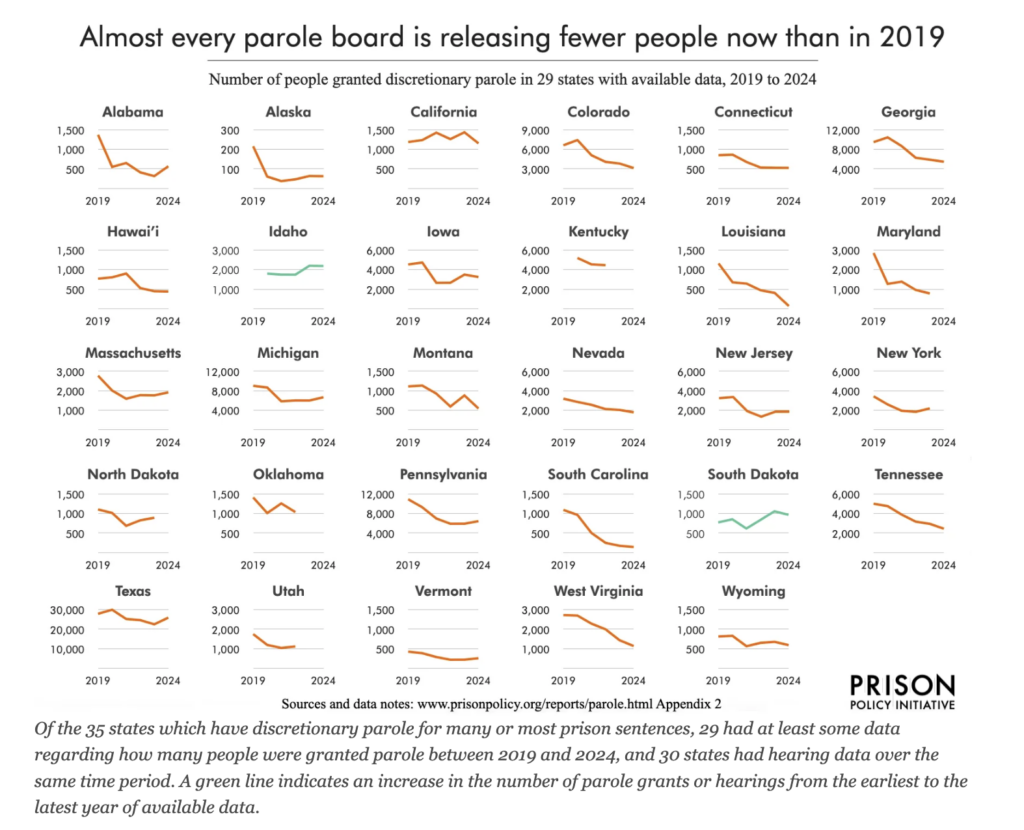
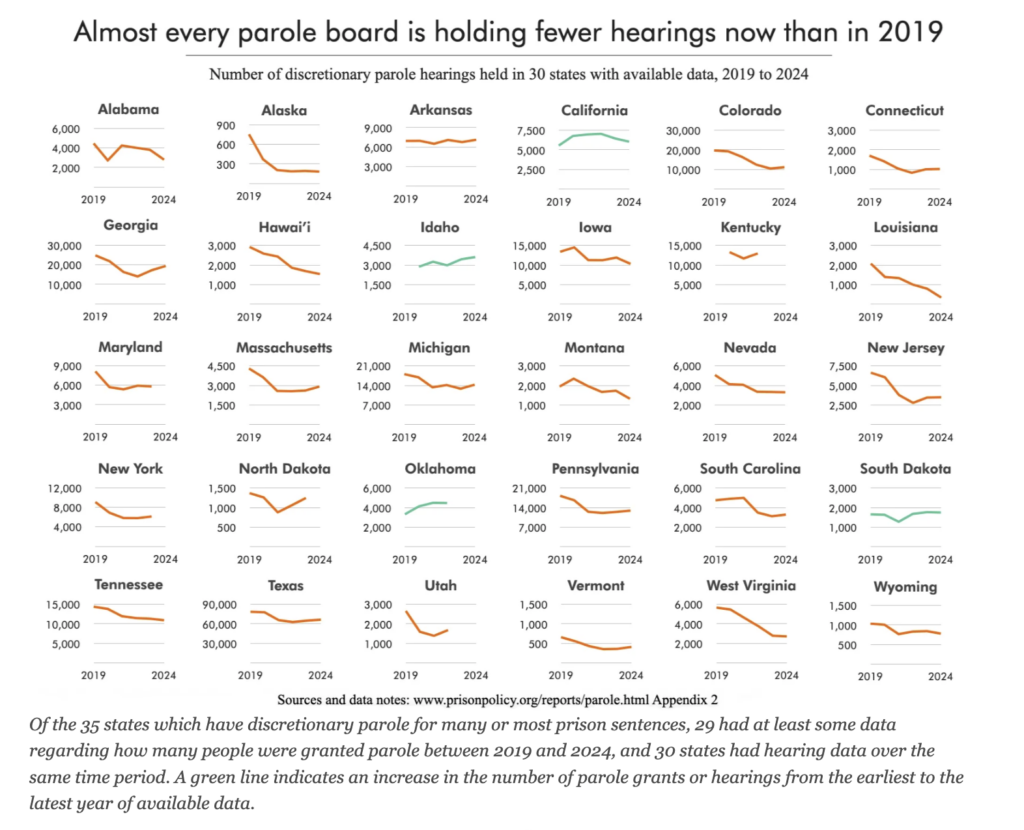
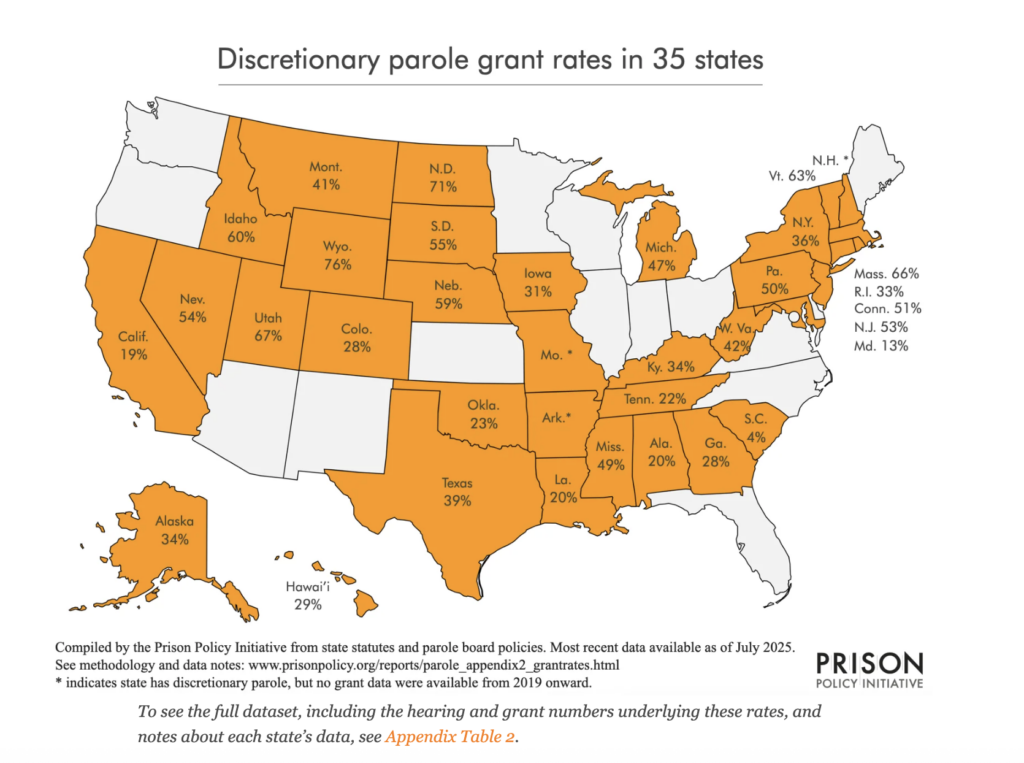
“Parole in Perspective: How parole decisions are made” is part two of PPI’s reporting on discretionary parole systems in California and 34 other states. The study found that in spite of steady repopulation of prisons post-pandemic, the overall number of parole grants declined from 2019 to 2024. The authors cite the factors above, in part, to explain the decline.
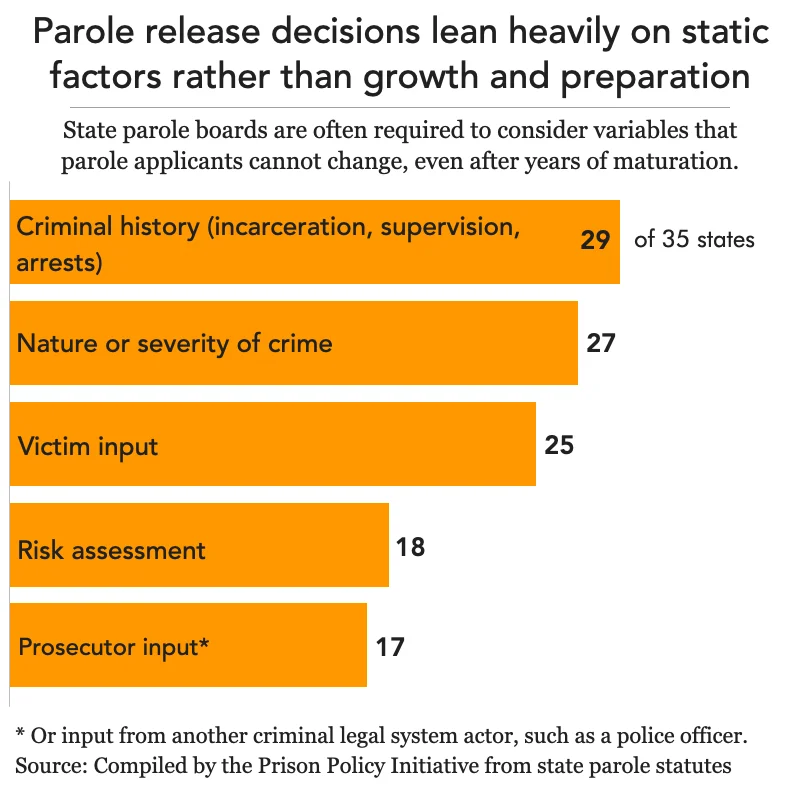
In parole hearings, static elements like criminal history, victim and law enforcement opposition, and the nature or severity of crimes of conviction, all over which the parole applicant has no control, often trump his or her transformation and readiness to return to society, said the report.
Report author Leah Wang wrote that putting heavy emphasis on the original crime of conviction and prior criminal history during parole hearings and risk assessments amounts to a “second sentence” based on issues already addressed by a judge upon sentencing.
“When judges determine sentences, they are first and foremost considering the nature of the crime … A sentence with the possibility of parole indicates that the judge … believes the timing of the individual’s release should depend on their acceptance of responsibility … completion of required programming, their demonstrated plan for going home. … The judge has already considered the criminal case itself.”
Often working against parole hopefuls is “tunnel vision” evaluation of parole candidates’ accomplishments and slipups, wrote Wang. Commissioners focus on a single write-up or minor rule violation to discredit an otherwise trouble-free record.
“This double standard cannot be overstated,” wrote Wang. “Consistent good behavior is not good enough to earn parole, but even minor misbehavior can serve as a reason to keep someone behind bars.”
Another obstacle to parole grants is what PPI dubbed the “optics” of granting parole to certain offenders. Several states have parole guidelines that require considering whether a release may “… ‘diminish’ the seriousness of the crime, or undermine respect for the law.”
South Dakota requires the board to evaluate the “… ‘effect on the administration of justice.’” Montana often refers to “Strong objection from Criminal Justice Agencies,” as a boilerplate cause for denials. These guidelines prioritize optics over preparedness of parole applicants, wrote PPI.
Parole denials are often justified with calls for specific further programming or treatment. But long waitlists or lack of availability can prevent applicants from accessing the required programming. Wang wrote that this problem results from “siloed” systems in which parole boards mandate programming but prison administrations control participant access.
If the required programming is available on the outside, PPI recommends granting parole so applicants can return to their communities for the mandated treatment.
PPI found that in most of the systems evaluated, “… the burden is on the parole applicant, not the parole board, to demonstrate readiness [for parole].” PPI recommended “In reality, most parole applicants do not pose a risk to the community; therefore, an effective parole system should instead start with the presumption of release, then require the parole board to justify why release is inappropriate.”
Some states flip the script by practicing presumptive parole in limited scenarios. Rather than requiring applicants to prove suitability, the burden shifts to parole boards to demonstrate non-suitability.
In Hawaii, in the absence of good cause or specific criteria, parole is required when the result of a risk assessment is “low.” In Colorado, a full-board majority is required to deny parole to an eligible applicant with an approved parole plan.
Discretionary parole takes its name from the liberty parole commissioners have to deviate from statutory guidelines in order to grant or deny parole in individual cases. However, PPI concluded that in the systems they studied commissioners are prone to apply discretion to deny rather than to grant parole.
Wang suggested that boards with stronger representation of commissioners with relevant lived experience or clinical knowledge might exercise their discretion by advocating for release more often.
PPI’s overall assessment is that discretionary parole is a “broken promise” and the authors quote a Marshall Project writer who 10 years ago said, “no one really knows how to get parole.”