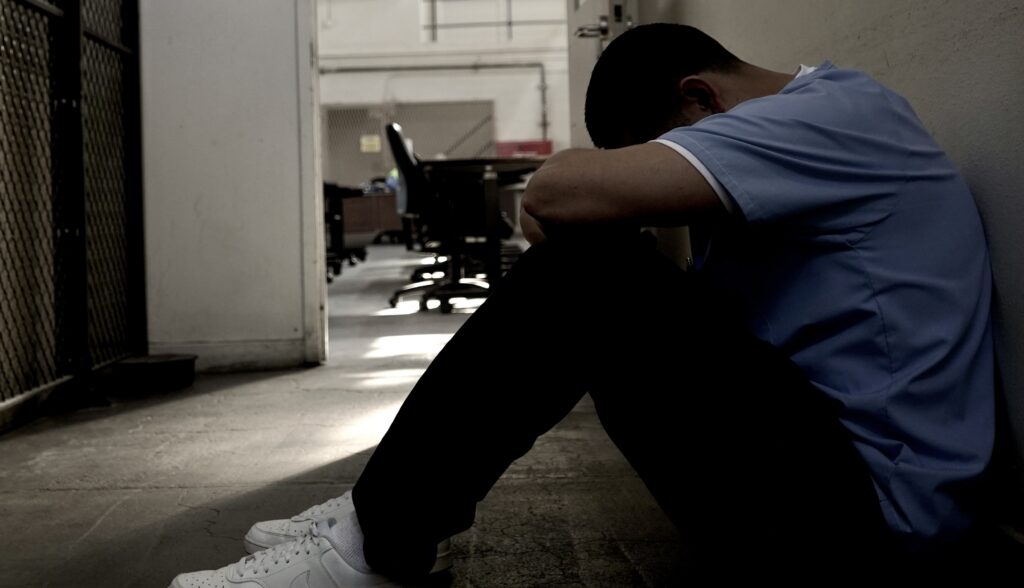
Every 11 minutes, a person commits suicide in the United States, some while in prison.
According to reports from the Bureau of Justice and the California Department of Corrections and Rehabilitation, self-inflicted deaths in state prisons increased more than 70% from 2000 to 2024.
“Suicide is unlike other causes of death. It’s incredibly complex,” said John R. Blosnich of the USC Susanne Dworak-Peck School of Social Work.
Each suicide inside prison is a devastating tragedy that takes a toll on the family and friends of those who die. Self-inflicted deaths significantly affect other incarcerated individuals and prison employees.
CDCR reports that the average suicide rate in California’s prisons over the last 20 years was 21 per 100,000 individuals. In the general population nationwide, the figure is 15 per 100,000.
“Each suicide within CDCR is one too many and must be carefully examined for lessons and insights on how to prevent similar tragedies in the future,” said CDCR’s Annual Suicide Report.
The Light Keepers of San Quentin is a peer support team of incarcerated individuals trained in suicide prevention. They host discussions every Tuesday on how to support residents going through mental health crises. San Quentin Rehabilitation Center’s Senior Psychologist Dr. E. Anderson, Family Nurse Practitioner Carrie Krupitsky, and Grief Counselor Peter “Ned” Buskirk lead the conversations.
In November 2025, Professor Blosnich participated in a Light Keepers discussion on strategies in suicide prevention. He said that Adverse Childhood Experiences, combined with added social stressors, lead to suicide ideation.
Blosnich said typical life events like losing a job or getting a divorce might be the tipping point for someone already in distress.
“Suicide prevention is not just one thing,” said Blosnich. “It’s really about understanding the individual, their background, and that they are not defined by one period in their life.”
Light Keepers members told Blosnich how they aid people in their community who feel worthless, agitated, hopeless, angry, or trapped into believing there is no reason to live.
Light Keepers Mentor Mark Cádiz said every situation is different when someone is in crisis. Once a Light Keeper recognizes that a person is expressing suicidal ideation, they de-escalate the situation and then urge the person to connect with a mental health professional.
The most important tool in a Light Keeper’s toolbox is active listening, said Cádiz. Most of the time, people just need someone to really listen to what they have to say.
Asking a person in distress open-ended questions, listening, identifying the problem, and being empathetic will defuse the situation.
Blosnich’s study, published in American Psychologist Journal, noted that adverse childhood trauma is a chronic public health disaster. His research suggests that ACEs lead to high-risk behavior and that it’s necessary to fully understand cumulative trauma when targeting suicide prevention.
Dr. Anderson said bringing in outside resources to further train the Light Keepers has helped strengthen their ability to respond to residents in crisis.
Erick Wick, a U.S. Marine Corps veteran who served 33 years in prison, is a suicide prevention trainer working with Swords to Plowshares in San Francisco. He sat down with the Light Keepers in October 2025 to discuss methods he has used to stop people from taking their own lives.
Wick said that in the mental health space, if people don’t trust you, they won’t talk to you. His more than three decades in prison and service in the Marine Corps helps him connect with both veterans and parolees through their shared lived experiences.
Having intervened in a number of potential suicides, Wick said the first thing to understand is that those with suicide ideation do not want to die. That is a major misunderstanding about the nature of suicide.
“Not wanting to live and wanting to die are two very different things,” said Wick. “If a person is in a certain level of psychological pain, and their brain is in crisis state, they will do anything to escape.”
In a crisis state, a person is not thinking clearly and impulse control is not where it should be. He said about 4% of people have suicide ideation. Of those, only a fraction commit suicide.
Although that seems like a very small number when viewed as a percentage, it’s still 50,000 people in the U.S. that take their own life every year. “What if one of them is a friend or family member?” Wick asked.
“It’s important to remember when you’re talking to someone in a suicide crisis, you’re their lifeline, you’re their anchor, you’re the one holding them in this life,” said Wick.
Wick explained that all someone must do is be there for a person in crisis. Don’t do anything extraordinary, just be quiet, listen, ask them open-ended questions, and keep them talking.
Wick said that if a person is not in crisis state then they are not in real danger, but it’s still important to encourage them to seek care. He has never turned his back on a person. He stays with them as long as he must, and in most cases, it takes about an hour.
“Small price to pay to keep a person alive as far as I’m concerned,” Wick said. “There’s no magic. There’s no secret sauce. Shut up, listen, and keep them talking.”