A day of educational training on life-saving methods critical for incarcerated individuals
By Jerry Maleek Gearin and Ben Greenspon
Overdose deaths from illicit drug use have been a growing problem throughout California Department of Corrections and Rehabilitation; therefore, overdose awareness was brought to San Quentin residents.
Bay Area volunteers and re-entry services gathered for the inaugural Overdose Awareness event on SQ’s Lower Yard to bring awareness and educational training on life-saving methods.
San Quentin’s Warden C. Andes spoke to residents about his 24-year career and said that he has seen it all. It used to be meth and marijuana, but now things are more dangerous with spice and fentanyl making overdoses common.
“We…have a serious spice problem at San Quentin,” said Andes. “Addicts are addicts, but dealers are victimizers. It’s a team effort; we need to find a way to make addicts feel safe to talk about it.”
Spice is synthetic designer drug that mimics THC, the active ingredient in marijuana. Its consumption has health risks such as elevated heart rate, high blood pressure, seizures, and vomiting.
The drug also induces acute psychotic episodes of intense hallucinations, severe agitation, disorganized thoughts, and paranoid delusions, according to the Drug Enforcement Administration.
The event was inspired by the overdose death of SQ resident Colby Phillips’ son in 2024. Phillips and SQ librarian Cordez Tarantino created an overdose planning committee when putting the occasion together.
“Our message was about drug avoidance and trying to save a life, to not let the person close to you overdose,” said Tarantino. “We want people here (SQ) to know there is help.”
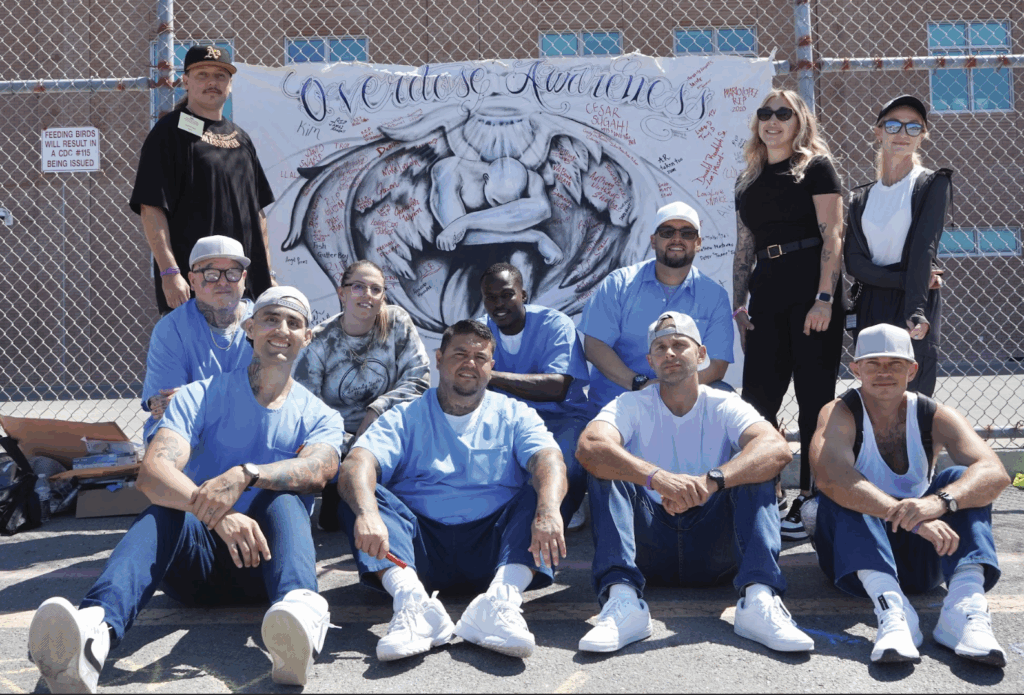
A painting of a person’s silhouette by resident Jesse Milo hung from an exercise yard fence. It had a white background and a black outline of a person kneeling in prayer.
The artwork depicted an angel’s wings that were spread across the length of the painting, with an illuminating halo above the head. On the edge of the image’s left hand it read “James,” the name of Phillips’ son.
People signed the wings of the painting with red and black pens in memory of loved ones and friends who died from an overdose. Some read: “In memory of my home girl Sonia Norwalk, R.I.P. Midget,” and “Ronald Randolph Sr. You are loved and missed.”
San Francisco District Attorney Brooke Jenkins stopped by and showed her support for bringing awareness to the growing problem of illicit drug use.
“We’re not on opposite sides; it’s all about creating safer communities, making everyone safe,” Jenkins said. “There is not enough… help on the county level. We need to mimic this (SQ) environment.”
Resident Edwin Tucker, who has been sober for approximately four years, said that while he was in the county jail he watched dozens of low-level offenders come and go.
Tucker added that there were no rehabilitation services offered in the jail, where it’s needed the most. The local jail systems have failed in overdose awareness and prevention.
“There are a lot of lost and broken people who need to know they are not alone,” Tucker said.
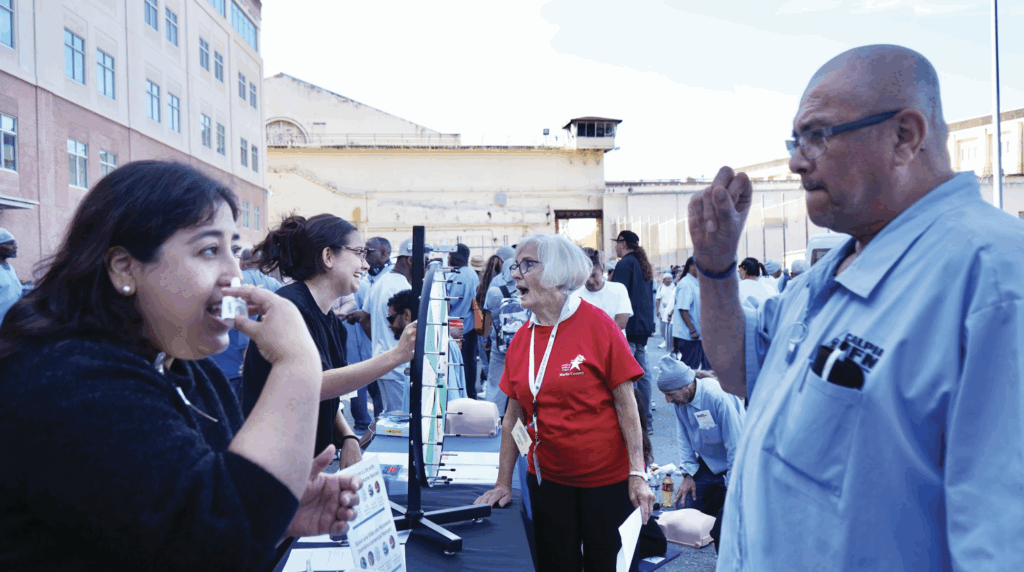
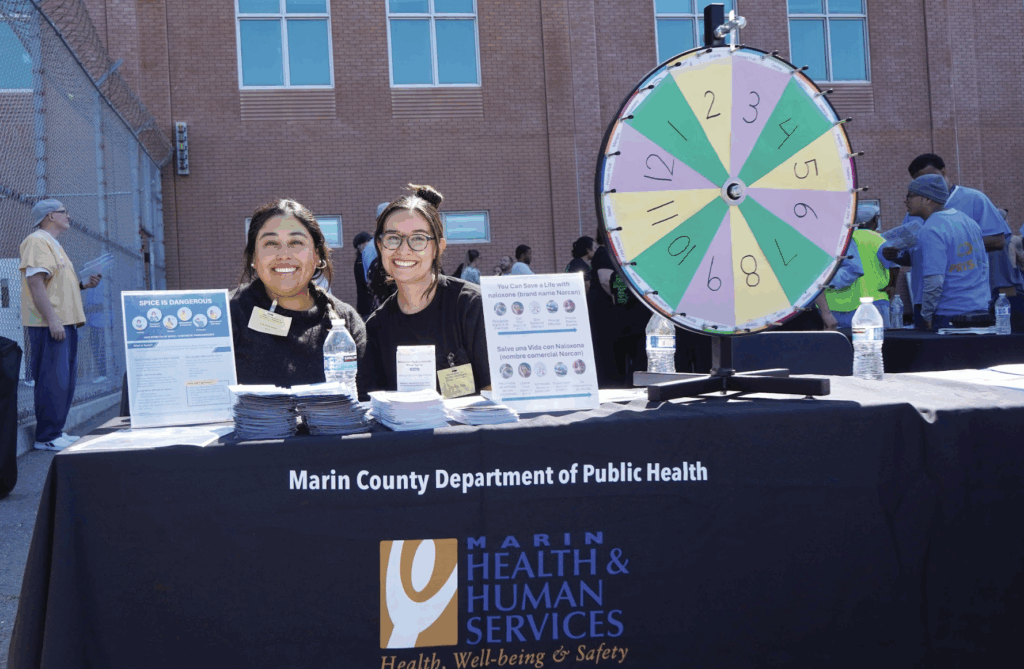
In light of the Overdose Awareness event, the Marin County Health and Human Services department gave first-hand CPR training to residents, which consisted of the correct application of chest compressions.
Residents lined up to learn the life-saving skill of CPR; they practiced on makeshift upper torsos while an electronic device monitored the exercise.
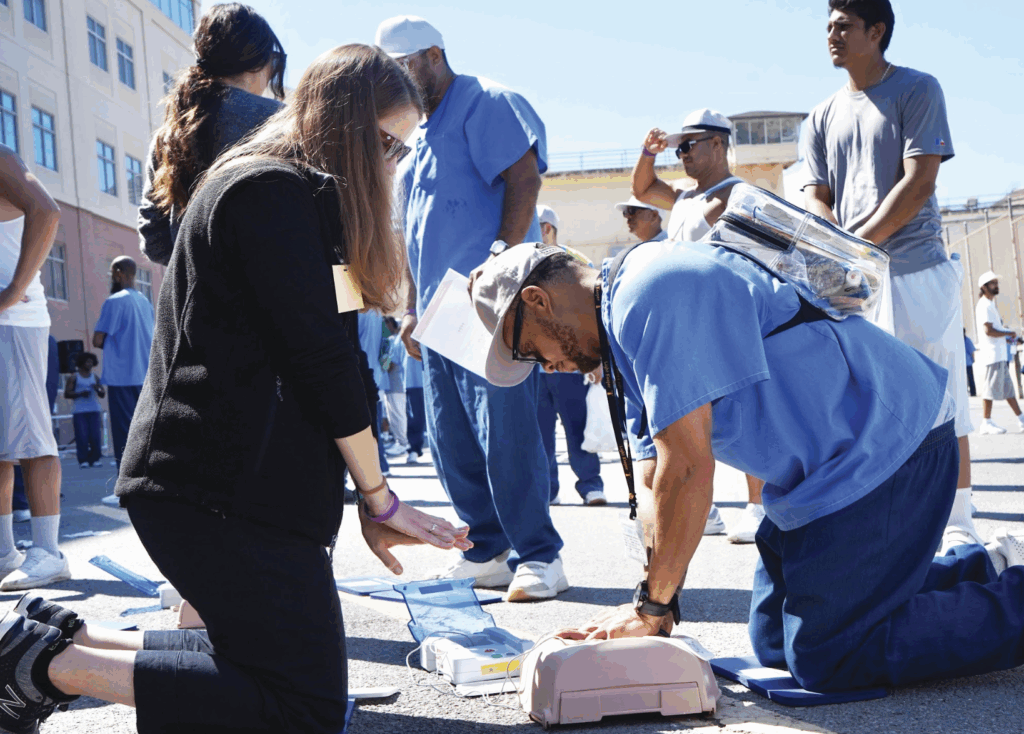
“You wanna go deep into the body; you may break someone’s ribs, but the main thing is to keep them alive,” said Lucia Ramirez of MCHHS.
Health Services conducted a Wheel of Fortune–type of quiz, where residents spun the wheel and answered the questions related to overdose prevention.
The Veterans Transition Center of California offered paroling veterans information on housing, clothing, food, and mental health resources.
A pamphlet distributed by SF Rams Peer Wellness Center stated that they offer healing circles and recovery support for parolees. Their organization is supported by the SF Department of Public Health.
Family Bridges Incorporated, a re-entry group of formerly incarcerated employees; they have hired over 30 previously incarcerated people who currently work for them.
“This is the most rewarding job I have ever had. I want you all to know that you have value and we can help when you parole,” said volunteer Heidi Wong. “We want you to become a part of our community. Just keep striving toward the best version of yourself.”
Family Bridges Housing and Community Services, provide information about support letters for parole hearings and their presence at resentencing hearings, according to the Family Bridges Incorporated flyer.
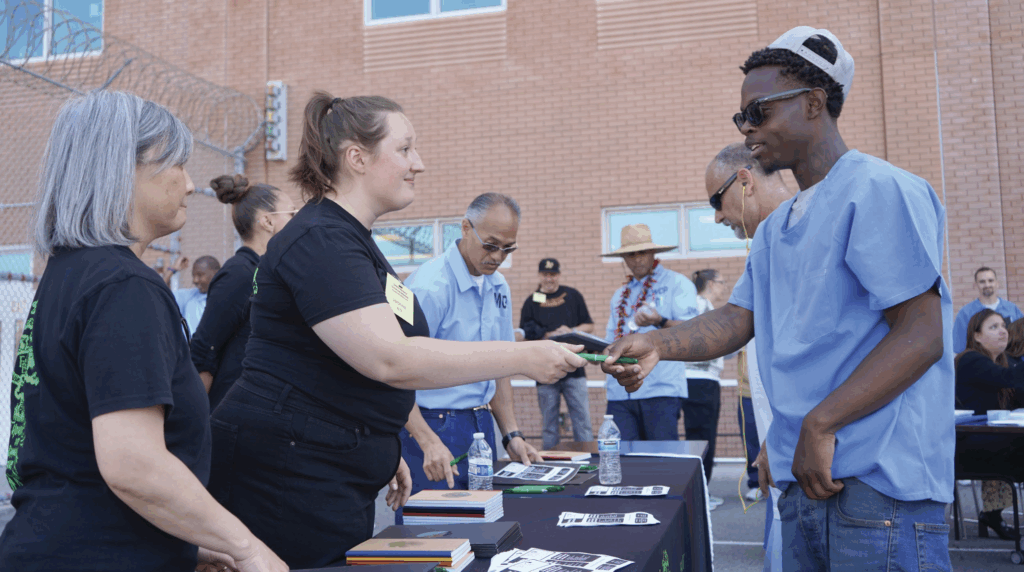
The theme of overdose prevention seemed to capture attendees’ attention because a lot of residents participated in the activities.
A contest sponsored by Integrated Substance Use Disorder Treatment, a SQ life skills program, held a cognitive behavioral questionnaire relating to drug addiction and addictive thinking patterns.
Residents formed teams and answered questions against the clock; the team that finished with the correct answers and best time were awarded a $50 prize of sodas, candy bars, and potato chips.
“Be more vulnerable than you are used to being. Take a chance on yourself,” said resident Amu Wynn of the Occupational Mentor Certification Program at SQ.
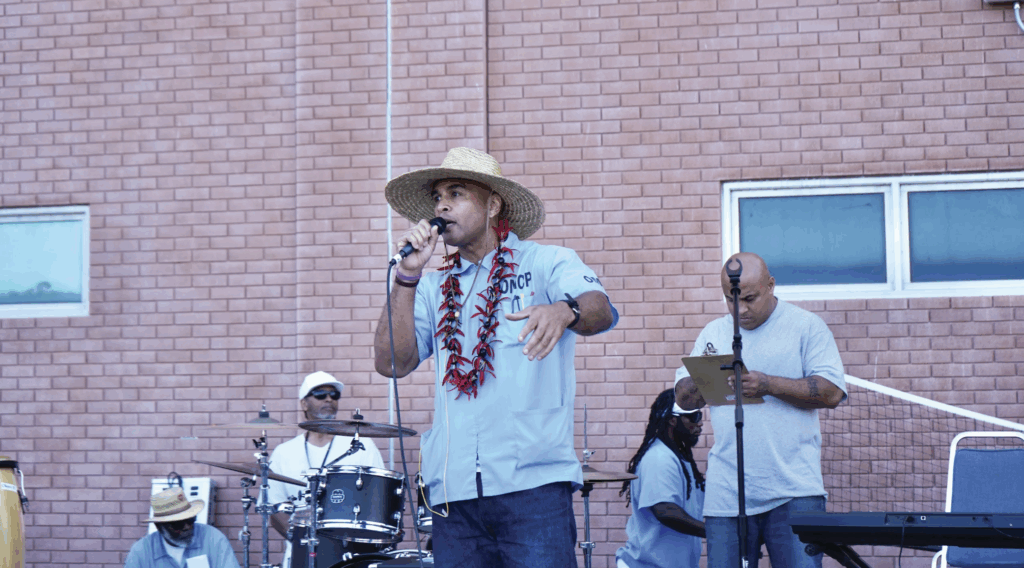
Wynn thanked the OMCP and I.S.U.D.T. programs for the work they are doing, then he gave credit to all of the groups that are combating addiction. He spoke of this day being a time to create memories and hopefully, for someone, a new drug-free beginning.
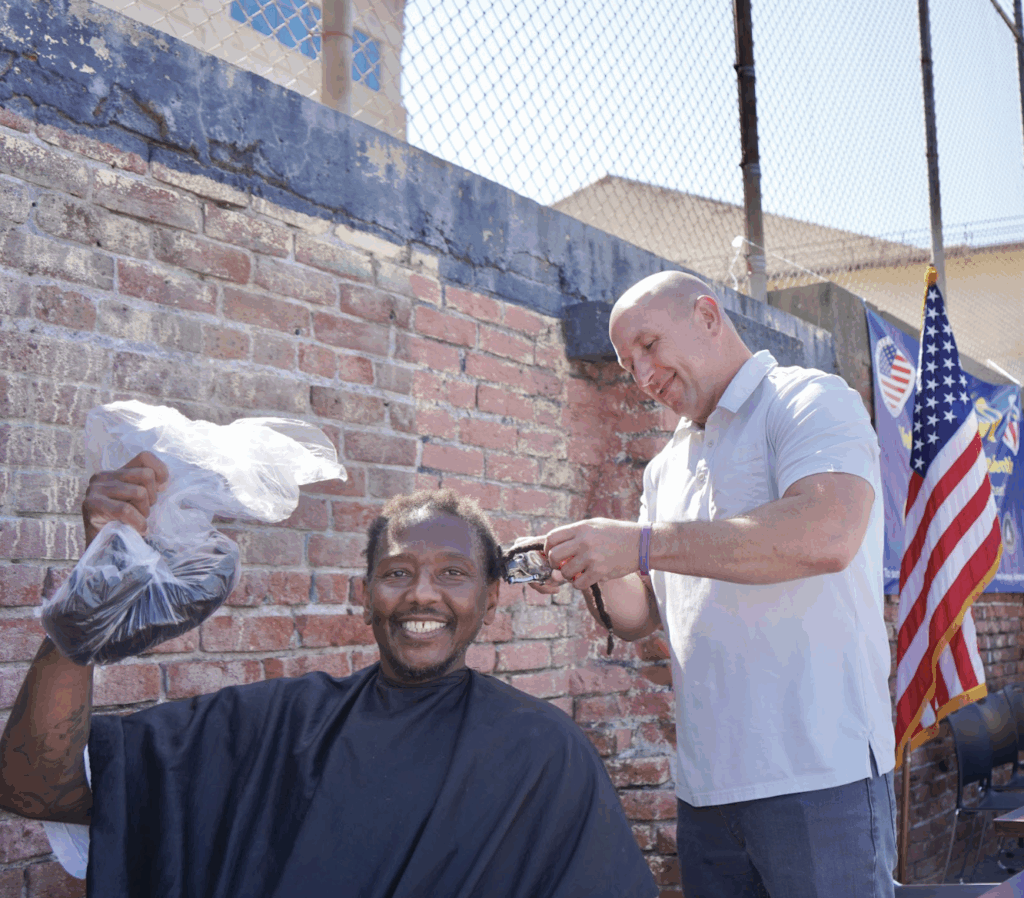
In an effort to enjoy refreshment, residents formed a line approximately a quarter mile long throughout the yard to receive a wrist bracelet, a slice of pizza, and a bottle of spring water.
The event’s planning committee thanked, A. Torres, of the Offce of SQ Resource team, Solitary Watch, SQNews Adviser Amanda Weitman, Kinders BBQ, and Family Bridges Inc.’s Anne Carda, who helped the committee to reach out to volunteers.
Gratitude was also extended to Dave Lewis, Director of CDCR programming; SFDA Brooke Jenkins; Marin Public Health services; and Prison 2 Employment, who contributed the art supplies.