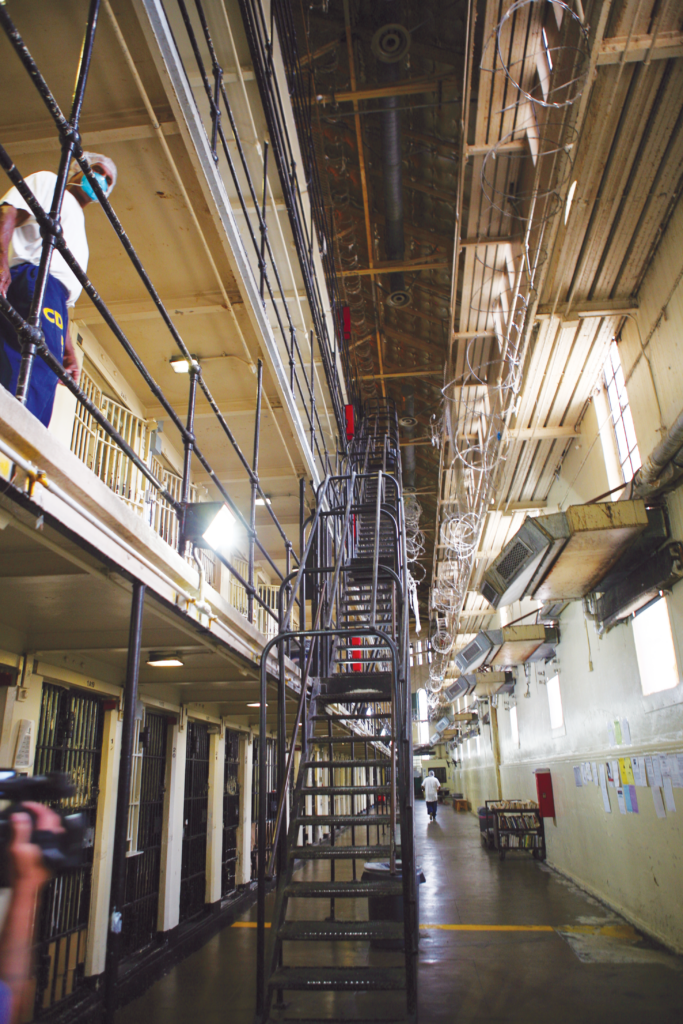
In prisons and jails across the country, lack of sleep among inmates continues to be a problematic and pressing issue.
In recent studies, the L.A. Times and The Marshall Project have uncovered more than 30 lawsuits involving sleep deprivation in carceral settings over the past three decades.
San Quentin resident Rahim Bradshaw said that on any given night he may get three to four hours of uninterrupted sleep. He said between the housing unit’s staff making announcements over the public address system in the early morning hours, to fellow residents that may have mental health issues or under the influence creating chaos, sleep has become a foreign concept to him.
“One of the unintended consequences of my lack of sleep is struggling with the desire to want to drink [alcohol] again,” said Bradshaw. “Drinking always made [me] sleep soundly, but drinking is not an option for me.”
UCLA School of Law Professor Sharon Dolovich has been researching sleep deprivation in prison and noted how such lack of sleep can cause serious mental and physical ailments, in extreme cases even leading to early death.
“It is a deep and pervasive and serious problem,” said Dolovich. “And the attention that is being paid to it…across the board is so minuscule compared to the scale of the problem.”
The causes of sleep deprivation behind bars can differ broadly. According to The Marshall Project examples of these causes can be that the room temperature can vary to extremes within the facility based on the season, or how for security reasons the lights never shut off. Even something as simple as the facility simply being too loud contributes to such deprivation.
Jeffery Dixon, a resident of San Quentin’s H-Unit, which is a dorm living unit, said that he is currently assigned to the upper bunk and the lights in the dorm force him to sleep with a sheet over his eyes.
“I have to go to work at 5 a.m. When I get off work, I just walk around the yard the rest of the day to exhaust myself to the point where I can attempt to sleep through the chaos and noise I’m surrounded by,” said Dixon.
The National Institutes of Health states that sleep deprivation is connected to countless numbers of health complications, including diabetes and strokes, heart disease, as well as mental health issues such as depression and suicide.
John Thompson was incarcerated in Pennsylvania prisons for more than 37 years. He said he spent a portion of his time housed in solitary confinement. He described the lights in solitary confinement as being on 24 hours a day and how he needed to stretch socks so he could wrap them around his eyes to try to get some rest, to no avail.
“It feels like your body can never rest, like it’s always daytime. So when you try to go to sleep, sleep doesn’t come,” said Thompson.
Thompson added that he remembers watching his neighbor in solitary deteriorate from lack of sleep. He said that he saw him complain numerous times about the lights and that he began to hear voices. Eventually the man became combative and started to flood his cell and yell throughout the night, leading others to not sleep as well.
Professor Dolovich said she is skeptical that security measures such as around-the-clock lighting actually prevent escapes or suicides. Dolovich says that prison officials are trying to stop residents from being able to kill themselves while not bearing in mind the elements that may lead to why they are suicidal, like lack of sleep.
“Decisions that are made about how the facilities are going to be run reflect an inability to recognize the humanity of the people inside,” said Dolovich.