By Jason L. Jackson
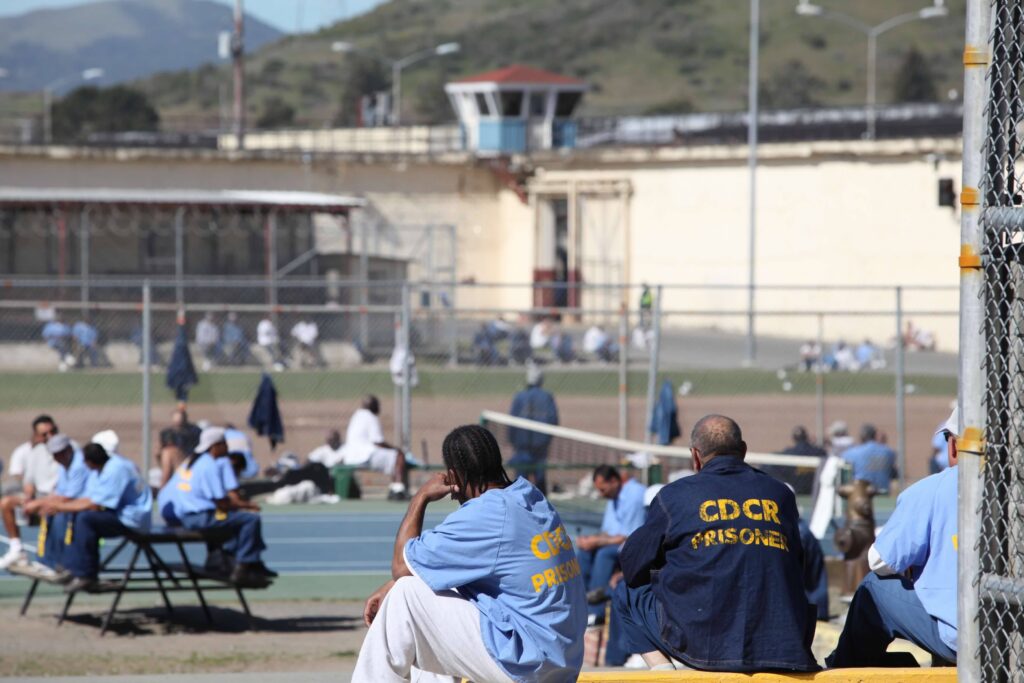
In a world of cages and captivity, loss and limitation, formerly and currently incarcerated men share their perspectives on freedom and the place it holds in their lives.
“Freedom is essentially just a right to be; a right to choose your own destiny. It’s having the ability to determine how you’ll live your life and who you’ll become while living it,” said Devan Jackson, released four years ago after serving nearly 10 years in prison.
Webster’s New College Dictionary defines freedom in numerous ways: “not under the control of some other person or arbitrary power; not held, as in chains; liberty; not confined to the usual rules or patterns; not restricted by anything except its own limitations.”
Designed and maintained to operate contrary to the very definitions of freedom, the prison industrial complex shapes an environment where countless men and spend years, even decades, being told when they can shower, when and what they can eat, what time to sleep, and what they are allowed to read.
Jackson said prison was debilitating for him, that the prison environment worked to kill his will to thrive, to wonder, and to think about possibilities.
“Prison eats away at you slowly, because there is little to nothing in it to build you up. It’s like someone is drowning you, and every now and again you’re allowed to come up for air,” said Jackson.
The mental and emotional residue years of prison and control can leave on men and women can be lasting.
A 2013 study conducted by the Prison Policy Initiative and the National Institute of Health found that long-term confinement left former prisoners with “institutionalized personality traits” commonly associated with Post-Incarceration Syndrome, including distrust, difficulties making decisions, and alienation.
“Prison has made me more leery of basically everything. I have anxiety because I’m afraid to make the wrong move,” said Allan Buckley, a San Quentin resident with more than 11 years inside California prisons.
People who have not spent prolonged periods denied the simplest pleasures may take every day experiences for granted.
“People definitely take freedom for granted because most people just move on autopilot. They aren’t aware enough to develop a different approach to freedom,” said Buckley.
Buckley admits it took years of growth and maturity and two prison terms before he realized he spent much of his life taking his everyday freedoms for granted.
“I wasn’t free for a long time. Even on the street, I wasn’t free, because I was battling with myself and my addictions. I’ve used this term to mature and unshackle the limitations I set on myself,” said Buckley.
For many incarcerated people, the realization that they took their freedom for granted accompanies the loss of it. For some, they come to complete realization only after they regain that freedom.
Jackson said that once he was home from prison he realized how much he missed the little things, including watering the grass, taking a drive, showering in private, and talking to family without being monitored and recorded.
“I feel like I can live now, like my destiny is in my hands. In prison, no matter what is said, there is always only so far you are allowed to go with your development. Now, there is nothing stopping me. I can go anywhere and do and be anything I want to be,” said Jackson.
Years of incarceration can make the idea of freedom seem like a distant dream, especially for the men and women serving extensive sentences. How we think about, approach, and define our experiences while in prison can be a determining factor in how we approach freedom if or when that day of release finally comes.
“Some people are freer in prison than people in the real world. It all depends on perspective. Prison is a small setback in the rest of our lives if we use the experience right,” said Buckley.