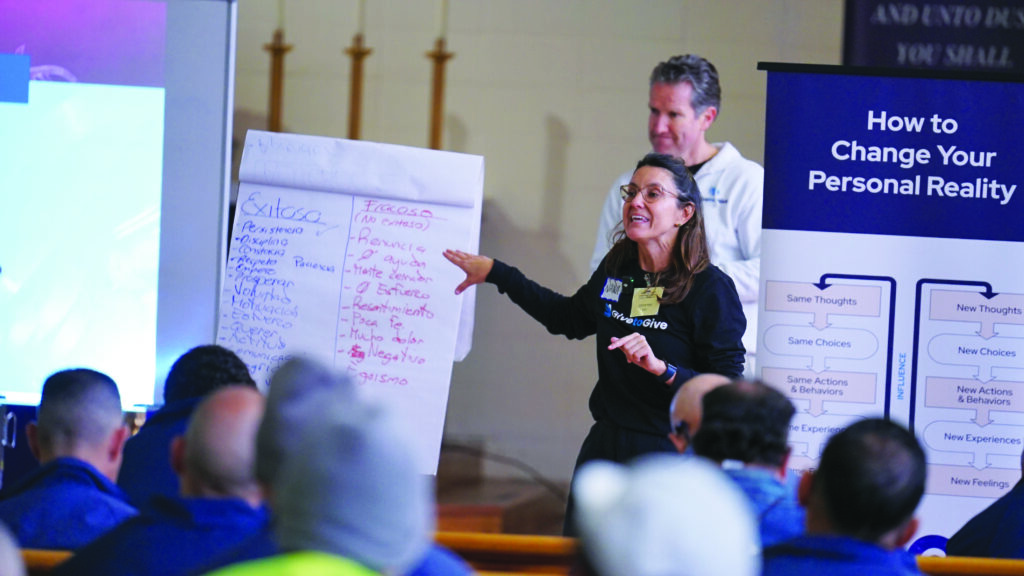
Los alumnos del Dr. Joe Dispenza y la Fundación Dar para Dar “Give to Give”, ofrecieron el primer taller informativo en español, para la comunidad hispana del Centro de Rehabilitación de San Quentin.
El Dr. Dispenza, basada la neurociencia en su investigación ― explica cómo las persona adquieren el conocimiento de su personalidad y cómo crea una realidad, establecido por: experiencias, actitudes, comportamientos, pensamientos, sentimientos, hábitos y decisiones.
Los exponentes del evento fueron los Consultores de Soluciones en Neurocambio; Natalia Varela y Juan Carlos Rubín, este último viajó desde San Luis Obispo México, para proporcionar el programa a los residentes de SQ.
“Si ustedes cambian, ustedes pueden ser la persona que cambie la historia en su familia”, dijo Rubín.
El taller impartido durante tres días, proporcionó a los reos una nueva conciencia restructurada. Basada en herramientas y ejercicios, en donde los participantes pudieron comprender los conceptos de; no ser influidos por el entorno, la razón del estado de supervivencia (conocido como estrés), identificación de emociones, la función de los tres cerebros y el estado creativo o de sobrevivencia del cerebro.
Uno de los enfoques que resaltó en el taller fue: cómo la personalidad crea una realidad basada en pensar, elegir, actuar, experimentar y sentir. El objetivo es que los participantes entiendan que todo lo dicho anteriormente, los llevo a la consecuencia en donde están el día de hoy. Sin embargo todo esto puede cambiar, con el “cambio de pensamientos” y por consecuencia crear “una nueva realidad”.
La fundación provee este taller a empleados de grades compañías como: Microsoft, Coca-Cola, Pfizer, Sony, Target, entre otros; con un costo monetario entre los $700 a $1000 por participante. Desde el año pasado, la fundación ha trabajado para que la información de éste taller sea proporcionada a los hispanos de SQ.
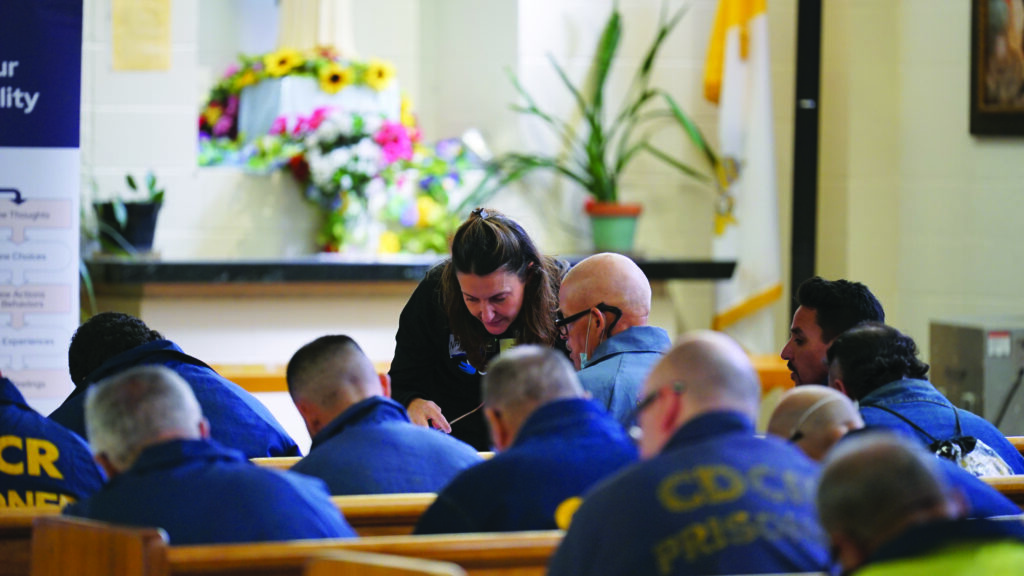
“Cuando aprendes en tu lengua natal, lo aprendes a largo plazo y lo entiendes mejor”, agregó Rubín, dando datos de que una persona tiene entre 60,000 a 70,000 pensamientos por día y que el 90% estos pensamientos son similares.
Según el Diccionario Webster, define la neurociencia como: la rama que estudia la ciencia que trata la anatomía, psicología, bioquímica o biología molecular de los nervios y tejidos nerviosos especialmente con su relación de comportamiento y aprendizaje.
Durante los tres días del taller, los consultores mostraron videos en donde los residentes aprendieron sobre los componentes del cerebro, además de explicaciones de cómo se crean las conexiones neuronales durante los momentos de aprendizaje y cómo este aprendizaje y su repetición, ayuda a tomar una nueva experiencia y mediante su repetición una y otra vez, condicionan al cuerpo tanto neurológicamente como químicamente para memorizar acciones de una manera consciente, dando como resultado un nuevo habito o habilidad.
“Podemos cambiar en momentos de dolor y sufrimiento o en tiempos de inspiración y alegría”, dijo el Dr. Dispenza.
Change your mind, create new results
Dr. Joe Dispenza’s students and the Give to Give Foundation offered the first informational workshop in Spanish for the Hispanic community at the San Quentin Rehabilitation Center.
Dr. Dispenza, drawing on neuroscience in his research, explains how people acquire knowledge of their personality and how it creates a reality, established by experiences, attitudes, behaviors, thoughts, feelings, habits, and decisions.
The event was presented by Neurochange Solutions Consultants Natalia Varela and Juan Carlos Rubin, the latter of whom traveled from San Luis Obispo, Mexico, to provide the program to San Quentin residents.
“If you change, you can be the person who changes the story of your family,” Rubin said.
The three-day workshop provided inmates with a new, restructured consciousness. Based on tools and exercises, participants were able to understand the concepts of: not being influenced by the environment, the reason for the survival state (known as stress), identifying emotions, the function of the three brains, and the creative or survival state of the brain.
One of the focuses highlighted in the workshop was how personality creates a reality based on thinking, choosing, acting, experiencing, and feeling. The goal is for participants to understand that everything previously stated led them to where they are today. However, all of this can change with a “change of mind” and, consequently, create “a new reality.”
The foundation provides this workshop to employees of large companies such as Microsoft, Coca-Cola, Pfizer, Sony, Target, among others; at a monetary cost of between $700 and $1,000 per participant. Since last year, the foundation has worked to ensure that the information from this workshop is provided to Hispanics in SQ. “When you learn in your native language, you learn it long-term and understand it better,” added Rubin, providing information that a person has between 60,000 and 70,000 thoughts per day and that 90% of these thoughts are similar.
According to Webster’s Dictionary, neuroscience is defined as: the branch of science that deals with the anatomy, psychology, biochemistry, or molecular biology of nerves and nervous tissues, especially with their relationship to behavior and learning.
During the three-day workshop, consultants showed videos in which residents learned about the components of the brain, as well as explanations of how neural connections are created during learning moments and how this learning, and its repetition, helps us take a new experience and, through repeated repetition, condition the body both neurologically and chemically to memorize actions consciously, resulting in a new habit or skill.
“We can change in moments of pain and suffering or in times of inspiration and joy,” said Dr. Dispenza.