Following their release from prison, returning citizens will find that employment opportunities are much different from the past. Job seekers will not only compete against other people but also against artificial intelligence.
“I’m a certified forklift driver,” said San Quentin Rehabilitation Center resident Bryan Monge. “But now forklifts are mostly automated and don’t need drivers.”
A study by the McKinsey Institute indicates that robotics, digitization, and AI advancements will force 14% of the global workforce to change careers within five years.
According to an article in Nexford University’s newsletter, many jobs are subject to automation due to reduced consumer spending, rising costs and wages, technological advancements, and tight labor markets. This could make finding a job more challenging for some.
The investment bank Goldman Sachs reported that by 2030 AI could replace more than 300 million full-time jobs across the globe, including a quarter of workplace tasks in Europe and the U.S.
The 90% of incarcerated people in the U.S. who will eventually renter society may wonder how best to respond to the challenge of AI. According to Nexford’s newsletter, job seekers must be willing to pivot and learn new skills, to become familiar with AI, and learn to navigate digital platforms.
“To stay ahead in the era of artificial intelligence, it is essential to embrace lifelong learning, [to] develop soft skills, be agile, and specialize in a particular area,” the newsletter stated.
Incarcerated people may prepare by furthering their education, working in a day labor or vocational program, attending self-help groups, and learning how to network. Experience in a trade, developing communication and problem solving skills, and learning to collaborate makes one less vulnerable to advancing technologies.
Many positions do not require advanced tech skills. Jobs that require a human touch, that emphasize interpersonal skills, or require skilled labor, are currently in high demand. Returning citizens who have spent years learning a vocation, facilitating groups, tutoring, or have a college degree can use the skills gained to obtain employment.
Whether they know it or not, incarcerated people already have experience with AI. Most incarcerated people in California state prisons have tablets and access to computers in classrooms and libraries at most facilities. They cannot browse the internet but do have access to research data banks and up-to-date news apps, and they are able to search for currently trending jobs.
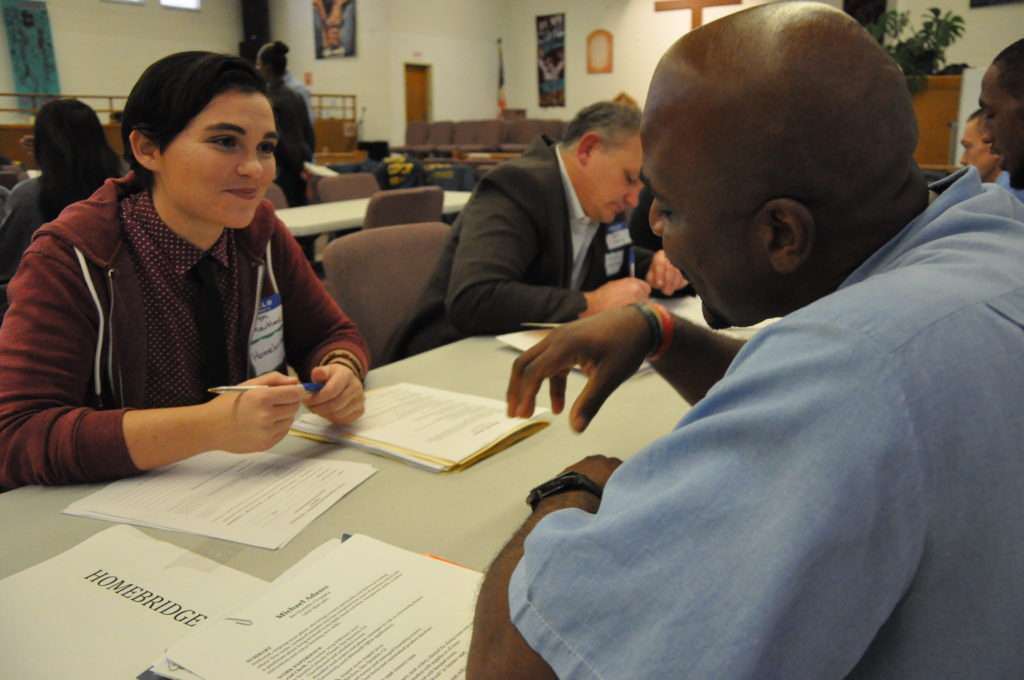
Resources available to San Quentin residents include the Prison to Employment Connection program, which teaches residents to write resumés, improve interview skills, and build confidence through meetings with employers, volunteers, and reentry professionals.
P2EC connects employers with residents to create possibilities. Executive Director Sumer Schulze explained that having support while still inside and meeting with potential employers helps residents gain motivation and a renewed sense of hope for the future.
“We all know it’s easier to get a job if you know somebody,” said Schulze. “This personal connection empowers people to believe that success is within their reach.”
The Last Mile program is a prison-based nonprofit that offers technology and coding training that prepares incarcerated people for careers in the tech field upon release.
The Last Mile volunteer Caroline Norton, who also participates in SQ’s P2EC, said both programs help people build the skills needed to get a job.
“By gathering with potential employers, it helps these guys build the confidence necessary in order to present really well in an interview,” said Norton.
Removed from modern technology for decades, SQ resident Eliezer Prado, 58, said he is not worried about AI influencing his ability to find work when he gets out of prison.
Scheduled to parole soon, Prado said during his 21 years of incarceration he has taken every opportunity to learn new skill sets. He is confident that his ability to perform tasks that AI cannot will make him an asset for potential employers and help him to become a productive member of society.
“I’ve taken commercial trucking courses, became a master butcher, and I’m a journeyman painter,” Prado said. “I am very fit, reliable and the quality of my work speaks for itself.”
According to Nexford’s newsletter, “developing [new] skills and adapting to the changing job market, workers can thrive in the era of AI and take advantage of the opportunities it presents.”