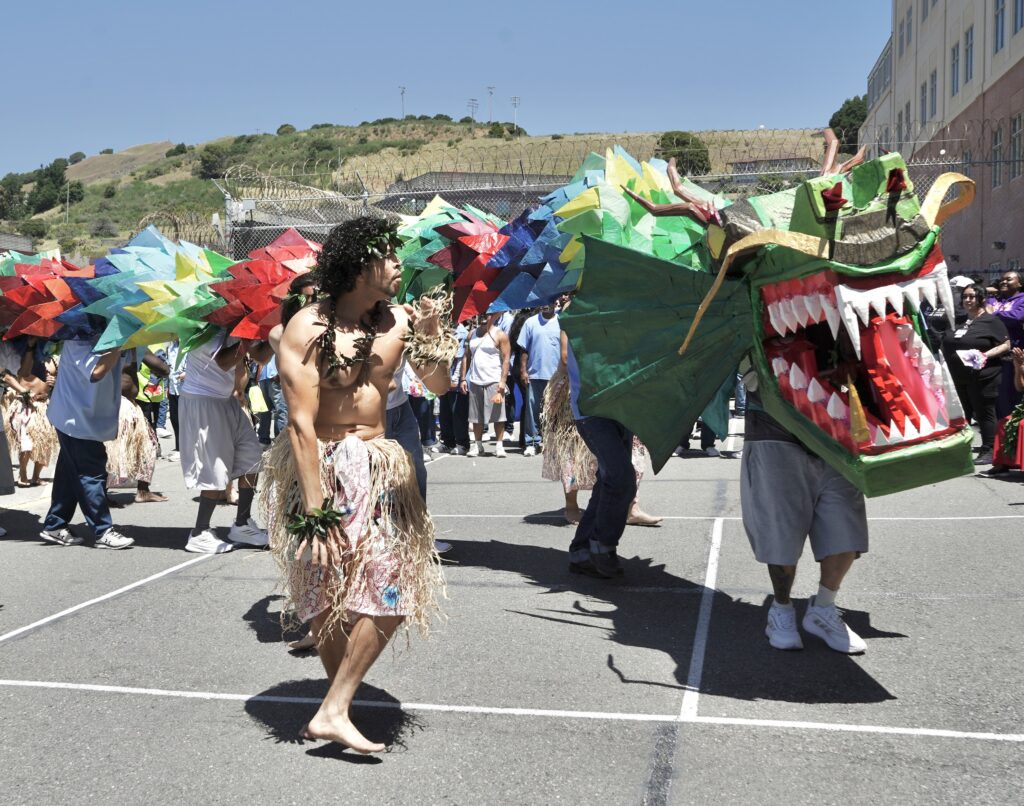
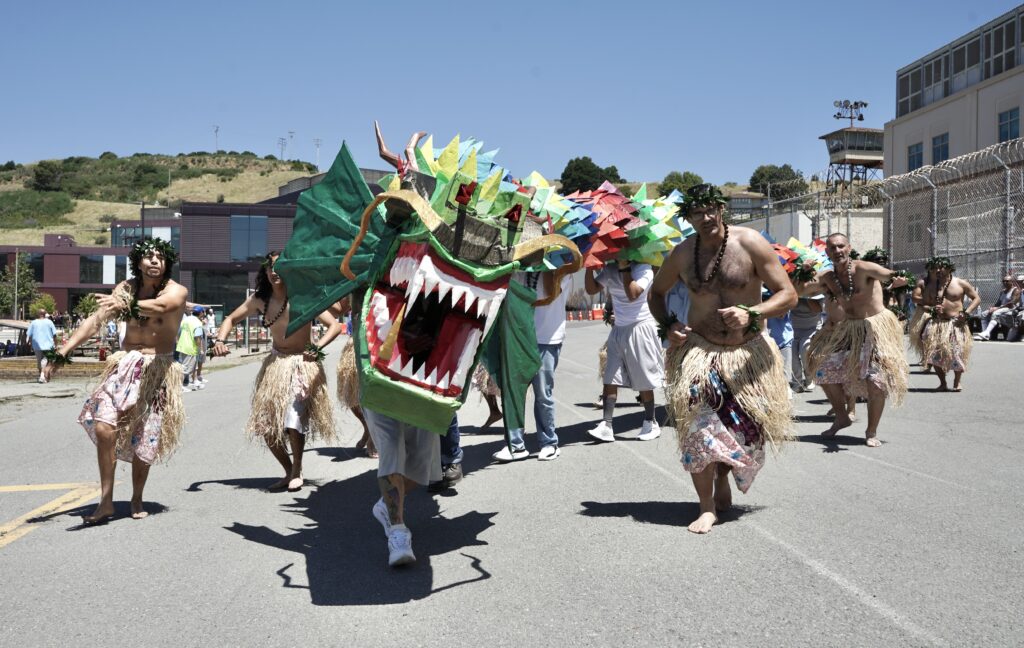
“Look that way, over there,” a man shouted excitedly, pointing toward San Quentin’s hills with his right hand, “See what’s coming out of the Learning Center!” Just then, a 65-foot dragon, yes, dragon, emerged from the newly constructed complex.
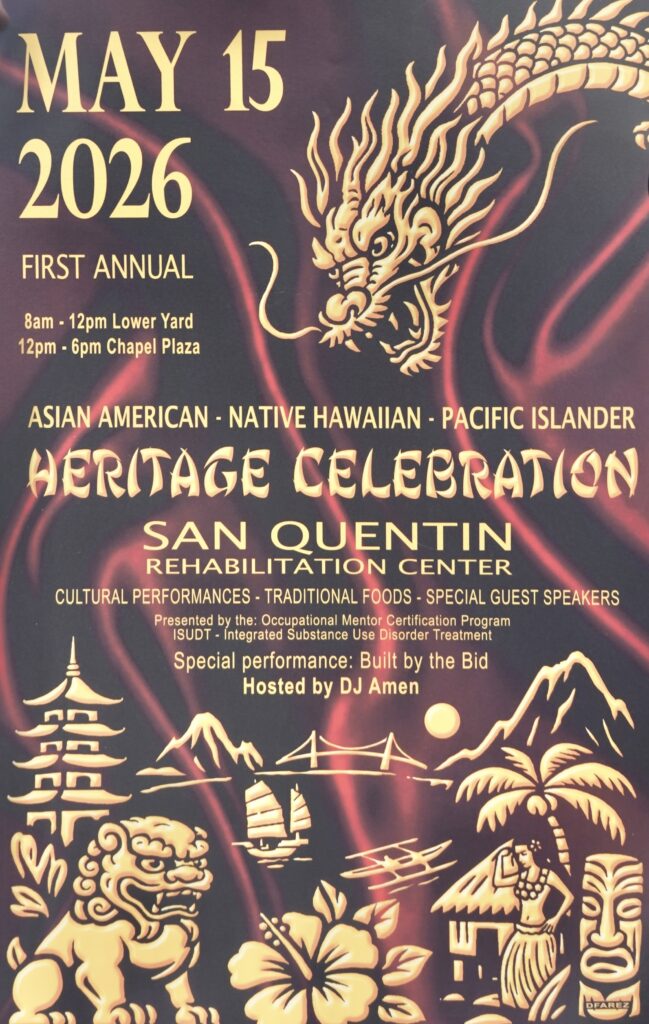
A fast and dramatic beat of five drums underscored the man’s exclamation as a 65-foot 18-legged, green-headed, rainbow-color-bodied, antler-horned and yellow-tailed dragon with fierce, white-gleaming fangs and an open jaw slowly slinked its way across the Lower Yard of San Quentin Rehabilitation Center. Soon, it arrived in the staging area of the Asian-American Pacific Islander Heritage Month celebration as crowds of San Quentin residents, staff, and volunteers cheered on the gigantic creature.
“This dragon symbolizes the fighting spirit of all incarcerated persons,” said resident Amu Wynn, who first alerted the crowd of the creature’s approach. The dragon, affectionately named “Quentin,” marked the high point of the May 15 event that celebrated culture, tradition, and community.
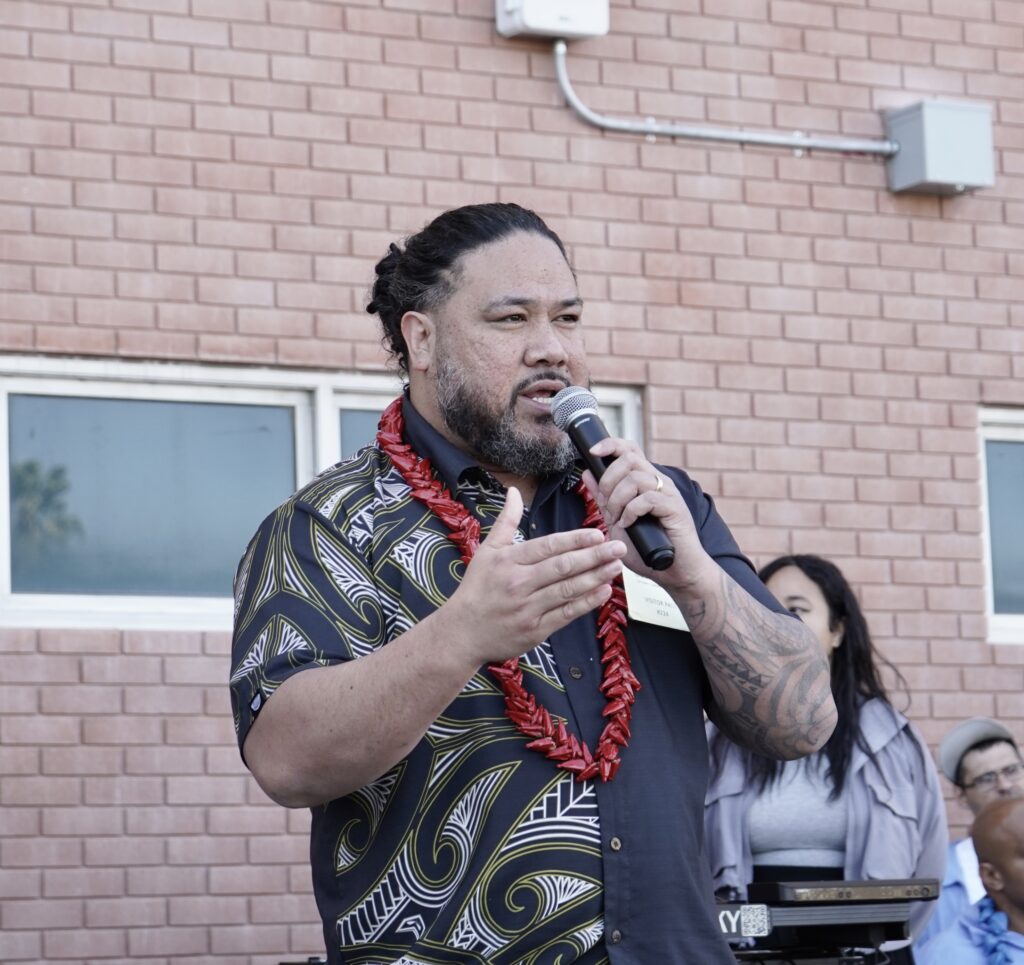
A San Quentin resident of Samoan heritage and the organizer of the AAPI event, Wynn, 50, said the dragon’s construction took 15 days. Wynn credited Acting Chief Deputy Warden Eric Patao, who sponsored the event, for having found a way to say Yes to the idea.
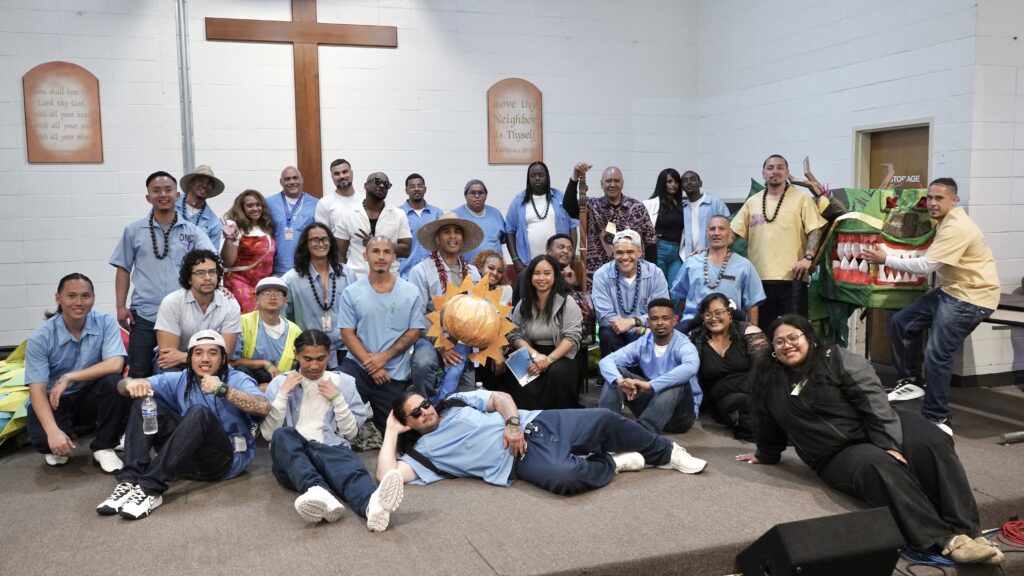
Construction came about as a collaborative arts project in which residents teamed up with volunteers from Life on Art, a “social practice community-based installation art” organization based in Petaluma, California. To participants at the event, the dragon symbolized not only art, but a convergence of heritage, tradition, and community. The group had come to San Quentin solely to support the dragon project.
Tracy Ferron of Life on Art said, “I met an incredibly dedicated group of residents and my group built the dragon side-by-side with them. The residents came up with the ideas and my group helped.”
For Zoe Fry, also a Life on Art volunteer, the process of artistic creation inspired a passion she called “Service Is Sanity.” Fry said she collaborated in arts projects for many years. She called the dragon project her “favorite art project” this year.
Fry stressed that teamwork made everything come together. “It’s all about the process of building a team of artists with the residents and the staff. None of us knew each other and yet, we built a cohesive team. They all respected each other and green-wearing staff came through and were super-supportive. The program gave residents real life experience and for me, it’s real life experience that matters. One resident told me, ‘This is better than therapy.’”
In a spirit of inclusivity, SQRC’s Warden Chance Andes said, “I’ve learned so much about culture and I thank you all for letting me experience your culture. Let’s build this San Quentin community.”
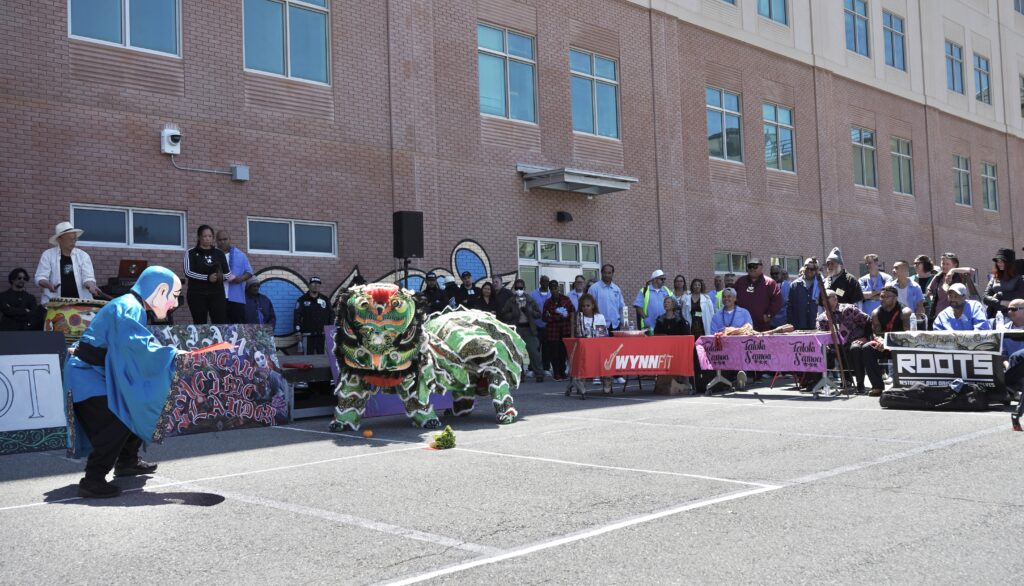
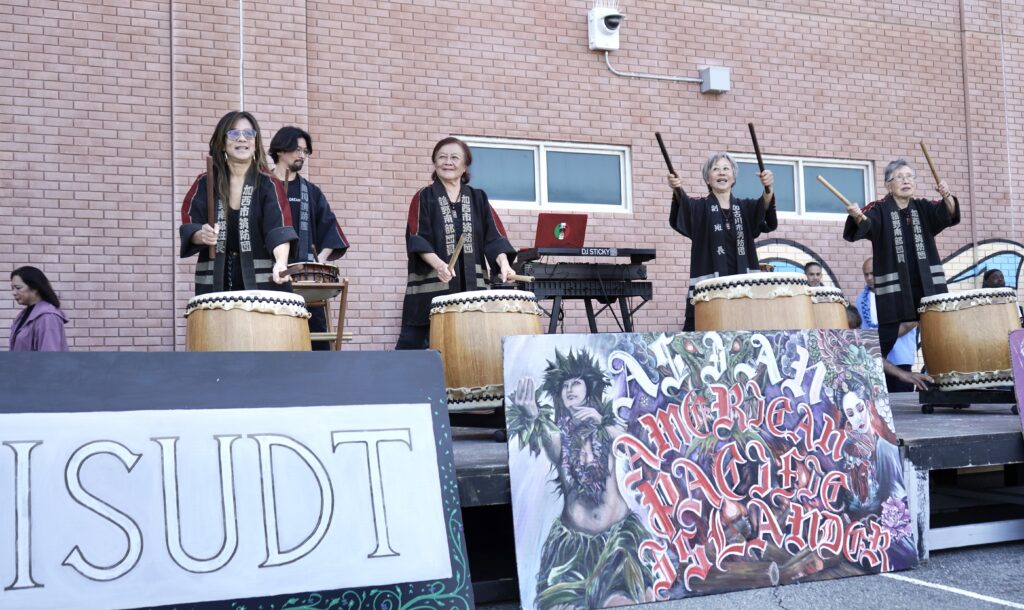
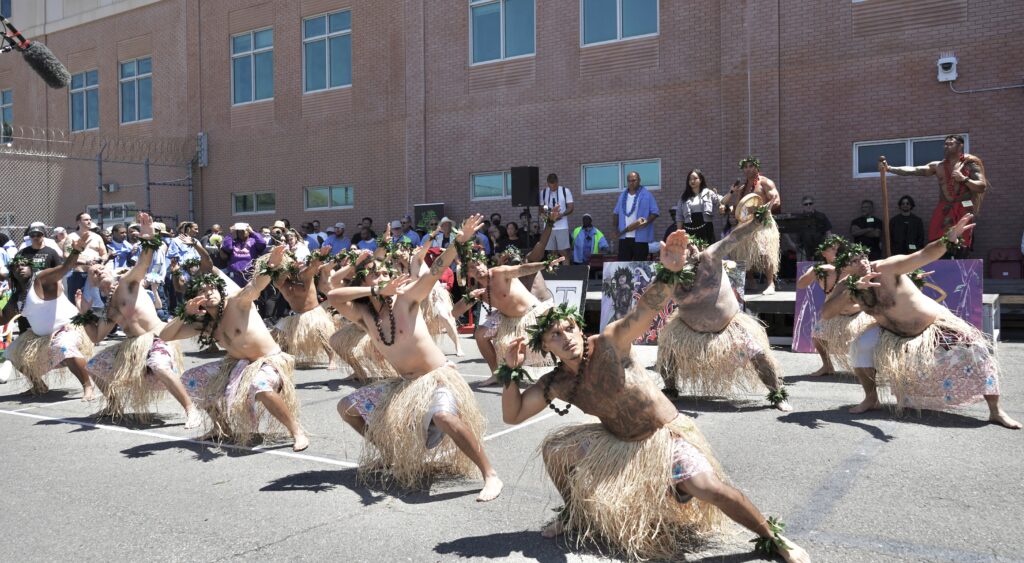
The event included several Polynesian dancing groups, various musical performances, an art exhibition of San Quentin–created paintings and sculptures. The event served pizza to San Quentin’s entire population.
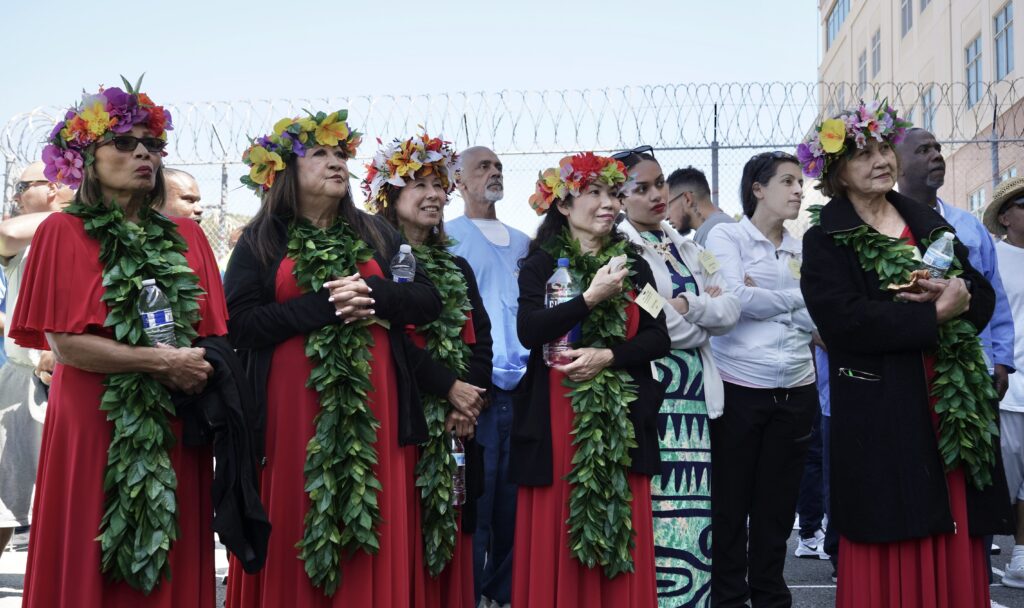
Five Hawaiian dancers in red dresses danced the Hula to recorded music, wearing flower headwear and wreaths with green leaves. Their dance honored Kipukai, a location on the island of Kauai, said one of the dancers. The Tahitian dancer Ke’Olani performed the Motu-uta dance in green dress with black swirls and white flowers in her hair, barefoot. The performer explained that the dance told the story of a journey of finding a black pearl.
Organizer Wynn also arranged for his daughter to sing at the event. Asked about her, he replied: “Koko is 27 now, a remarkable woman who inspires me to became a better person. I have never heard her sing; this was the first time. I was so happy that everyone came up to me and said they engaged with her music.”
Wynn said, “I think the event contributed to the work done and hopefully inspires hope and motivation for our community to believe in themselves and pursue their dreams.”
Resident Fuahala Fonuamana, 34, said, “I am proud to be a Polynesian and I am grateful for all the people and all the cultures who came. The event really captured diversity and community, and community is what it’s all about.”
Acting Chief Deputy Warden Patao said, “I could not be more proud of everything you guys have done. Events like this do not happen by accident. I’m just the guy who says ‘Approved.’ All different races and cultures are coming together here.” At the end of his speech, ACDW Patao shouted, “Yee-Hoo” and admitted that the exclamation required much practice.
San Quentin’s Chief Medical Officer, Dr. A. Pachynski, found impressive the cooperation between staff and incarcerated persons to make the event happen. “It’s amazing to have the recognition of so many different cultures being represented here today. Visibility is so important, and it’s also so important for everybody to preserve their traditions.”
Robert Wong, a retired former warden of San Quentin, said, “I am an old dinosaur prison guard,” and added, “I am glad I came. Forty years ago, you would not think about having everyone together like this. I don’t feel the tension like it was back then. Change and growth are good.”