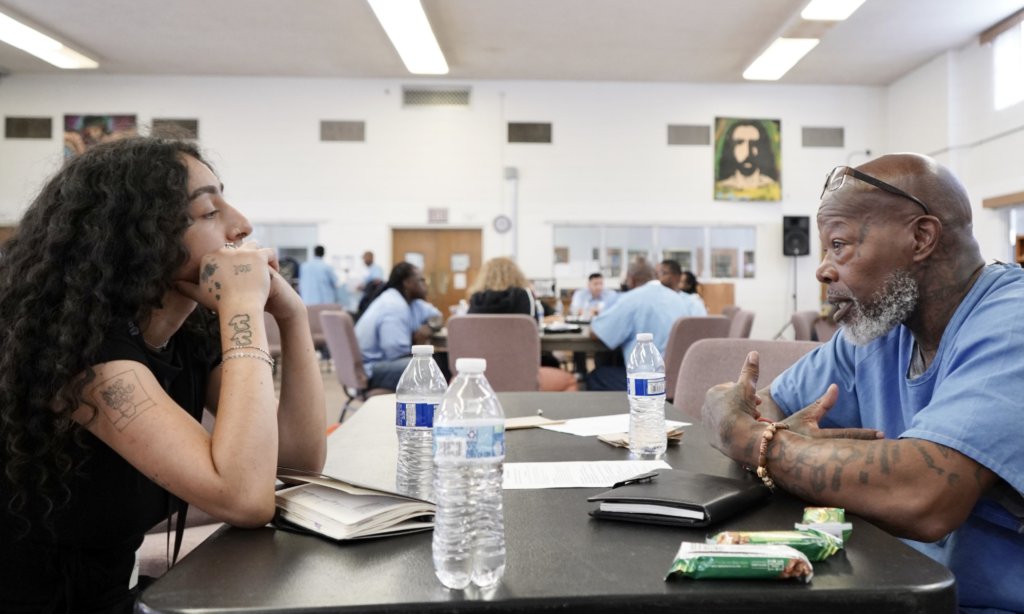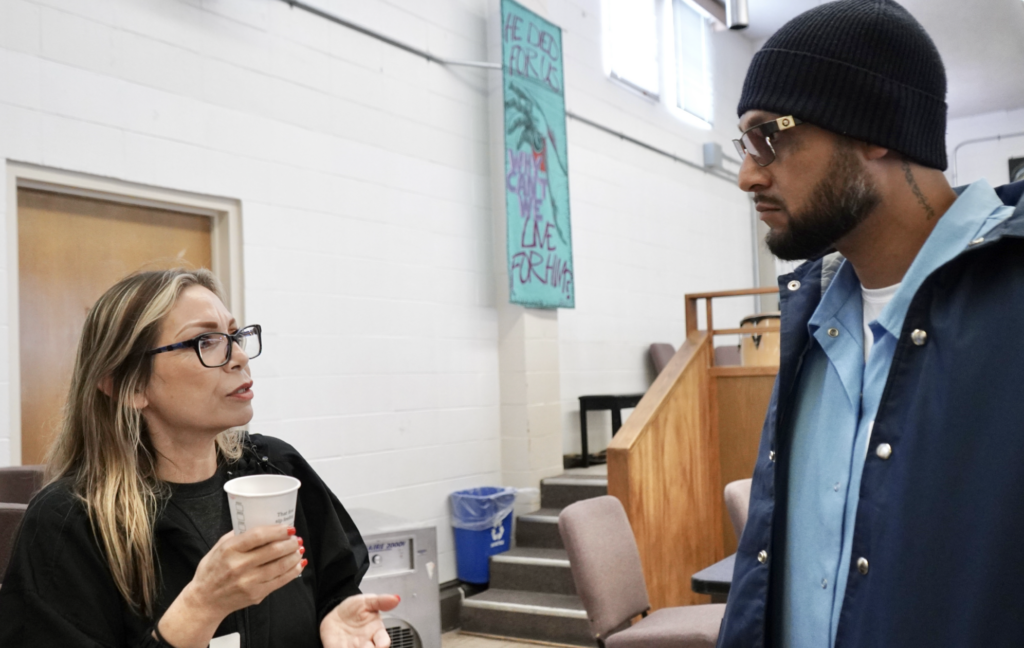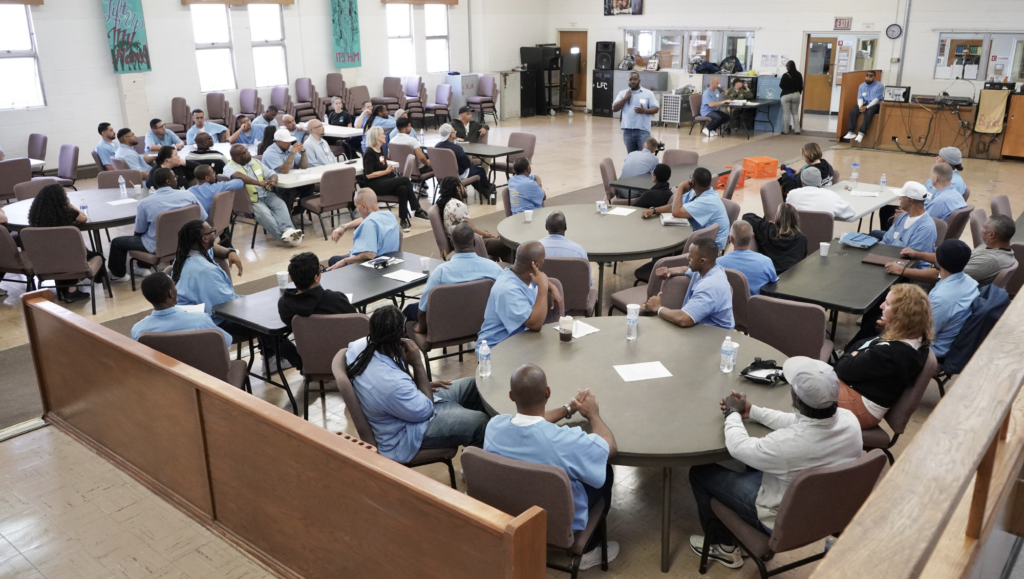
SQNews hosted a teachers’ symposium that took place in the Garden Chapel on July 22. Approximately 75 persons came together to talk about their journey through the educational system and the academic support they wish they had received.
SQNews staffer Eric Allen opened up with his limited learning experience that ended abruptly at 15 when he was sentenced to life in prison. Other residents shared their traumatic educational experiences.
“Schools passed me forward without the foundational skills I needed,” Carlos Valdez said. “This left academic scars and had me questioning whether education was for me. My disability was never a lack of intelligence, but a lack of support.”
Resident Alfonso Landa grew up in a gang-infested area in Los Angeles. He exhibited full accountability and vulnerability in front of the nearly 100 attendees when he told his story about a seventh-grade teacher who brought a reality he had not known.
Landa said his teacher said, “Why are you even tripping and trying so hard? You are an illegal alien, not a U.S. citizen.”
He said he had felt betrayed and lied to by his mother and stepfather his whole life. He started making poor choices and turned to the neighborhood for acceptance, but he acknowledged that it was not that teachers’ fault.
Oakland native Gregory St. Mary said he had great teachers and support until some clerical errors went unaddressed until he was in his senior year. After spending time in and out of youth authority, he fell into the school-to-prison pipeline.
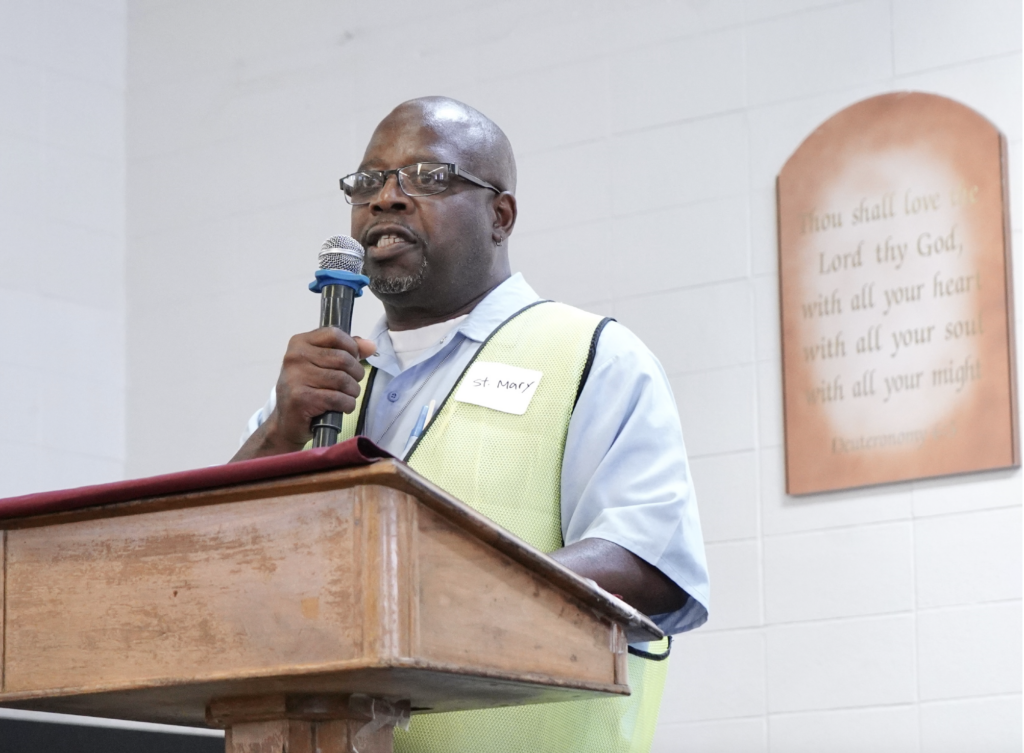
“It broke my heart because I couldn’t walk with my class, so I started selling and using drugs. I thought I would be somebody important, but I had no clue at that age that I had a choice in the matter,” St. Mary said.
St. Mary, 37 years later, is still laboring through and overcoming to obtain his high school diploma. Each of the residents highlighted the warning signs that teachers should pay more attention to, such as shyness, truancy, depression, fear, and restlessness.
The purpose of this event was to examine the impact that teachers and educational environments have on the life trajectories of young people. To create an informative and reflective discussion highlighting both positive and negative teacher-student experiences, engagement, and how culturally responsive teachers impact lives.
The outside panelists were teachers, community-based organizations, and educators. Each discussed the harmful and dismissive experiences in school that contributed to student disengagement, higher dropout rates, and involvement in the criminal justice system. They talked about how school is carceral in its nature, how they skipped class, and how labels or harassment have an impact.
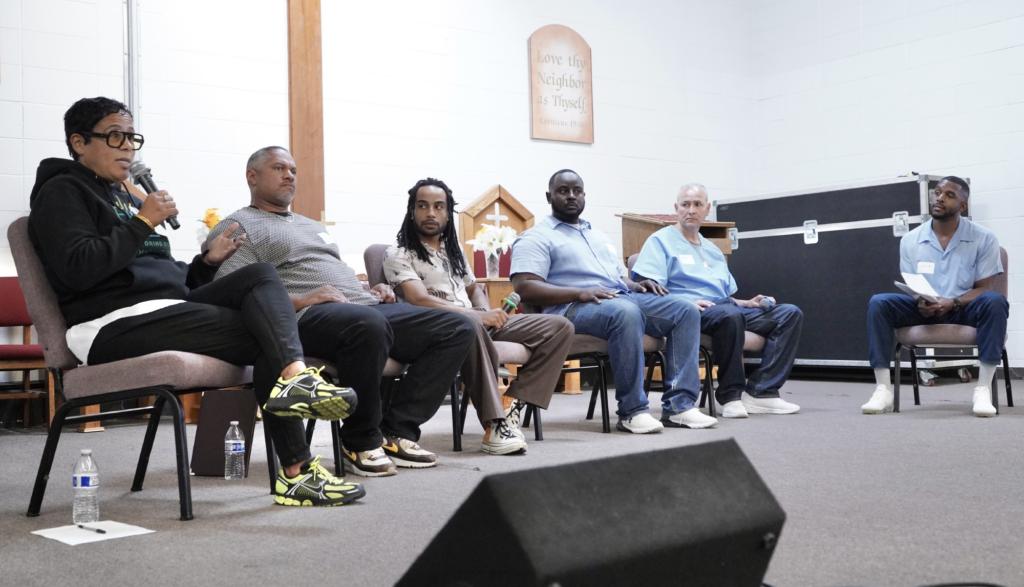
“As a child, you don’t understand what’s happening,” formerly incarcerated Jason Bell said.
Attention was given to understanding the “school-to-prison pipeline” and identifying practical ways educators, institutions, and communities can intervene early on to support at-risk youth and prevent negative outcomes to increase public safety.
Vanessa Rojas said she was touched and at a loss for words from the event and the vulnerability the individuals shared on the panel and in the small groups.
“What would have benefited me is having a teacher recognize what was wrong. How do you expect children to learn or process when they are trying to understand what was happening at home and in life?” Rojas said.