A group of trailblazers inside San Quentin Rehabilitation Center is changing the status quo by leading with empathy and forging solutions for a brighter future—one step at a time.
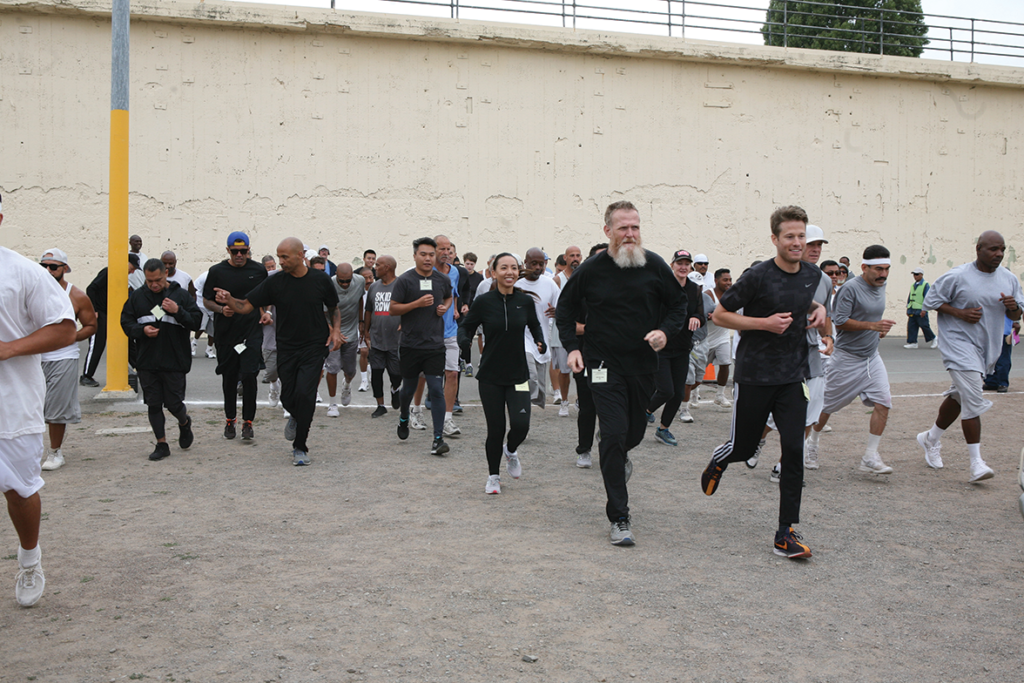
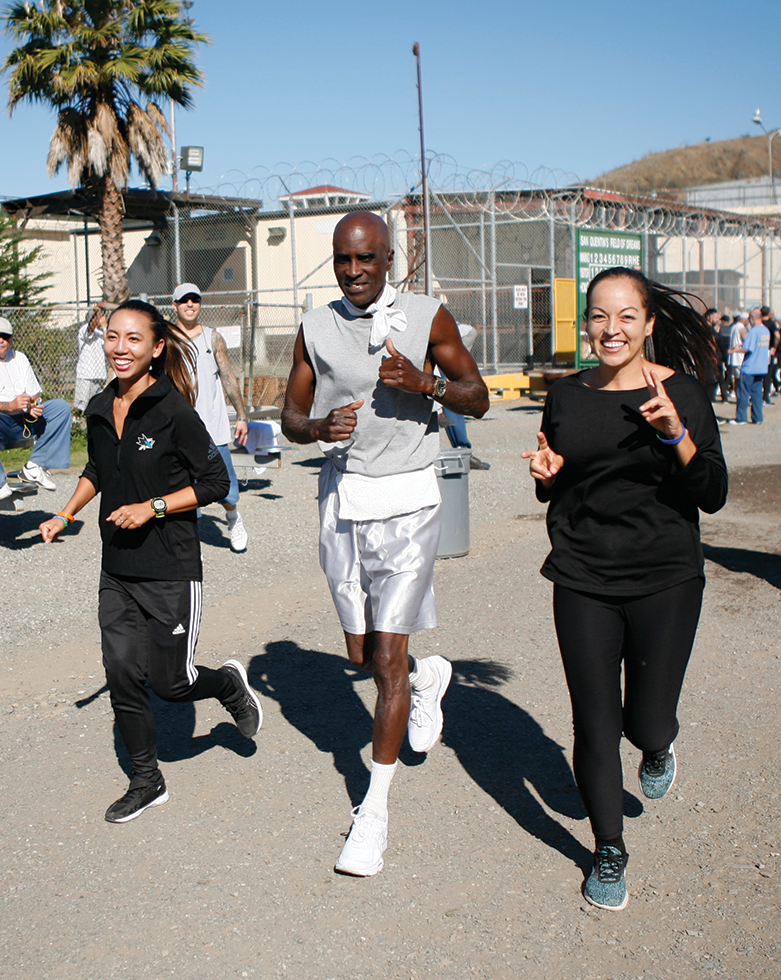
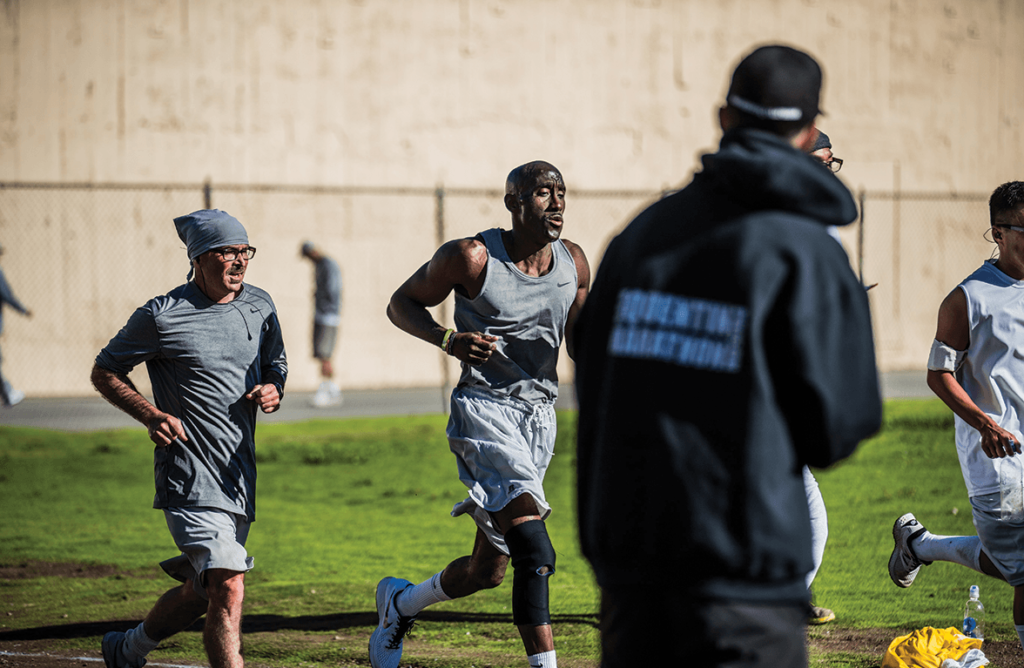
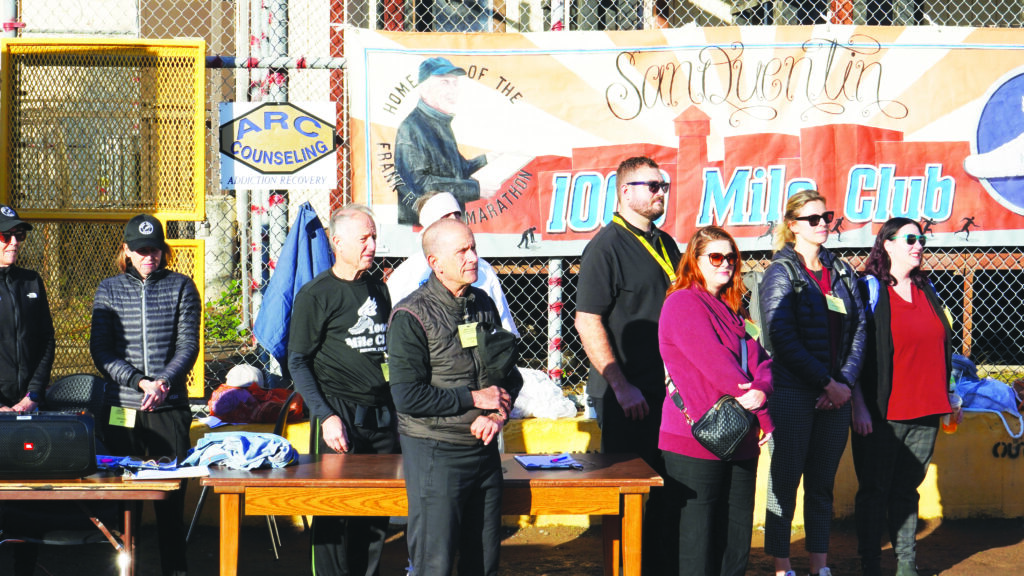
For the past 20 years, the SQ’s 1000 Mile Club has gathered on the prison’s Lower Yard to demonstrate the rehabilitative power of running.
“We start seeing people apply the skills they learn through running—the commitment, the discipline, and focus—to other parts of their lives,” said Diana Fitzpatrick, 1000 Mile Club coach of 16 years.
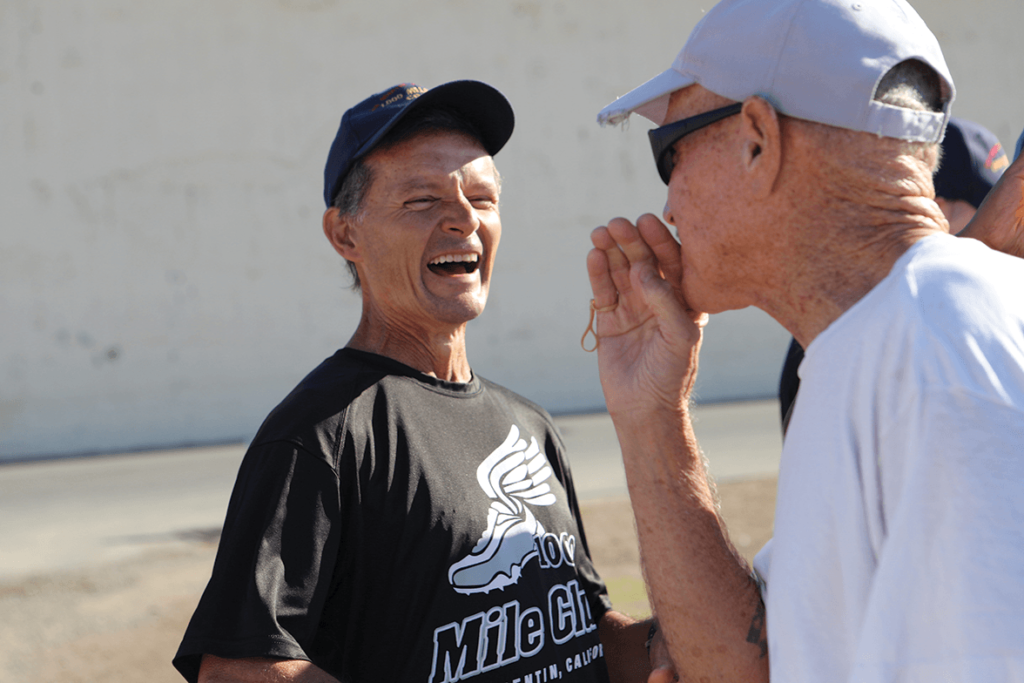
SQ resident Jim Levin, 61, joined the club in 2015 and said each one of the 6,500 miles he has run has given him purpose and a perspective on life. Levin said he lacked the courage to take on life’s big challenges when he was younger. Now, Levin said he has gained the confidence to combat the stigma and shame of being incarcerated.
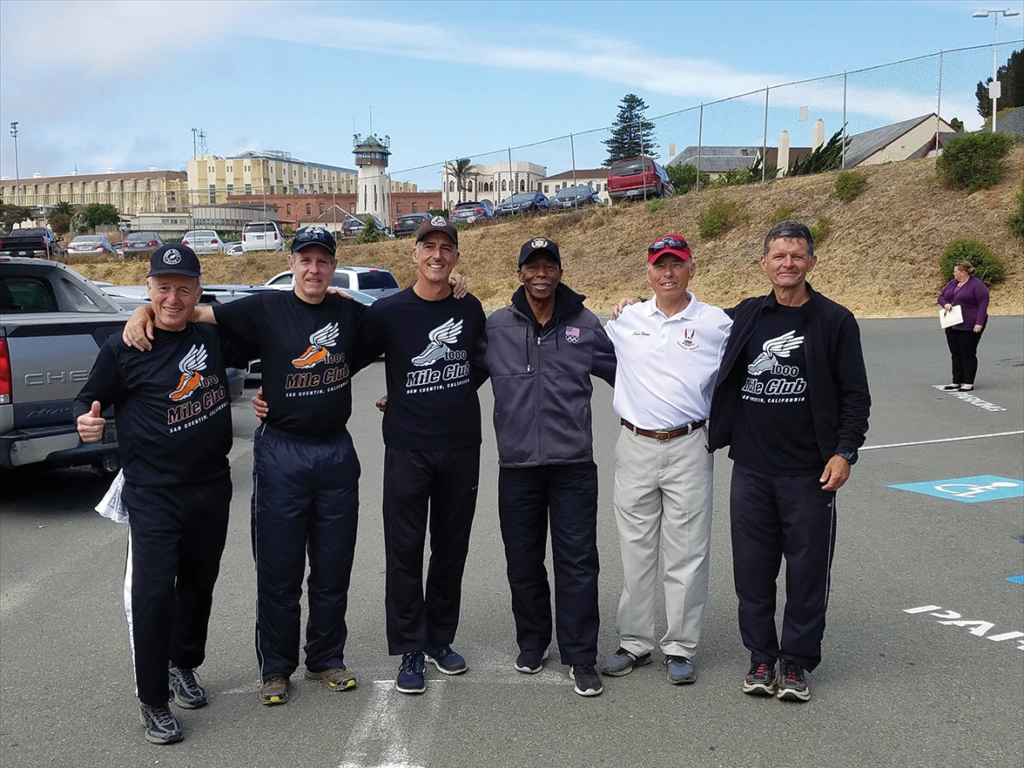
He credited club’s volunteer coaches not only for sharing their decades of combined running experience, but also for demonstrating commitment, kindness, patience, and above all empathy.
“The coaches choose to see to us as more than our worst decision,” Levin said. “They choose see us for who we are, rather than for what we did. In a word, they humanize us.”
Volunteer coach Jim Maloney said 90% of people in prison eventually will get out, and he believes it’s important to emphasize rehabilitation over punishment. Maloney said the recidivism rate of club members who have paroled remains at less than 4%.
“You men truly awe and inspire us coaches every time we come in,” Maloney told the runners recently. “We feel honored to work with you in achieving whatever goals you set your mind to.”
The inaugural 1000 Mile Club Marathon, held in 2008, had only 15 runners and one finisher, Ronnie Goodman, who ran it in 3:47:58.
“Goodman was the only one to finish the first three marathons; the club has grown alot since then,” said Frank Ruona, who co-founded the club and now has the marathon named in his honor.
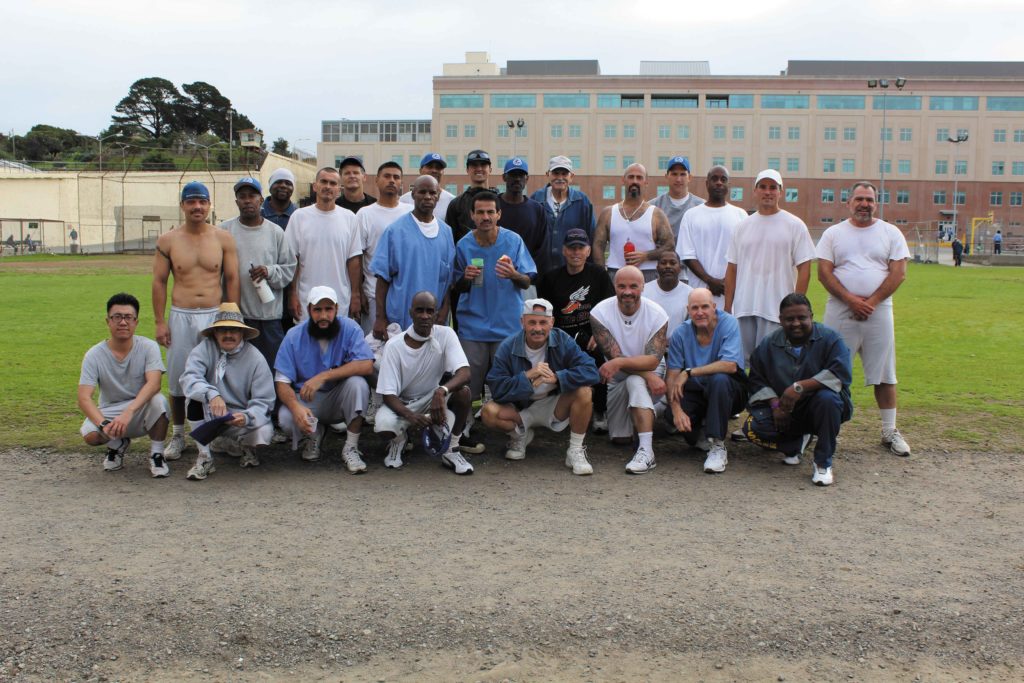
Today, there are more than 100 runners, 30 outside volunteers and alumni, with a long waiting list of outsiders who want to promote persistence, determination, resilience and self-confidence with the club.
In November, with hundreds watching, a record number 77 runners started the celebrated event, and a record number 38 finished it.
“This just shows us how vibrant and alive the community is here at San Quentin,” Maloney said.
In 2023, the popularity and visibility of the club exploded with the release of Christine Yoo’s film “26.2 to Life,” which immortalized the club’s 2017 marathon. Yoo spent five years creating the critically acclaimed independent documentary about the journey of three SQ 1000 Mile Club members.
Yo said the goal of making the film was to open the public’s eyes to the community of people working together inside the prison to make a difference in each other’s lives.
The San Quentin club has led to seven other facilities across the country staring running clubs of their own. Incarcerated runners in Ohio, Colorado, Washington, and California are now taking their first steps toward a brighter future, noted the website.
“I just want you guys to know that you are the role model for rehabilitation across the state and it is really appreciated,” California Governor Public Safety Adviser Michael Redding said at SQ’s July, Fun Run event.
On November 21, hundreds gathered in SQ’s Chapel B for the club’s 20th anniversary banquet celebration. The camaraderie and passion of it’s members was on full display, as coaches runners and alumni spoke about the clubs historic milestones, then passed out the years marathon completion certificates.
“In the beginning, maybe a guy shows up because he just wants to get in shape, but what you end up with is a bunch of really good friendships and community; it’s really powerful.” said head coach Tim Fitzpatrick.
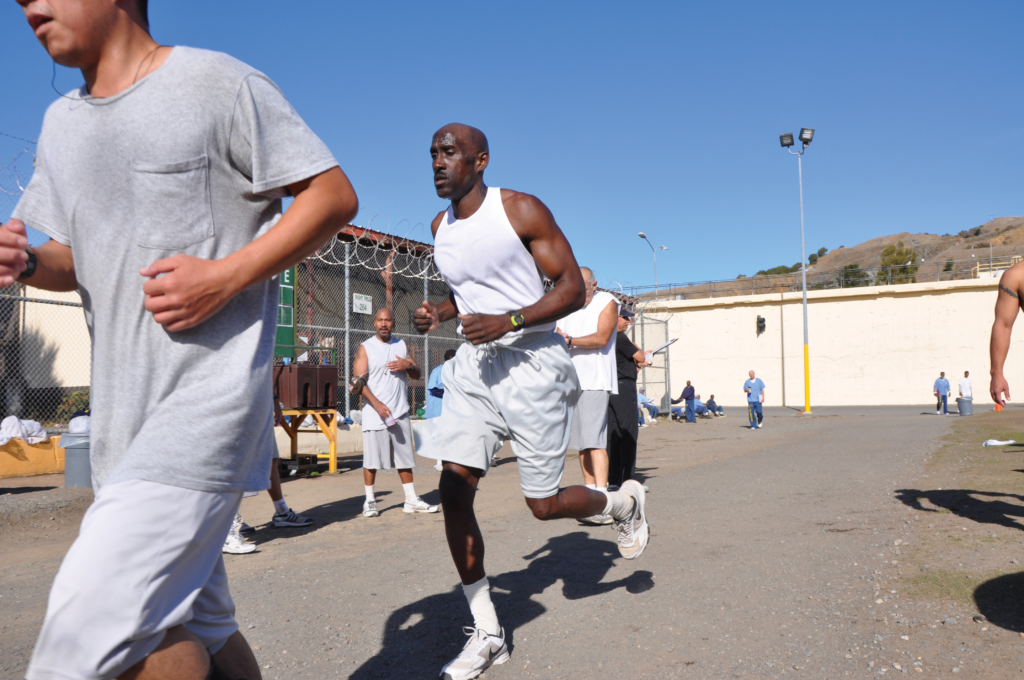
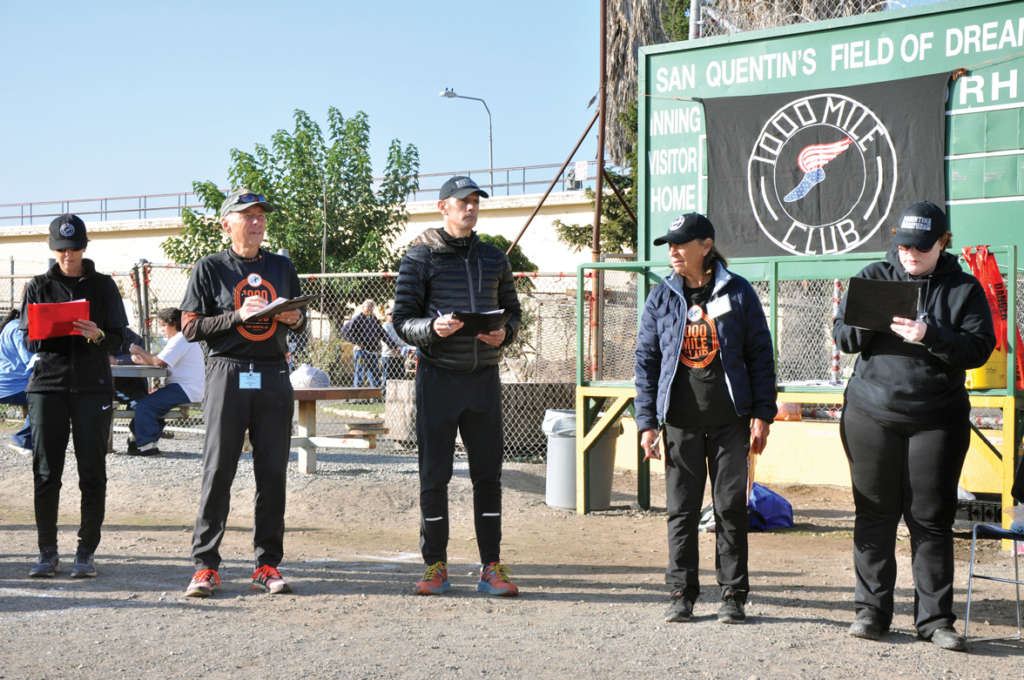
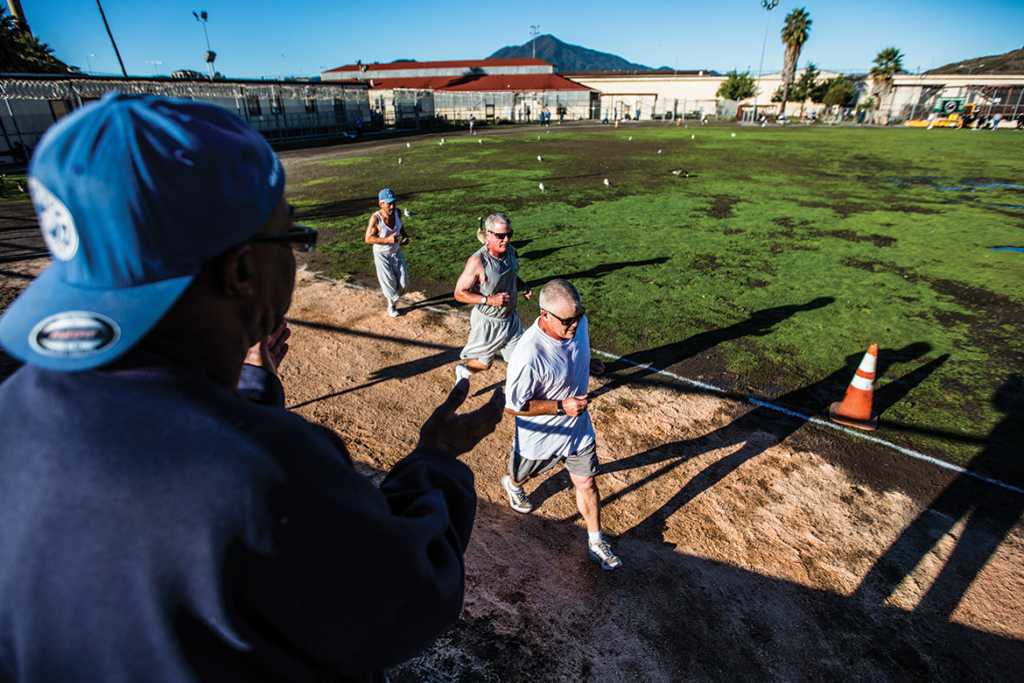
Thompson counting laps for San Quentin club runners