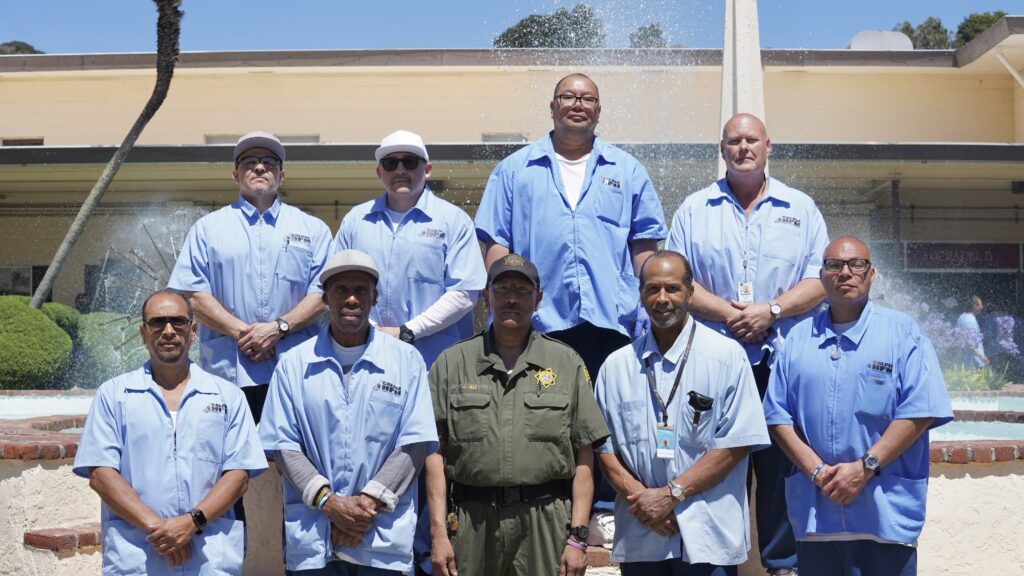
A “strike team” of eight to ten San Quentin residents, trained in biohazard cleanup, stands ready to respond to a biohazard event at all hours. The California PIA Healthcare Facilities Maintenance (HFM) employs and oversees the team.
“When people overdose using the synthetic drug spice, they sometimes defecate on themselves,” said resident HFM worker Luis Orosco. “On the fourth floor [Central Health Service Building], the strike team gears up to clean up who knows what.”
The team helps medical staff with biohazards and general sanitation, and is responsible for all housekeeping duties inside the hospital and other tasks throughout the institution.
The work includes cleaning up infectious waste, such as feces, urine, blood, and any other bodily fluids. The team also disposes of soiled linen in accordance with medical waste management and health and safety regulations.
North Block resident and HFM worker Gordon Kimbrough leads the team. He assists medical patients treated and housed in San Quentin’s health services.
Kimbrough said the work has taught him about forgiveness and change and made him less judgmental about people.
“Working on the fourth floor of the hospital, where cancer patients are housed, has humbled me. To work here, this is how I make my living amends being a helping hand,” Kimbrough said. “I don’t do this for the money. I’m sincere … about what I do.”
Recommendations call for two workers in each housing unit, supervised by a health-management staff member, and on-call 24-hours-per-day. Even after evening lock-up, when there is no resident movement throughout the prison, the strike team stands ready to respond to medical emergencies.
“The other night my crew and I responded to two calls in the middle of the night at 2 a.m.,” said Kimbrough.
The skills developed by HFM workers are transferable to employment on the outside. Their certification requires extensive training consisting of more than 2,000 hours of academic studies, assessment tests, and hands-on work.
Resident Billy Altes said that HFM is the only job that pays time-and-a-half like jobs on the outside. His starting pay was 35 cents per hour, now increased to 45 cents.
“This job gives me a sense of normalcy. I have a reason to get up in the morning and I’m tired enough to go to sleep at night,” said Altes.
Resident Kai Brandon said that mopping floors and cleaning toilets may seem disgusting, but it gives him structured work while serving time.
“People may look down on the job, but it’s really contributing to keep San Quentin running the proper way. If things are not clean, the hospital could not run properly,” Brandon said.