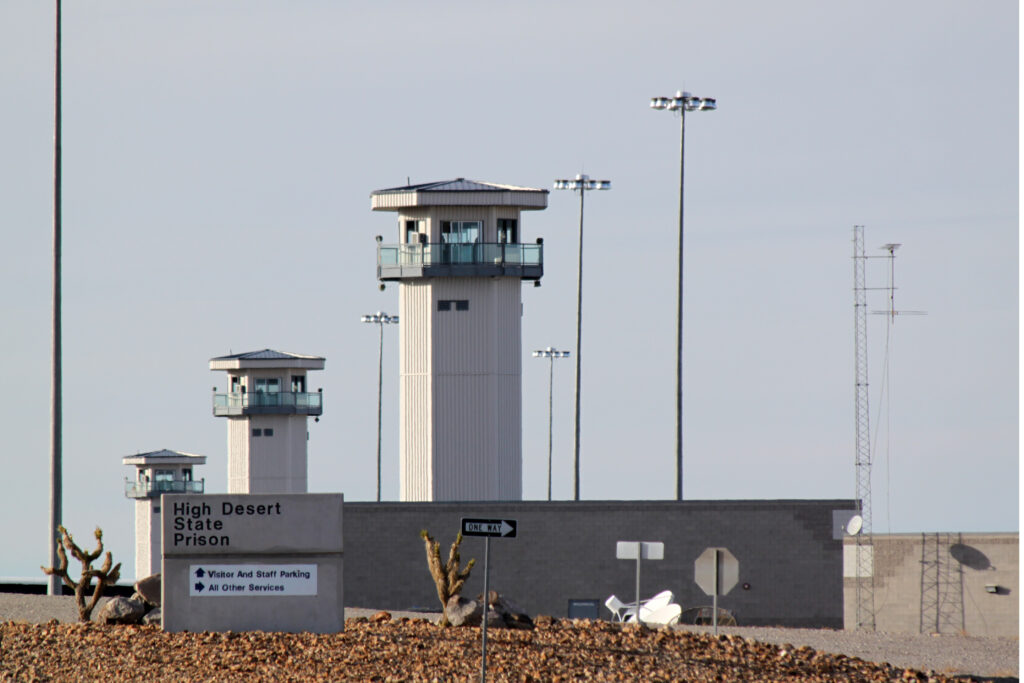
Whether one believed in climate change or not, excessive heat in prisons has remained a reality that few incarcerated persons would regard with skepticism. The report “Audit of the California Department of Corrections and Rehabilitation’s Management of Temperature Conditions Within California’s Prisons” by the Office of the Inspector General made clear that extreme temperatures have created risks that could easily turn lethal.
The OIG inspected practices of dealing with heat at High Desert State Prison, California State Prison in Corcoran, and at California State Prison in Los Angeles County. The review considered indoor temperature logs, examined methods used for managing extreme heat, and evaluated the capacity to maintain reasonable temperatures under conditions set forth by a court-mandated “heat plan.” The results exposed several deficiencies.
“Our audit found that custody staff at the three prisons we reviewed did not consistently complete heat logs as required by the heat plan. When prison staff are not regularly monitoring temperatures in the housing units, they may not take precautionary measures when there is excessive heat, which jeopardizes the health and safety of the incarcerated population,” said a prefacing letter to Jeffrey Macomber, secretary of the CDCR.
The litigation of Coleman v. Newsom brought about a heat management plan, or for short, a “heat plan.” Its implementation fell to California Correctional Health Care Services.
The report said, “Individuals who take mental health medications are at increased risk of developing adverse effects including life-threatening conditions when exposed to excessive heat. Extreme heat has been linked to an increased likelihood of death and violence among the incarcerated population. Studies have linked higher temperatures to an increased prevalence of aggression, self-harm, and suicide attempts.”
Since its start, the heat plan required daily monitoring and documenting of temperatures in housing units to determine whether incarcerated persons would need protective measures, especially if they took medications that caused heat sensitivity. The report said the heat plan, typically in effect from May 1 to October 31 (year-round at some facilities), has three stages. Stage I would start if the outside temperature would rise to 90°F; Stage II would apply if the indoor temperature would reach 90°F; and Stage III would kick in if any inside area (even the kitchen) would rise to 95°F.
The OIG reported sparsely on heating and cooling equipment, stating, “Prisons do not consistently perform preventive maintenance on their heating and cooling systems.” The report blamed “Budget challenges and inconsistent completion of preventive maintenance” for inhibiting the ability to maintain outdated heating and cooling equipment.
The OIG interviewed a teacher at High Desert who complained about classroom temperatures above 86°F. The teacher suffered a heat-related illness. According to the report, “If prisons were required to comply with Cal/OSHA standards, the working conditions described above would be considered unacceptable.”
The report’s recommendations said to “prioritize replacing heating and cooling equipment that has outlived its useful life and is no longer effective,” and to “establish statewide policies and procedures for plant operations staff to effectively track and complete preventive maintenance on heating and cooling equipment ….”
The OIG briefly looked at the opposite end of thermometers. Excessively cold temperatures presented a problem at some facilities. The report said “five prisons in California experienced 100 or more days of temperatures below 40°F in 2024” and in “January 2024, Corcoran received 36 complaints about cold temperatures,” which fell as low as 30°F during the winter of 2024. A resident at Corcoran told the OIG “even inside in his cell, he can see his breath during winter months.”
“Not all prisons offer sufficient clothing for incarcerated people to protect themselves from the cold,” the report continued, and “denim jackets are thin and do not provide sufficient warmth for cold temperatures.” Many facilities did not offer the lined, thicker jacket the CDCR has available — “the department leaves this decision to the discretion of each prison.”
The CDCR “received fewer complaints concerning the cold temperatures” in facilities that offered the warmer jacket and the OIG issued the recommendation that “The department should consider providing the incarcerated population the option of receiving a thicker jacket to protect individuals during cold weather.”
CDCR Secretary Macomber responded to the OIG in a letter that concluded the report. “The Department is committed to maintaining safe and humane conditions for all individuals in our custody and all staff in the institutions and acknowledges the oversight in this area is important. CDCR recognizes the critical need to advance efforts to manage indoor temperatures across housing units.”
In the letter, Macomber discussed “a three-year pilot program to explore effective strategies for managing indoor temperatures across its institutions” that would “involve installing improved cooling and insulation options on two housing units at Kern Valley State Prison, California State Prison Los Angeles County, and the Central California Women’s Facility.”
The pilot “intends to map out future options using all available means to address indoor temperatures,” with “broader solutions for facilities where upgrades may be necessary.” Macomber referenced funding and fiscal constraints, but also pointed to several recent improvements of cooling systems.
“CDCR is studying the complexity of the problem and creating new solutions,” wrote the secretary.