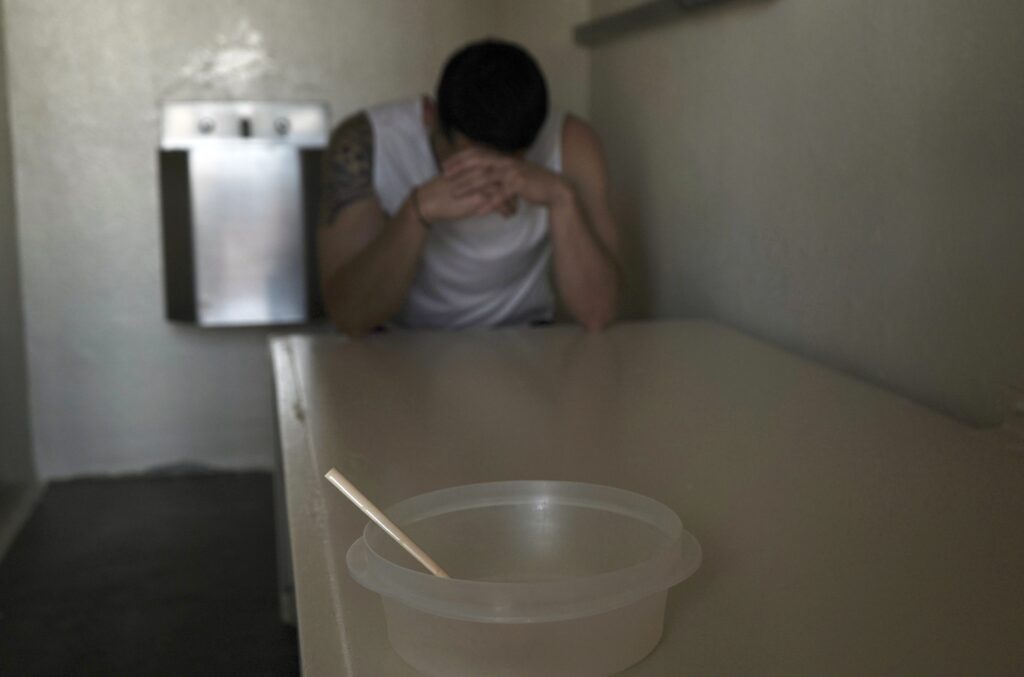
Incarcerated people at San Quentin Rehabilitation Center respond to a newly proposed rule change that punishes some incarcerated persons, eliminating their ability to purchase food items.
The new regulations would affect people who are assigned to privilege groups C and D, disallowing them from purchasing food items from the prison’s commissary.
C-status is a temporary disciplinary assignment for General Population residents. D-status is for those placed in solitary confinement pending an investigation, according to Operational Procedures, Title 15 of the California Code of Regulations.
The new restrictions would only allow the purchase of personal care and hygiene items, according to CDCR’s Notice of Proposed Regulations change.
“If they (CDCR) take away the opportunity and/or the ability to purchase food, that would be catastrophic,” said SQ resident Giovanni Gladden, 60, incarcerated for 22 years, who has been assigned to solitary confinement twice.
Gladden stated that CDCR already limits privilege groups C and D to spending $75 in the prison’s commissary, compared to the $300 for the rest of the population. He added that the ideology of restricting people from purchasing food in order to deter violent behavior is absurd.
“Science has shown an incarcerated person who eats well, behaves well,” Gladden said.
In 2025 CDCR modified the program status of its medium and maximum security facilities in response to violence targeting staff and incarcerated people. At that time, communication on residents’ tablets and in-person visiting was suspended, according to FOX26 News.
The new regulations would also suspend messaging, phone calls, and entertainment services on tablets as means of punishment. However, people would be able to engage in self-help and academic programs while assigned to privilege groups C and D, according to CDCR.
“It’s amazing how California lawmakers and CDCR are on two different pages, with Governor Gavin Newsom’s signing of Senate Bill 551 that normalizes life in prison,” Gladden said.
SQ resident Jessie Milo, 46, spent a total of 7 years in solitary confinement at various California prisons and County jails.
He was transferred to SQ from a Southern California prison where he was housed for six months. Milo stated that while in solitary confinement, his communications were restricted and, as a result, relationships were destroyed. It has been three years, and the relationships have not recovered, Milo said.
He stated that making his own meals while he was in solitary confinement was as important a part of his self-care as a shower and a phone call.
“It’s ironic that taking away food was done as a response to increased violence,” Milo said. “Hunger is not gonna calm anyone.”
Resident Milo stated that suicidal ideation exists in solitary confinement. He added that the current correctional nutritional requirements lack protein; the food is high in carbohydrates, which increase blood sugar levels.
A sign of self-harm is when a person stops eating. If CDCR wants to take away food options, it may induce food deprivation, Milo said.
“It will make it difficult to maintain a supplemental nutritional diet, because there would be no alternative to the crap [poor quality of food] that they are currently giving us, compared to the crap they gave us in the past,” Gladden said.
SQ resident Kevin Fuqua, 60, incarcerated for 39 years, has been assigned to solitary confinement on two different occasions.
He stated that CDCR is not being rational when they are proposing punishment that has nothing to do with rehabilitation.
“When a person is restricted from food, you are treating them like children. It’s like a parent punishing their child for their bad behavior,” Fuqua said.