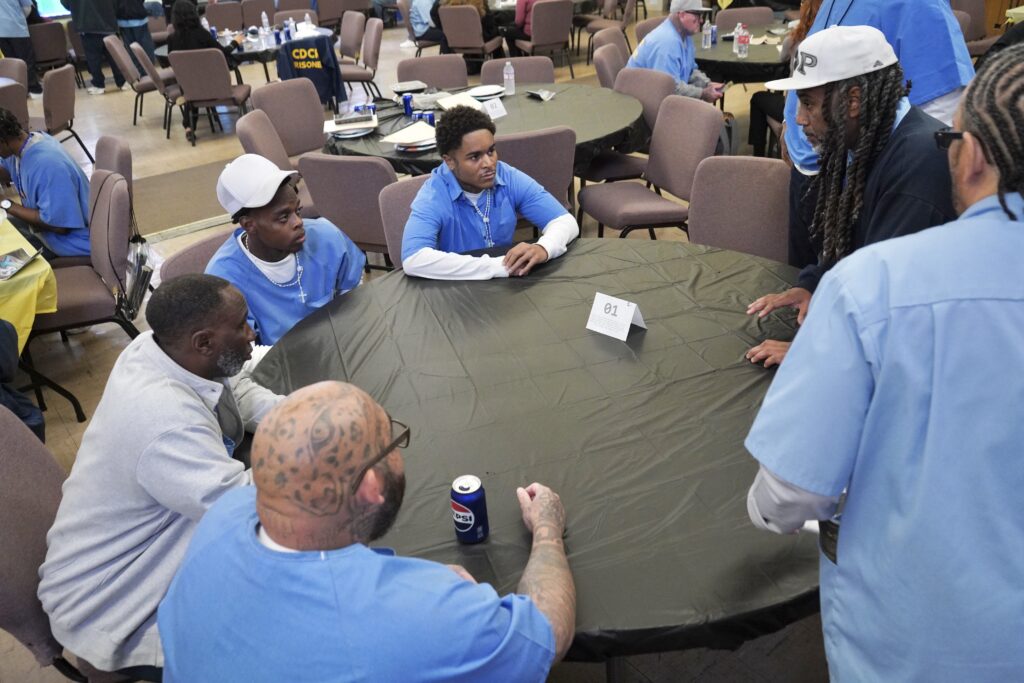
A mentor-mentee relationship is built on guidance, learning, and trust. When both sides communicate honestly and respect each other, the relationship becomes a powerful tool for development.
California’s Department of Corrections and Rehabilitation has made strides to help support a peer-to-peer approach to effecting change in youth offenders. However, more progress and support are still needed for the mentors who have invested a lot of their free time and energy to overcome the roadblocks and space issues in San Quentin.
The Youth Offender program (YOP) started when the state of California passed legislation with the goal of providing offenders under the age of 26 with the tools, guidance, and community necessary to change the course of their lives. SQ’s YOP mentors have played a big role in the growth, support, and understanding of youth offenders participating in the program.
“The importance of having somebody as a role model that you can look up to and that is invested into your well-being is overlooked,” SQ resident mentee Diego Nava said.
A mentor is usually someone with more experience who can offer advice, share knowledge, and help a mentee navigate challenges. Instead of just giving orders, a good mentor listens, supports and encourages growth. They use their own experiences, successes, and mistakes to help mentees avoid common pitfalls and built confidence in their abilities.
One of SQ’s YOP mentors is S. Brown. He has been incarcerated for nearly eight years on his fifth term. In addition to mentoring, Brown is the YOP education coordinator. He oversees and coordinates group schedules, participation, and facilitation.
“Being a mentor is special. I had nobody over me giving me good advice when I was younger in prison,” Brown said. “I want to help these men to be productive citizens by providing them with suggestions, advice, and guidance.”
Brown has been a YOP mentor for three years. In that time he has been assigned to more than a dozen mentees and has a personal relationship with all of them.
Unfortunately, not all the mentees buy in to the rehabilitative model, but this does not dissuade the mentors. Brown said he focuses on active and reflective listening. He helps mentees understand their self-worth and discover their authentic selves.
A mentee’s role is just as important. A strong mentee is open to feedback, willing to learn, and ready to ask questions. They take responsibility for their progress and show appreciation for a mentor’s time and insight.
“For me to change, I thought about my values and what I want out of life,” Diego Nava said.
Nava is 24 years old with a 32-year-to-life sentence. He said his social, environmental, and economic conditions led to a path of criminality that was familiar. Several of his family members were gang members and many of his friendships evolved into gangs. Nava grew up in an abusive household, struggled with low self-esteem, feelings of insecurity, and power and control issues.
“Coming to prison, there were several individuals who were bad influences. But it was the mentors in the YOP program that modeled positive change and helped me stay optimistic,” Nava said.
In eighth grade Nava was kicked out of school. “It was my parents who told me I did not need to attend school,” he said, sharing that having a positive role model could have changed his trajectory to finish his education.
“When someone who is invested in you shares that made the same mistakes, then I can learn to overcome my struggles.”
Nava said the mentors motivated him to attend self-help groups such as Criminals and Gang Members Anonymous, Financial Literacy, and Anger Management, and to participate in events like YOP dodge ball, kickball, and movie night.
“If I need to talk or go to them, they encourage me and open my eyes even more,” Nava said.
Mentors and mentees both grow through the shared experience — one by teaching, the other by learning — and the connection can last well beyond the formal mentoring period.
“Mentorship can light even the darkest spaces. True leadership is measured not by what we achieve in ourselves, but what we inspire in others,” resident mentor Larry “Ali” Deminter said.
On November 25, San Quentin’s Youth Offender Program held their inaugural CLUB (Changing Live through Understanding Beliefs) graduation. Thirty residents were recognized for their perseverance, courage, and transformation.
Each individual completed the 52-week multi-curriculum courses centered on denial, self-management, thinking errors, healthy relationships, boundaries, anger management, cycle of addiction, and financial planning.
“YOP mentors are a source of support that I can look for guidance because they walked this path already,” said resident youth offender Omar Suarez. “They can help me with things going on in my life within these walls.”
“Our mentors took the time to invest in us. I learned to take help, even when I don’t want it,” Alex Mendez said. “They are much more than friends, they are someone to depend on for support and accountability.”