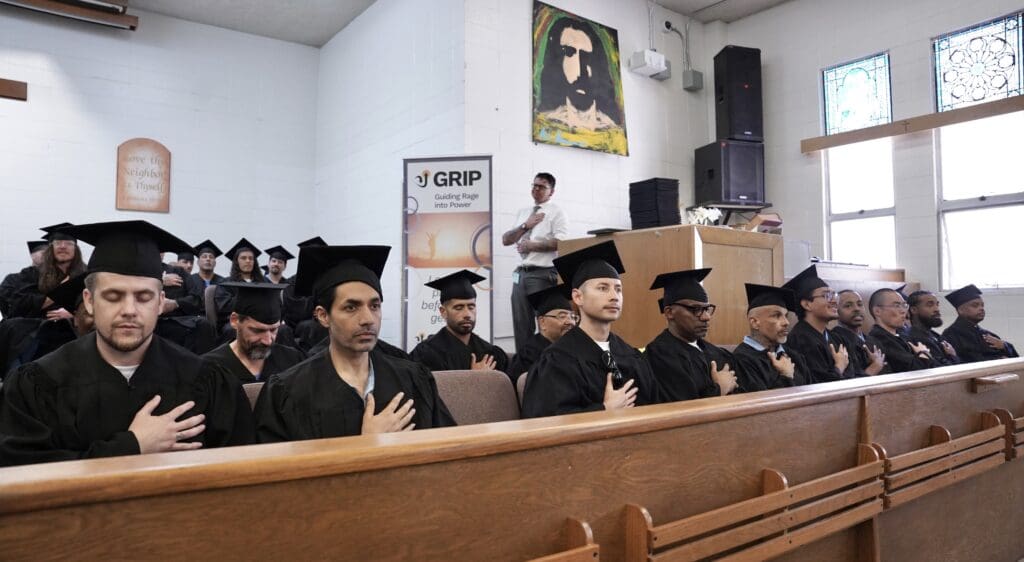
Caps, gowns, and smiling faces were on full display at a recent GRIP graduation.
With over 13 cycles of graduates to date, GRIP, which stands for Guiding Rage into Power, celebrated the remarkable capacity for human beings to change when they choose growth over excuses and accountability over denial, according to Z. Hudson, a once incarcerated person.
“I used to be here. I used to sit right in those seats. I know what it’s like to feel shame and regret,” Hudson said.
GRIP was established by Jacques Verduin after more than 25 years of learning from educators who had long been teaching rehabilitation programs inside California prison. GRIP teaches individuals how to manage their anger through emotional intelligence components. Acronyms are used to help persons become aware when they are triggered. Another focus is on healing from trauma, based on Verduin’s book “Leaving Prison Before You Get Out.”
In 2011, GRIP began as an in-person group for violent offenders at was then called San Quentin State Prison in California.
“GRIP has graduated 948 participants with a 12% recidivism rate, saving the taxpayers approximately $664 million,” Hudson recalled with a sense of pride.
Hudson said GRIP is more than a program; it is more of a movement toward rehabilitation.
The names of tribes 833, 753, and 599 all have a symbolic meaning. Each graduating tribe name represents the total number of years served by each individual in their tribe.
Ty Warren, a student speaker and graduate of tribe 753, gave a speech.
“753 puts the value of our time [length sentences] at the forefront of our minds,” Warren said. He said viewing himself in a reflective perspective helped him to see he was not the worst moment in his life. “We’re graduating GRIP because we see clearly as we guide our rage into power.”
Eliazar Guerra, of graduating tribe 599, spoke in depth about healing his trauma through GRIP and how being freed of that trauma now becomes an obligation to help others do the same. Speaking to the family members in attendance, Guerra spoke about peace and gratitude.
“For every loved one here, there’s a special place for you in our circle,” Guerra said.
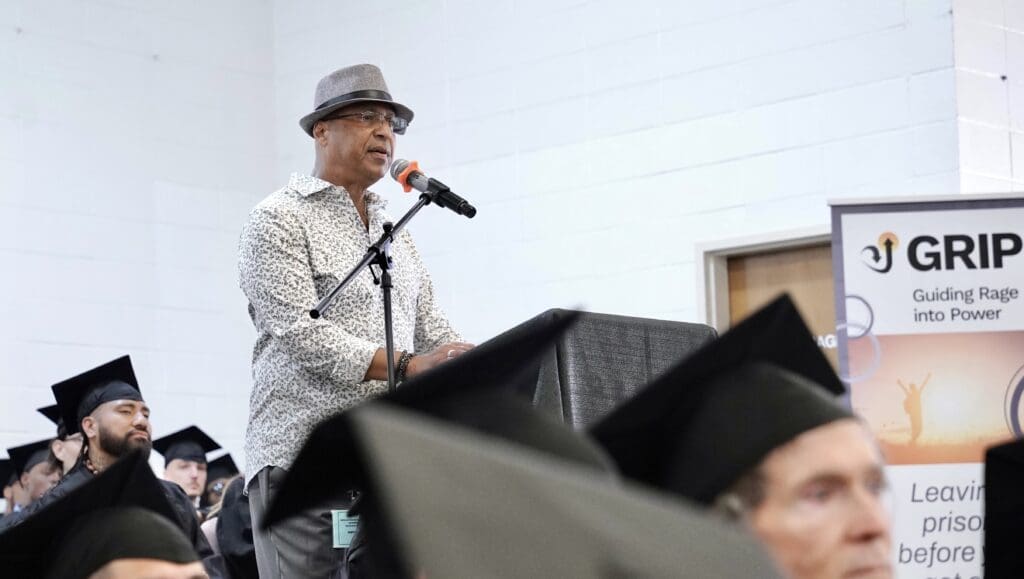
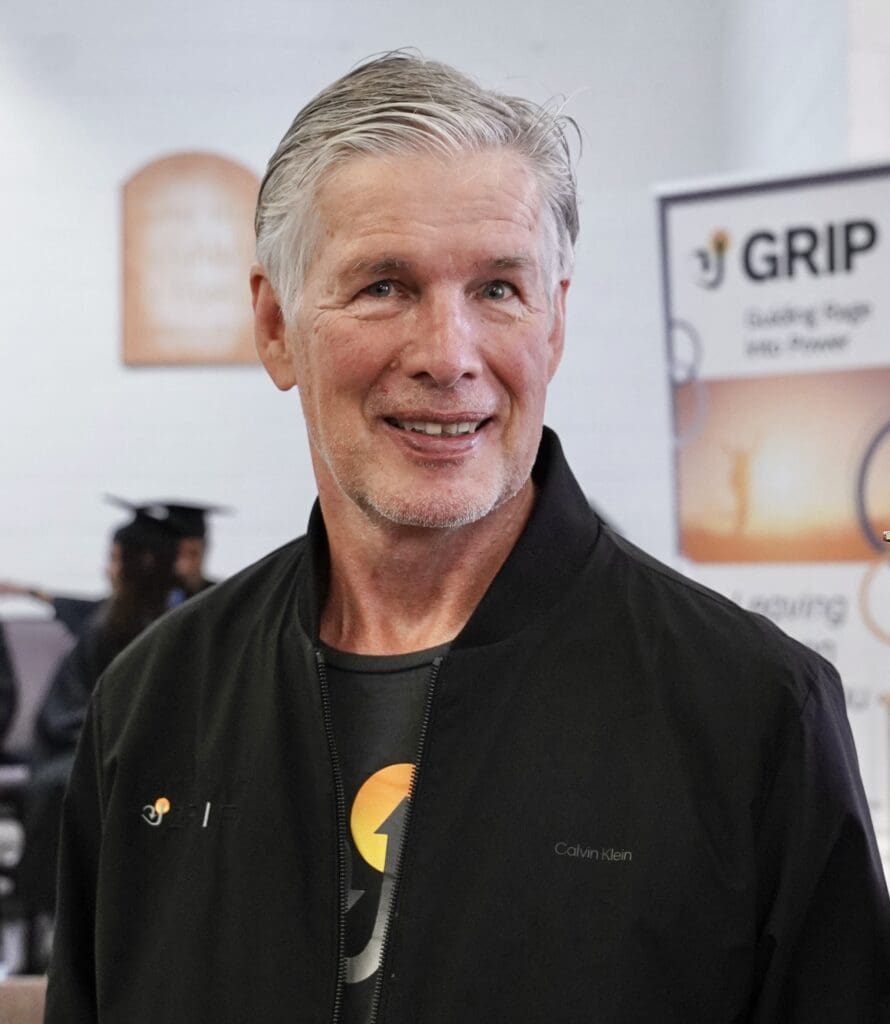
SQ Warden Chance Andes also spoke to the family members of the incarcerated, telling them they should be very proud of them and how proud of them he was as well.
“Y’all make me want to get a tribe and scream,” Andes said.
As the speeches were replaced by hand shakes and certificates, graduates of tribes 599, 753, and 833 made their way down the aisle.
Some were creative on their way to getting their coveted GRIP certificate. Donnell Pimpton of graduating tribe 753 did the griddy, while others opted for shout-outs to their respective tribes, including Segi, a puppy in training, who yelped in excitement as Randy Thompson, his trainer, was called to receive his certificate.
A few inside facilitators became certified including Max Robinson who, earlier on, opened the graduation with a brief check-in and a meditation breathing exercise.
“One hand over your heart, one hand over your stomach. Now take a deep breath. This is how we connect. We tend to pay attention to how different we are, but this is how we connect,” Robinson told the audience.
Families got a chance to see their incarcerated loved ones accomplish a goal set 52 weeks ago. “My wife (Jazmine Hayes) and mother in-law (Ameerah Mohamed) came to support me and watched me graduate all the way from Minnesota,” said tribe 599’s Alfredo Hayes.
“I felt accomplished and loved,” Hayes continued.
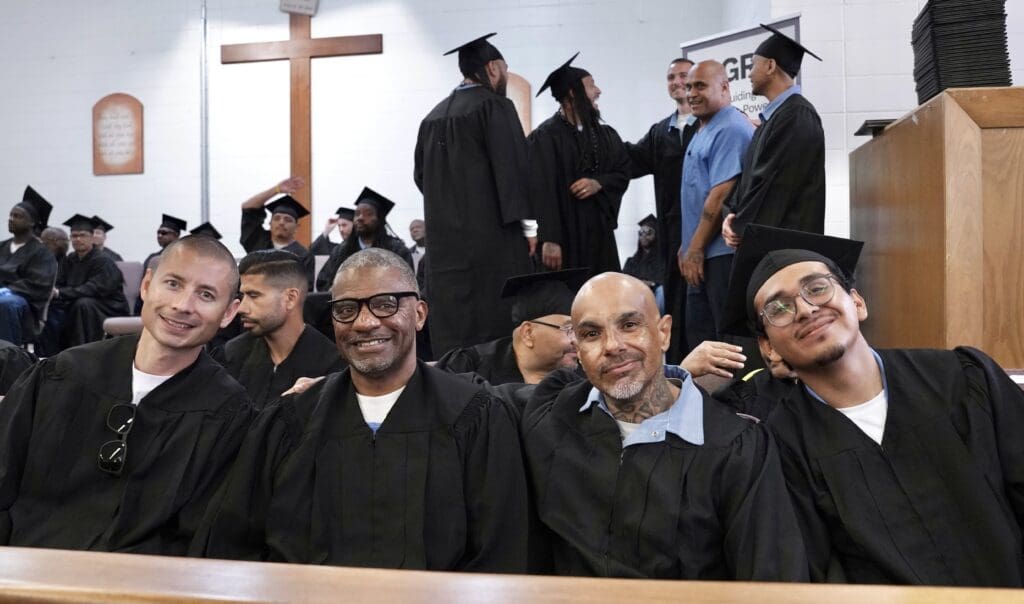
Caps, gowns, and warm embraces from proud family members were on full display as the graduation came to a close.
In front of family members and friends, all tribes took an oath to become not just any peace keeper, but a GRIP peacekeeper. GRIP graduates made the oath with the signing of a contract pledging to abstain from violence, hold integrity, challenge violence and defend others, to name a few.
“You GRIP graduates are celebrated in the field of emotional intelligence. You have done the hard work of self examination, transformation, and are the living proof that redemption is real and hope is not naive,” said Hudson.