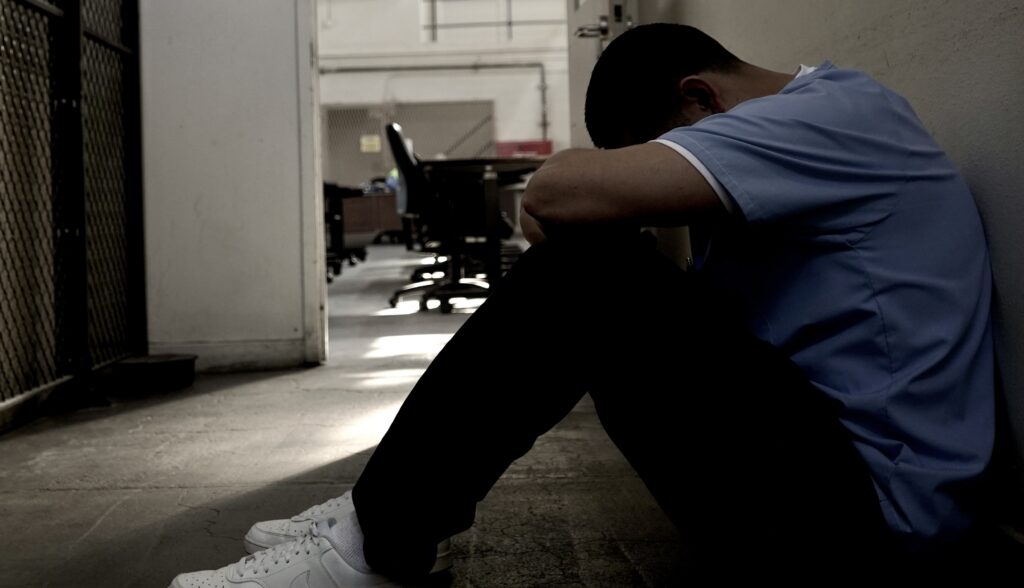
San Quentin residents share insight and advice on dealing with the loss of family and loved ones while incarcerated.
In life, one fact stands undefeated throughout time: We will all experience the pain and heartache that often accompanies the loss of friends, family, and loved ones. How we process loss can be a determining factor in how we move forward after it has happened.
That healing journey can be an arduous one to undergo while incarcerated because distance and separation can have negative impacts on the grieving process.
“It’s hard being in prison when my son’s mother died because I couldn’t go to the funeral. I wasn’t able to connect with the family, and so I wasn’t able to grieve properly,” said San Quentin resident Tamar Thompson.
Thompson lost his girlfriend, Melinda, in February 2025. Melinda passed away from a fentanyl overdose in front of their six-year-old son. Thompson said he received the news through legal mail, with a letter from Child Protective Services notifying him of Melinda’s passing and that his son had been placed in the custody of CPS because of it.
“It was heartbreaking. We had a special bond because she gave me my first child. I just felt loss and distraught. It felt like I didn’t have anything to live for,” said Thompson.
After receiving the news, Thompson said he was placed on suicide watch after a failed suicide attempt. He would later be placed in the Enhanced Outpatient Program, a mental health–focused program that offers direct and consistent care to incarcerated people dealing with trauma and other mental and emotional issues.
Thompson said his placement in EOP has been a literal lifesaver.
“I’ve been able to start healing because I am able to talk to my therapist and process what I’ve been through. I would’ve been lost without EOP,” said Thompson.
To help better understand and cope with the loss of a friend or loved one, some residents lean on the support of other residents.
Mourning Our Losses is a unique group at San Quentin that offers a support network for those dealing with grief. The group was born in 2021 from the ashes of the Covid-19 pandemic. More men died from the virus at San Quentin than at any other prison in the state, and residents reeling from all the death at the facility wanted to create a healthy way to process and mourn those whom they lost.
“Usually when someone dies, we mourn through violence or other negative behavior. This program provides us a healthy outlet to mourn in a positive manner,” said Arthur Jackson, a founding member of the group.
Relying on their faith also provides some residents the solace and encouragement often needed during the healing journey.
San Quentin resident Amos Carter, Jr. said his Christian faith teaches him that a person is never really lost, and that one day he will see them again. His belief helped him deal with the loss of one of his good friends, Shinti, who passed away last February after a battle with cancer.
“My faith helps me understand that my focus should be on our interaction and the moments we shared together,” said Carter, Jr.
Mark ‘Seishin’ Cádiz is a resident at San Quentin and serves as a priest for the Buddhist community at the facility. Cádiz’s practice of Buddhism helps shape his views on life and death, allowing him to create a positive approach to both.
“Do not waste time chasing the future or wallowing in the past. Understand that we all get old, fall apart, and pass away. It applies to everyone,” said Cádiz. “What I do right now in this moment is what matters.
Cádiz said Buddhism teaches that attachment creates suffering, so we must enjoy what we have while we have it because everything comes to an end.
“How many times have we heard someone say ‘I wish I would’ve said to them I loved them?’ We must do it while people are still here,” said Cádiz.
Dealing with the death of loved ones can often be a sad and difficult experience, especially while separated from those loved ones while in prison. And yet, residents continuously discover ways to persevere.
“Talk to people so you can take your mind off of what happened. Have a good group of people around you who can help you process. I go to my mom and my grandma to help me keep myself together, so I can get back out there for my son. I listen to a lot of music too. It feeds my soul and helps me relax and deal with my depression and anxiety,” said Thompson.