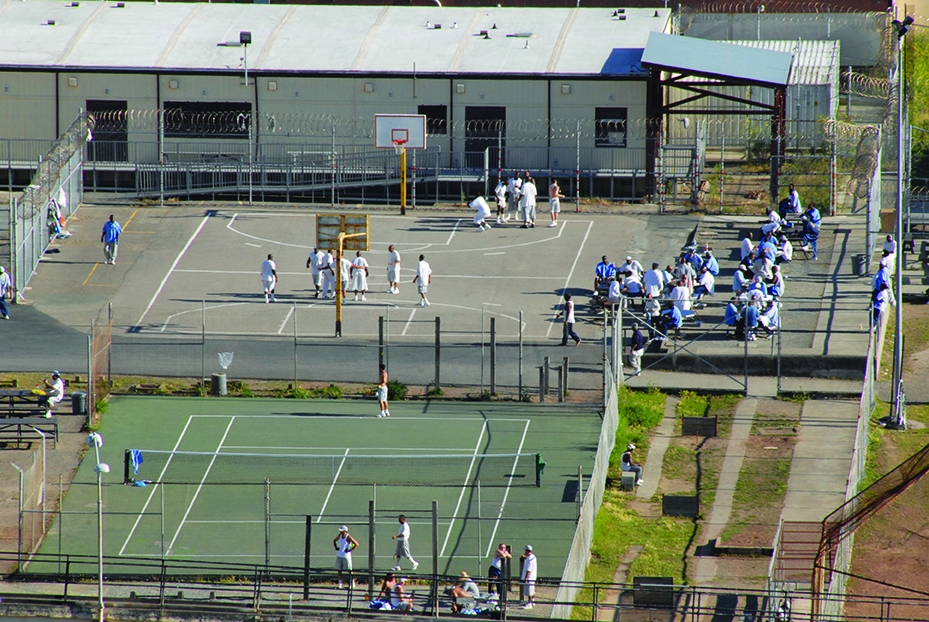
Is carceral segregation as American as baseball and apple pie, or is it a method of prison politics in the wake of survival?
Dartmoor is a British prison that was built in 1806-1809 to hold prisoners of war during the 1812 Napoleonic wars. The prisoners were housed in five two-story prison blocks at Dartmoor, and each floor housed 500 men. The prison was originally built to house 5,000 people, according to the Dartmoor Prison Museum.
At one time Dartmoor housed 6,500 Black and White American POWs, but violence between the races was untenable. The prisoners claimed they could not live amongst each other, stated American History Professor Nicholas Guyatt of Cambridge University in England.
The prisoners made a request to the British authorities to be housed in separate quarters. The request was granted, marking Dartmoor as the first racially segregated prison in American history — even if not on American soil — stated Guyatt.
More than 200 years after the Napoleonic wars, San Quentin Rehabilitation Center took on the lead role of rehabilitation in California’s correctional system. Here, racial segregation still exists.
In the early morning when SQ residents are released from their cells, hundreds of men walk down 46 steps to the prison’s exercise yard. Once residents get to the bottom of the stairwell, they face the decision: to segregate or integrate?
The younger residents seem most prone to intermingling with different races, while the older crowd stay within their own. The most visibly segregated areas on the prison’s yard are made up of Black and Hispanic residents.
“In prison I feel that people often times self-segregate in order to fit in and not draw unwanted attention to themselves,” said SQ resident Desmond McKenzie, who has been incarcerated for more than 25 years.
McKenzie added that segregation has become “a reflex” in the American prison system.
In early 2025, SQ replaced its exercise equipment on the Lower Yard, which was already in a racially segregated area. The new equipment was placed in the same area where the old equipment previously existed, leaving no options to de-segregate.
The SQ dining rooms are divided into three distinct areas of Black, White, and Hispanic seating. In the West Block dining hall, the majority of residents eat their meals with their own race, while smaller groups dine with friends of different races.
Resident Paul Hultman arrived at SQ in 2025. Upon entering the West Block dining hall, he sat in an area allocated for a different race, and soon received “dirty looks.”
“A belligerent-looking guy of approximately my age quickly sat at the table across from me,” Hultman said. “He silently maintained a gaze of extreme disapproval, scowling yet saying nothing.” The man didn’t say anything, but Hultman understood.
In the changing demographics of SQ, the social norms are shifting from segregation to integration. People in SQ have found commonalities in sports, self-help, education, and music.
“Music heals the savage beast,” said SQ resident Amos Carter. “I use music to expose myself to other cultures, and to expose other cultures to mine.”
Carter said that while it’s difficult to convince people to give up segregation, finding common ground is easier than most people think.
SQ resident Raul Aguayo said he has experienced pushback from his Hispanic community for teaching guitar in English. He stated that he has been demonized and called “worthless, no-good, and a traitor to his people.”
“Music can be the avenue through which we can all view each other in a brand-new way without biases, judgments, and or delineation,” Aguayo said.
Judy King, a math preparatory teacher for Mount Tamalpais College, has been an educator for 26 years. In the past, she says her students would self-segregate into groups of Black, White, and Hispanic.
“The social problem of segregation is that people have been segregating since they were kids, by staying within their local communities,” King said.