
The California Board of Parole Hearings denied an aggregate of 9,886 years to incarcerated persons in 2025, according to a San Quentin News analysis and interpretation of Board of Parole Hearings data extracted from the five most recent issues of the quarterly California Lifer Newsletter.
This new quantitative perspective of the carceral landscape came from the San Quentin News metric “Aggregate Years Denied,” which multiplied the number of denials by their duration. As an example, five 10-year denials would produce a number of 50 Aggregate Years Denied, or 50 AYD. The CLN showed data for 4,589 hearings, but did not include one-year denials given to parole violators, which amounted to 139 for the year. Added together, the BPH denied a total of 10,025 years.
“Ten thousand years is a staggering number, it’s outrageous, it’s a crazy number. I’ve never looked at board denials in the aggregate before, but I am not surprised because I know that board grants were really low in ’25,” said Michael Beaudette, 66, a San Quentin resident with a board hearing in 2032.
Beaudette said, “We focus a lot on grant rates, but we should also take a much closer look at denials, especially since the board gives us so many of them.” For Beaudette, the AYD metric stood as a bellwether. He said the AYD number looked perfectly round, easy to understand, and easy to remember and so should stand as the number the board should make an effort to beat in the future.
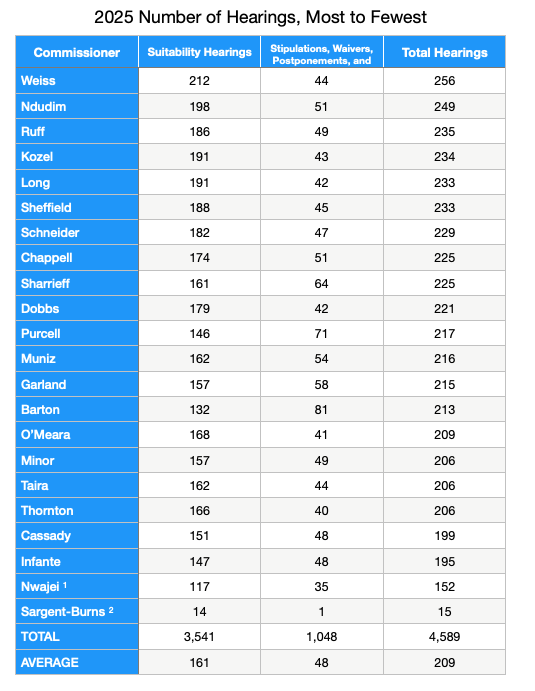


Why did the numbers turn out so poorly? The CLN said BPH leadership agreed that the well-known issue of incarcerated persons gaming the system to avoid paying restitution must take the blame for the cloud. That cloud, though, had a silver lining: “The biggest impact of this issue is behind us now and we will begin seeing fewer denials based on this issue going forward … Or, as we told the board at a recent executive meeting, ‘Commissioners, this issue (restitution) is a dead horse. Stop beating it.’”
The CLN added a message for incarcerated persons engaged in restitution avoidance: “[I]f you are still playing that game, STOP it now.”
The San Quentin News analysis separated the 4,589 total hearings into 3,541 “suitability hearings” that involved only grants and denials, and 1,048 “other hearings” that involved stipulations, waivers, postponements, and continuances. The CLN data occasionally showed some minor differences from the data printed from the BPH website, but these differences did not significantly affect the outcome of the analysis.The number for one-year denials came from a San Quentin News analysis of printouts from data available at the BPH website.
Data published on the BPH website only listed a bare minimum of information. More data would have added transparency to board decisions and could have explained, for example, whether commissioners with low grant rates conducted hearings more at Level IV facilities or at rural facilities without much programming.
Beaudette said he looked forward to better numbers in the future. “I would like to reunite with my family, and I can be an asset to fight recidivism. By the time I go to board, I hope the 10,000 number is a lot lower,” he said.
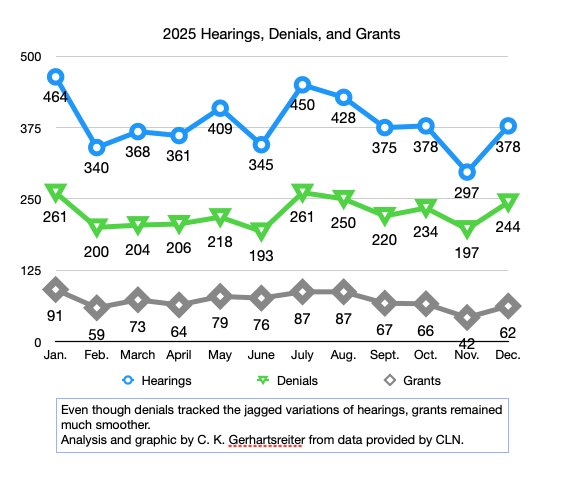
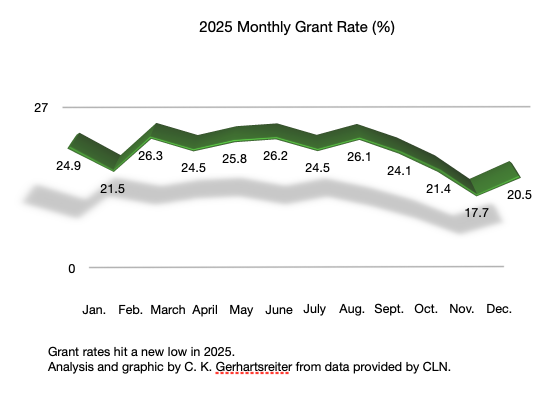
Junta de Audiencias de Libertad Condicional de California (ALC) denegó un total acumulado de 9.886 años a personas encarceladas en 2025, según un análisis e interpretación de San Quentin News (Noticias de San Quentin) sobre los datos de la Junta, extraídos de las cinco ediciones más recientes del boletín trimestral California Lifer Newsletter (CLN) (Boletín Informativo para reclusos con cadena perpetua en California) .
Esta nueva perspectiva cuantitativa del panorama penitenciaria surgió de la métrica de San Quentin News denominada “Años Acumulados Denegados” (ADD), que multiplicaba el número de denegaciones por su duración. Por ejemplo, cinco denegaciones de 10 años resultan en una cifra de 50 años acumulados denegados (50 ADD).
El CLN presentó datos de 4.589 audiencias, pero no incluyó las denegaciones de un año impuestas a quienes violaron las condiciones de la libertad condicional, las cuales sumaron 139 en el año. Al sumar estas cifras, la ALC denegó un total de 10.025 años.
“Diez mil años es una cifra asombrosa; es indignante, es una cifra descabellada. Nunca antes se había analizado las denegaciones de la Junta de forma acumulada, pero no me sorprende, ya que sé que las concesiones de libertad condicional fueron realmente bajas en 2025”, afirmó Michael Beaudette, de 66 años, residente de San Quentin cuya audiencia ante la Junta está programada para 2032.
Beaudette comentó: “Nos centramos mucho en las tasas de concesión, pero también deberíamos examinar más de cerca las denegaciones, sobre todo porque la Junta dicta muchísimas de ellas”. Para Beaudette, la métrica ADD sirve como indicador clave. Señaló que la cifra ADD resultaba redonda, fácil de entender y de recordar, por lo que debería establecerse como el número que la Junta se esfuerce para superar en el futuro.
¿Por qué los resultados fueron tan negativos? El CLN indicó que la dirección de la ALC coincidió en que el conocido problema de los reclusos que manipulan el sistema para evitar pagar la restitución es el principal responsable de esta situación adversa. Sin embargo, esa situación tenía un lado positivo: “Lo peor de este problema ya ha pasado y, de ahora en adelante, empezaremos a ver menos denegaciones basadas en esta cuestión… O, como dijimos a la junta en una reciente reunión ejecutiva: ‘Comisionados, este asunto (la restitución) es un tema agotador. Dejen de insistir en él’”.
La CLN añadió un mensaje para las personas encarceladas que intentan eludir el pago de la restitución: “[Si todavía están jugando a eso, DEJEN de hacerlo ya”.
El análisis de San Quentin News clasificó el total de 4.589 audiencias en dos grupos: 3.541 “audiencias de idoneidad” (que implicaban únicamente la concesión o denegación de la libertad) y 1.048 “otras audiencias” (que incluían estipulaciones, renuncias, aplazamientos y prórrogas). Los datos de la CLN mostraban ocasionalmente ligeras diferencias respecto a los datos obtenidos del sitio web de la ALC, pero dichas diferencias no afectaron significativamente a los resultados del análisis. La cifra relativa a las denegaciones por un año procedía de un análisis realizado por San Quentin News a partir de impresiones de datos disponibles en el sitio web de la ALC.
Los datos publicados en el sitio web de la ALC ofrecían una información mínima. Disponer de más datos habría aportado transparencia a las decisiones de la junta y podría haber aclarado, por ejemplo, si los comisionados con tasas más bajas de concesión de libertad celebraban más audiencias en centros de Nivel IV o en instalaciones rurales con escasa oferta de programas.
Beaudette expresó su esperanza de ver mejores cifras en el futuro. “Me gustaría reunirme con mi familia y poder contribuir a combatir la reincidencia. Para cuando comparezca ante la junta, espero que esa cifra de diez mil sea mucho menor”, afirmó.
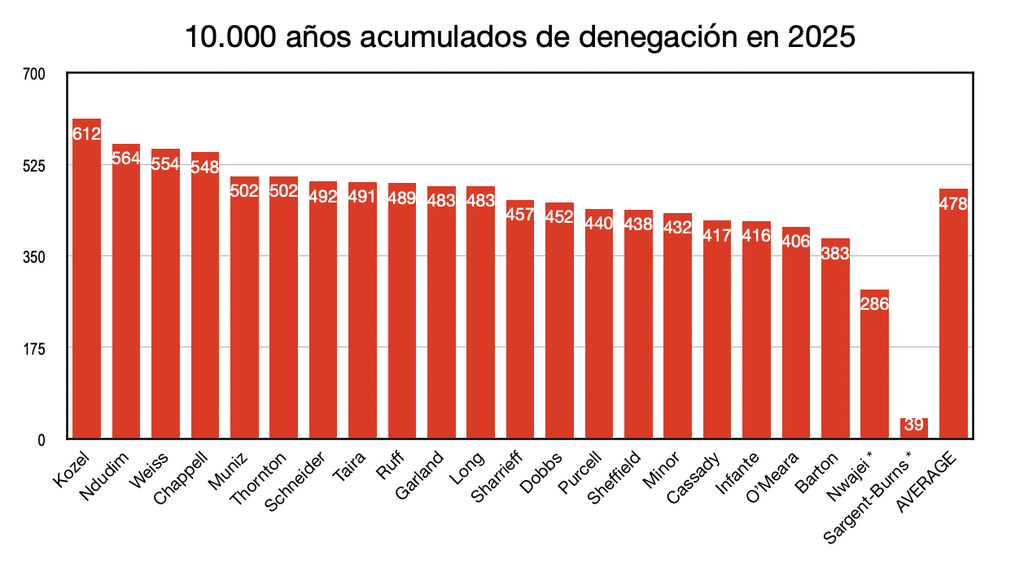
Estas columnas muestran el número de denegaciones de 2025 multiplicado por su duración, según el comisionado principal. Ejemplo: 10 denegaciones de 5 años equivalen a 50 años acumulados de denegación (ADD).
Las decisiones sobre la libertad condicional requieren el acuerdo de dos comisionados, pero este análisis se centra únicamente en el comisionado principal.
* El comisionado Nwajei dejó la ALC en agosto y la comisionada Sargent-Burns se incorporó en diciembre. El cálculo del promedio no incluye sus datos.
No se incluyen los datos de las denegaciones de 1 año; sin embargo, sí se incluyeron, el número total de años de denegación en 2025 que ascendería a 10.025.
Análisis y gráfico realizados por C. K. Gerhartsreiter a partir de datos proporcionados por CLN.