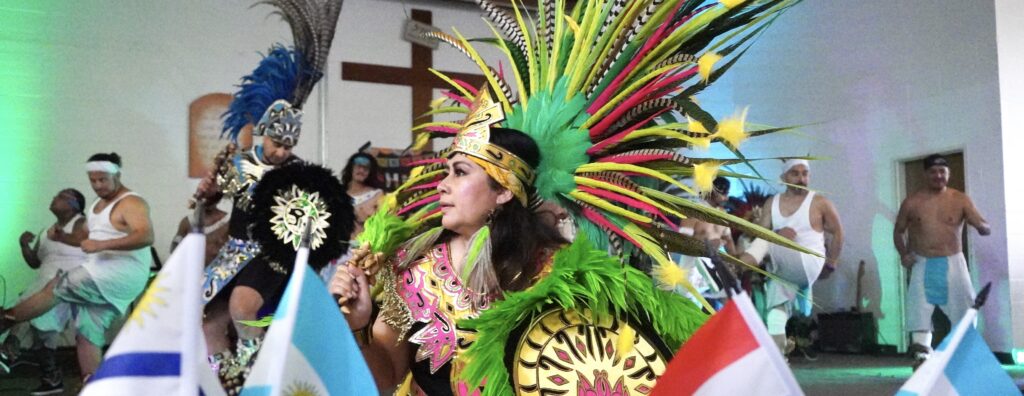
The culture of Aztecan Dance displays spiritual symbolism through dress and physical movement.
The Nahua tribal warriors, called Aztecs, arrived in the valley of Mexico with only their cultural beliefs and idols. They left a heritage that has inspired generations with profound devotion.
The tribal warrior dance appeases the gods and mediates between the deities and the people. The dance’s connection to the earth personifies Aztecan culture, tied to the spiritual world and the cosmos, according to MexicoHistorico.com. It is a form of worship and celebration. The smoke from the copal served to purify the people, according to Professor Kathleen Ann of Indiana University.
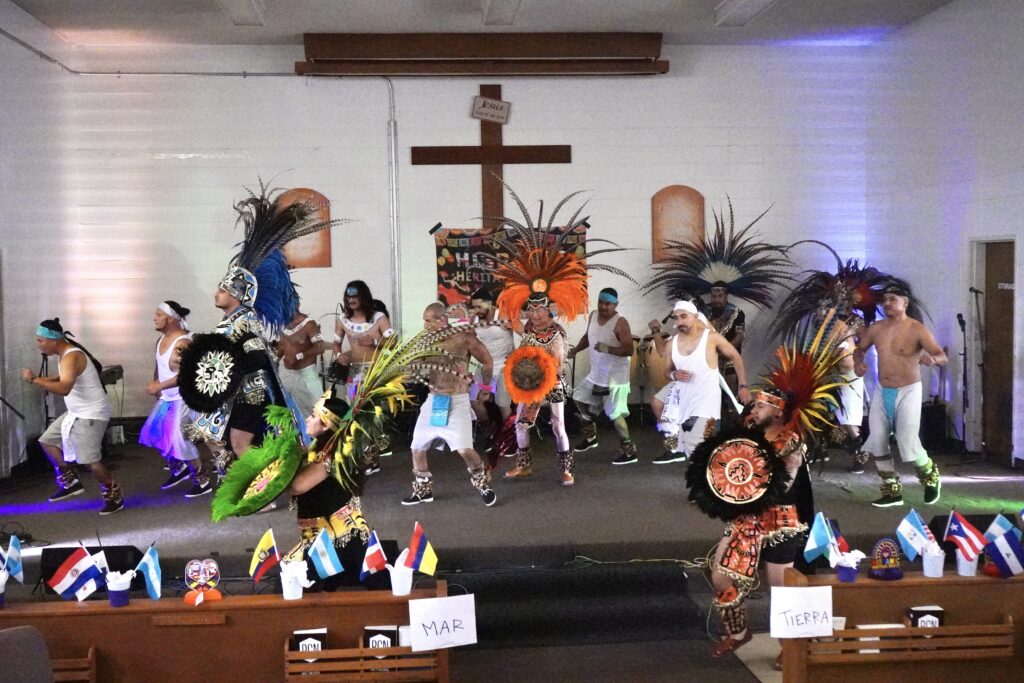
The self-help group Danza Cuāuhocēloti uses dance as a form of rehabilitation through rhythm and meditation. The dance provides a path to learn the culture and to identify with a civilization while offering an explanation of the supernatural.
“The opportunity to represent my culture in a positive way encourages me because the gangs made me believe that you need to be worthy and brave in order to earn your tattoos (badges),” said San Quentin resident Gabino Madera, a member of the Aztec Dance group.
The program focuses on emotional recovery by encouraging education and cultural activities. Members learn about teamwork and develop skills useful in community service. Through exploration of Aztecan culture and history, participants can develop communication and conflict resolution skills.
Madera said when he was on the outside, he hid his interest in the Aztecan dance, and the only thing he could do was watch the dancers perform. As a former gang member, he decided to represent his culture as a proud Chicano.
The Codex Boturini [historic document] tells the legendary story of the Aztecs, being originally from Aztlan (C.E. 1000) they settled on Texcoco Lake, fulfilling the prophecy of their God Huitzilophtli. That prophecy foresaw an eagle eating a snake while standing on a cactus that grows from a solid rock. In the middle of the lake lies an island where they witnessed the miraculous vision of the prophecy.
Fulfilling their destiny, the tribe founded the city of Tenochtitlan in 1325. The city became the capital of Central Mexico from the 14th to the 16th century.
Each movement of the dance connects dancers to the four cardinal points and the elements: Alt (water), Tonatiuh (fire), Ehecalt (wind), and Tonantzin (earth). Additionally, dancers commune with guardians such as Ilhuica and Tlaticpac, and animals such as turkey, deer, and jaguar.
The hand gestures and movements of the Aztecan dance symbolize motions of planting and presenting their sons and daughters to the Great Spirit.
Each dance move has a connection to the past and present. For example, dancing barefoot connects dancers with Tonantzin (Mother Earth).
“I am from Morelos Mexico, a place where the remains of the conqueror Hernán Cortez are buried,” said SQ resident Sergio Medina. “The dance connects me because where I came from is a place where the Spanish conquest has too much [influence].” Medina added that he would like to learn more about his ancestors and to connect more to Aztecan culture.
In the article “Understanding the Role of Aztec Dance and Symbolism,” author Mateo Villanueva wrote that there is meaning in the colors, accessories, and instruments. He explained that each color represents different elements or deities. For example, red symbolizes blood and sacrifice, while blue represents water.
Aztecs made their attire from natural material such as cotton, feathers, and animal skin, each material chosen for its symbolism of earth and the divine.
The drum used in the dance represents heartbeats, said Villanueva. The flute is associated with the wind and the breath of life.
“I felt ignorant, because when I started in the group I just played the drum as choreography,” said SQ resident Williams C. Campos. “Now I am more interested in representing the meaning of each rhythm.”
The magazine Xipe Totek provided a good example of a dance called Iztacuauhtli (White Eagle). It tells the story of a warrior chosen by his village, entrusted with their devotions and offerings so that the Great Eagle would carry them to the Creator. The Eagle rises up to the Creator as the warrior raises his hand up to the air as a signal of gratitude.
The dance Mihtotiliztly represents the movement of the cosmos due to the elliptical movement of the planets. Men and women have their own separate dances and in some cases, they join together to symbolize balance of the cosmos.
According to the Routledge studies, each member of the Nahua tribe was able to participate in the dance because everyone learned to sing and dance. Singing and dancing might come into play at any time during planting in order to have a generous harvest.
“Everyone doesn’t forget where they came from. This was my motivation to join this group,” said SQ resident Osman Garcia Juarez. “At the same time it was something positive in my life because I could stay away from drugs.”