The Peer Literacy Mentor Program held its second annual literacy symposium in its continued efforts to tackle the ongoing problems surrounding reading and education.
The symposium was held in the new, recently opened multipurpose room in San Quentin’s new education campus. In attendance were educators from all walks of life, with experience teaching in both K-12 and college settings.
Incarcerated mentors of the peer literacy program opened the event with personal remarks about their own educational journeys, and spoke about the work they do with fellow residents at San Quentin, including G.E.D. and high school preparation, tutoring, and assisting with reading and comprehension.
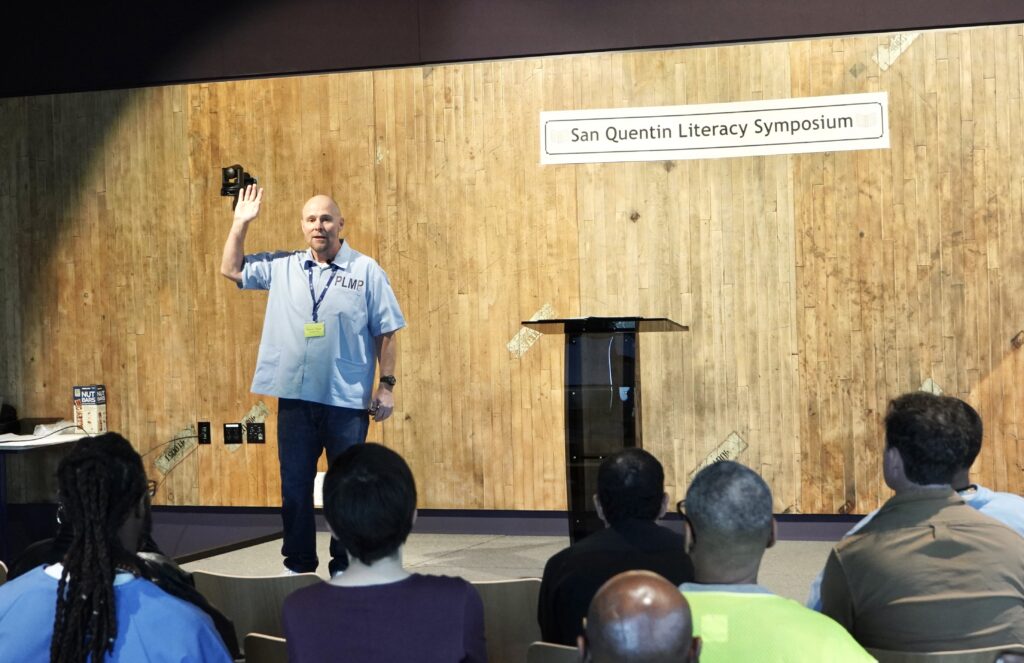
After opening remarks, mentor Marius Robinson introduced Sufi, a long-time educator and supervisor of the literacy program.
“I worked for 15 years in the public school system, and I have worked for 20 years in education in San Quentin,” said Sufi. “This program has radically changed the way I think about education.”
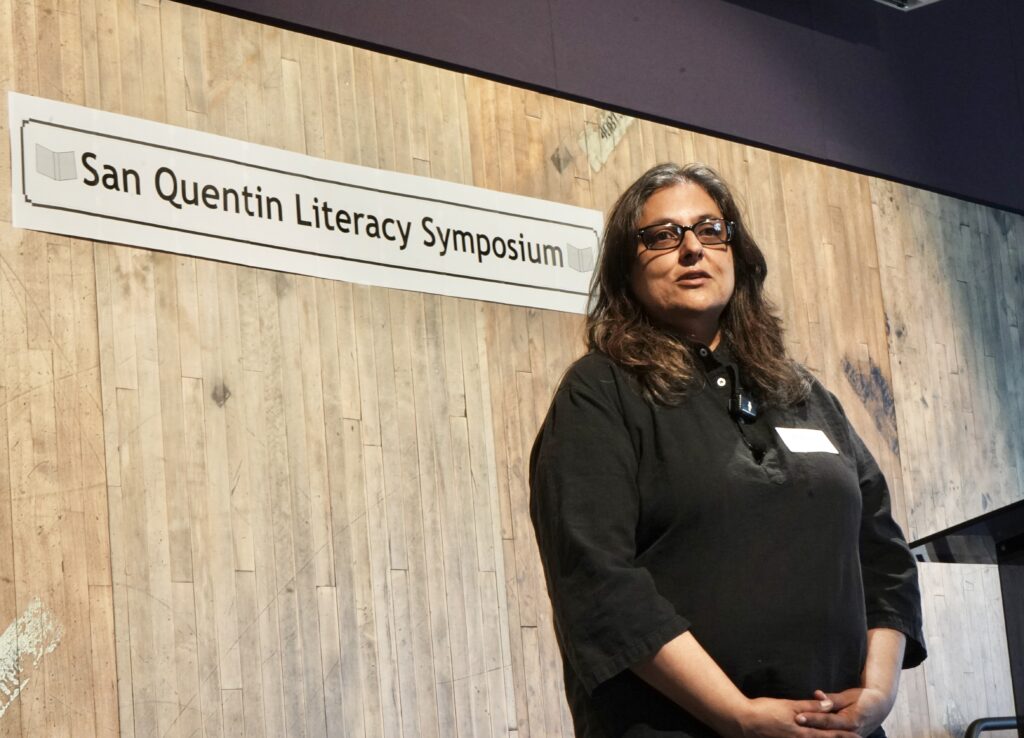
Along with sharing details about the literacy program at San Quentin, Sufi said places like the new learning center are needed “so we can have symposiums to bring people in, so they can be a bridge for those who are incarcerated and going back into the world.”
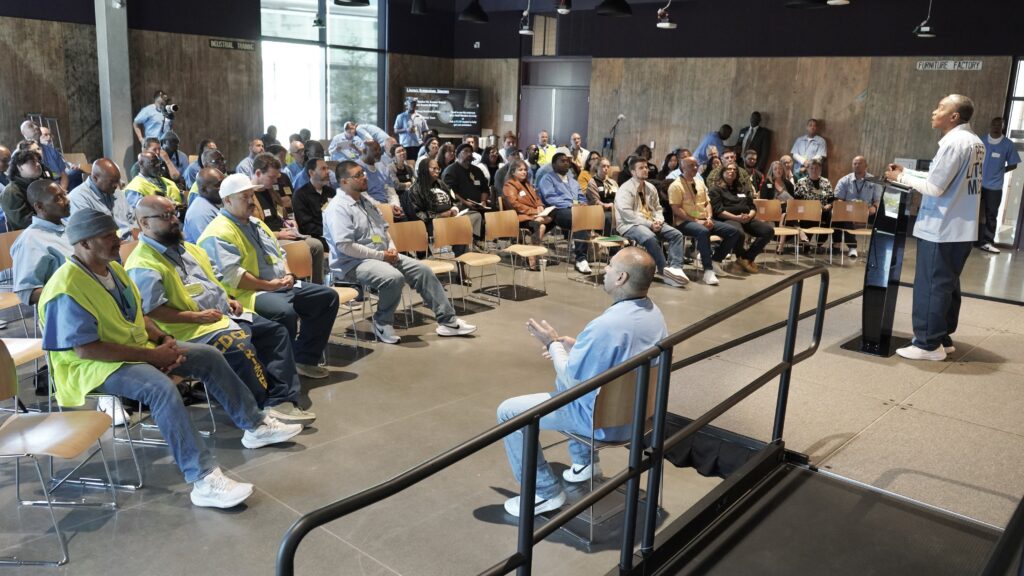
The highlight of the event was a brief, yet powerful lecture from educator and Executive Director of the Fulcrum Literacy Program, Dr. Kareem Weaver.
Weaver focused his message on the issues surrounding dyslexia, which he said is a leading contributor to the literacy problem throughout the United States.
“Reading is a precious commodity,” said Weaver. “Part of the world wants to avert their eyes from the consequences of not diagnosing dyslexia and other learning disabilities. You can’t throw people away, but that’s what we do when you don’t give people what they need.”
Weaver said 45% of children in schools throughout the country need structured learning in order to learn how to read, 15%-20% of kids are dyslexic and have extremely difficult times learning to read. He said the problem is the system’s approach when teaching.
“Many educators are biased in their teaching because they teach in a way that worked for them. They don’t realize that what worked for them doesn’t work for everyone. And so when a child doesn’t understand, they blame it on the child instead of improving their teaching method,” said Weaver.
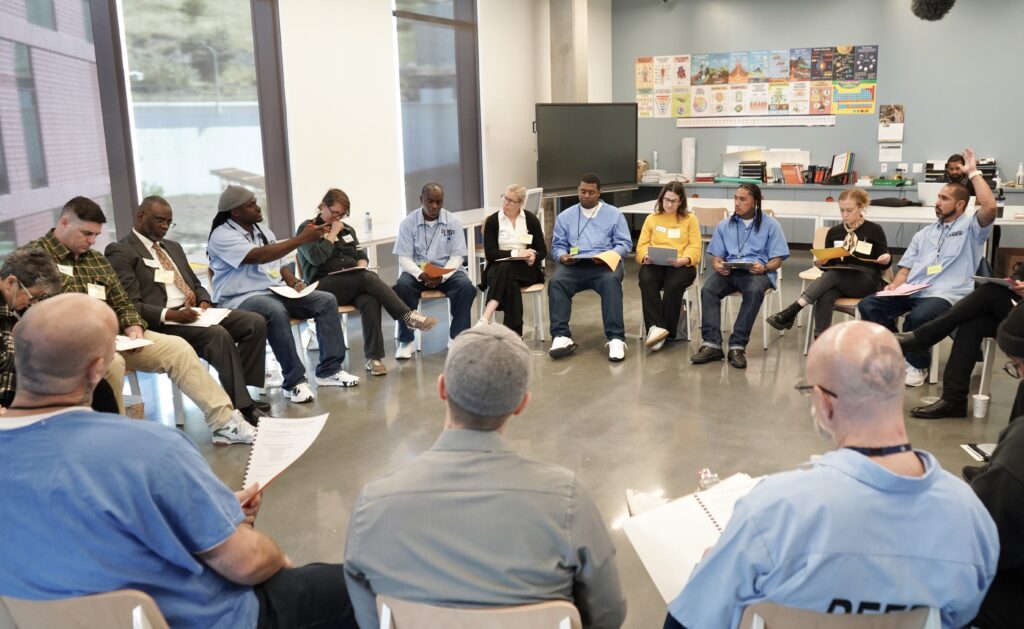
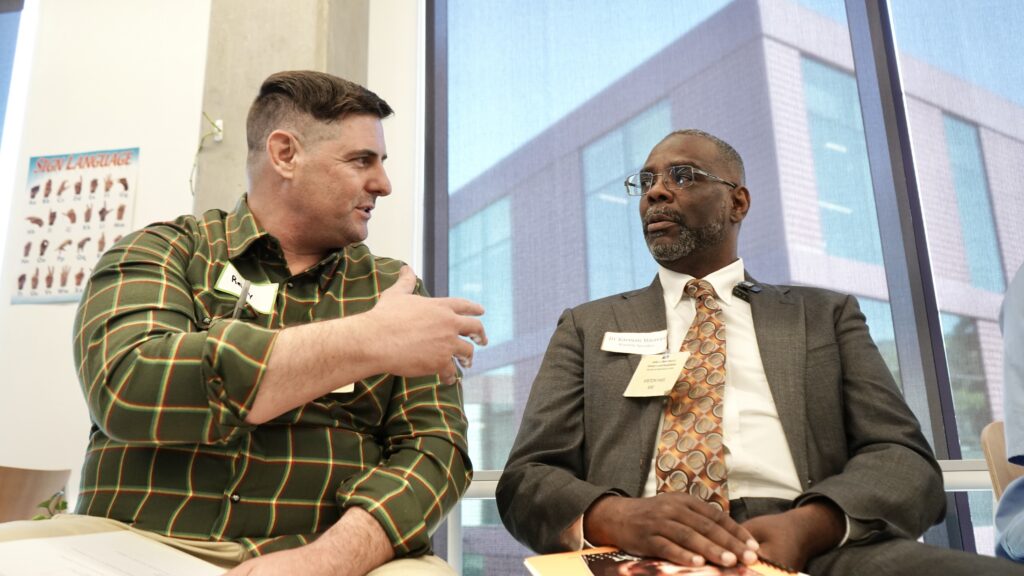
After Weaver’s lecture, guests were given a tour of the learning center, and then ushered into a series of small groups that discussed topics ranging from the School to Prison Pipeline, Teaching Strategies, Mentorship, and Accessibility. The small groups gave incarcerated people and educators an opportunity to share stories about their journeys through the educational system, while coming together to discuss and develop possible solutions to issues plaguing the system.
The event was capped off with a tour of San Quentin and interviews of some of the guests.
“I am leaving here feeling encouraged that the young men in these programs feel that they are enough. I have to think positive because if I don’t, I won’t be able to go out and do what I need to do in order to make a difference,” said Dr. Dela Morris, an educator and Chairwoman of the Oakland chapter of the NAACP.