fAs a sitting governor who has higher political aspirations, he has gone out of his way to make improvements in the Golden State. But like any politician, he cannot please everyone of his constituents. He could have played it safe and maintained the status quo, like some of his predecessors.
Three decades ago, when I entered the criminal justice system, state Penal Code § 1170(a)(1) read, in part, “The Legislature finds and declares that the purpose of imprisonment for crime is punishment.” Rehabilitation has since been added.
As a reminder, Gov. Newsom did not add “Rehabilitation” to the then-CDC’s mission, which created the California Department of Corrections and Rehabilitation. That was done by former Gov. Arnold Schwarzenneger on July 1, 2005. Nearly 21 years later, there are those who are still resistant to the idea of change. I have stopped asking why long ago.
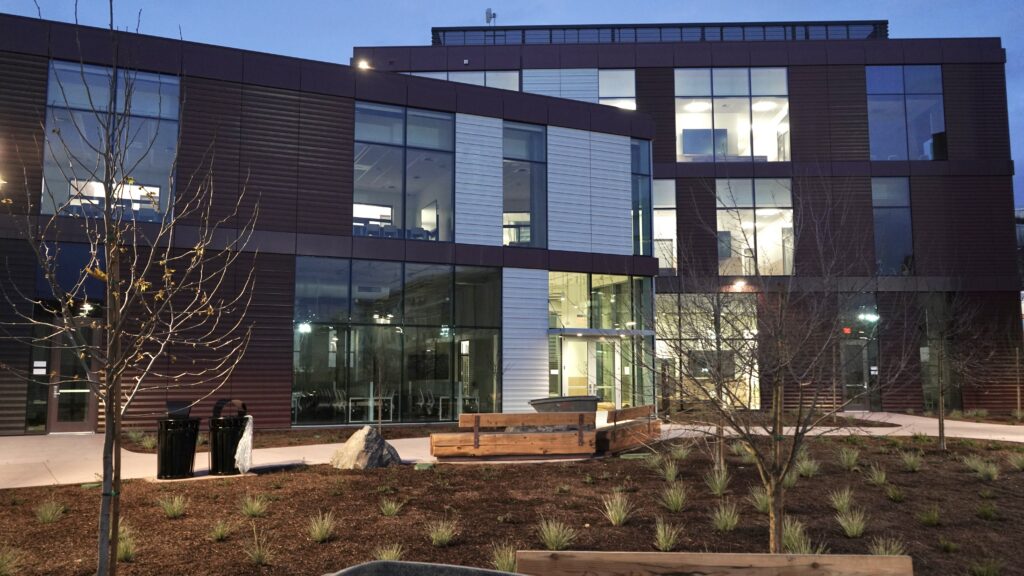
There is a good reason San Quentin was rebranded as a rehabilitation center, and chosen as a sight with a new learning center. Its past history, proximity to major metropolitan areas, universities, and the Silicon Valley makes it a go-to destination for all things possible inside a prison. It is the epitome of what a new model prison can be, and its success can be duplicated not only in California but across the nation.
The idea to roll out the California Model at San Quentin has been a long time coming. What was needed was a politician with the wherewithal to implement such a transformation. What made it possible were the programs already flourishing here. For example, Mt. Tamalpais College (formerly Patten University) has been educating men at San Quentin for 30 years. The Last Mile started the first computer coding program inside a U.S. prison right here, and the San Quentin News — established in 1940 — was the inspiration for what has become perhaps the largest media center inside any penal institution in the world. Then there are the numerous groups and self-help programs to restore broken individuals who need healing.
Is it any wonder Gov. Newsom chose San Quentin? I remember him visiting the prison when he was the state’s lieutenant governor. He seems to be very familiar with what goes on at the 174-year-old institution, so it is no accident that he chose to fortify what he has seen and read about working for more than a decade. Through hard journalism, San Quentin News made its mission to report on what takes place at the institution, and beyond.
Change is still taking place. Today, several prisons have closed in California. There is a moratorium on the state’s executions, and, of course, there is a new learning center at San Quentin. Some may choose to call its $239 million price tag being soft on crime, coddling criminals, or playing politics. I live here, so I will call it change for the betterment of inmates, officers, staff, and volunteers. Everyone inside benefits, and undoubtedly so will Californians on the other side of the prison gate.
California is the world’s fifth-largest economy, so reforms are slow. Not so long ago a federal three-judge court had to exert its authority over the CDCR to improve its healthcare system, and to reduce its prisoner population to its current 93,000. The Board of Parole Hearings is constantly changing, and more prisoners serving life have been found suitable. I recall my first year in prison when only 13 prisoners received parole dates, and most if not all of those were rescinded by former governors.
I have seen many events — good and bad — take shape inside California’s prisons. The new learning center scored big points. What I have not seen or heard from anyone in the outside media, or inside the CDCR — not that it has not happened — is a public thanks to the governor, his staff, and supporters for making an investment in people that many in society believe are undeserving and unworthy.
For prisoners outside of San Quentin, your time will come. And while I cannot speak for the entire state prison system, on behalf of the guys at San Quentin News, inside the new media center, Thank you, Gov. Newsom.