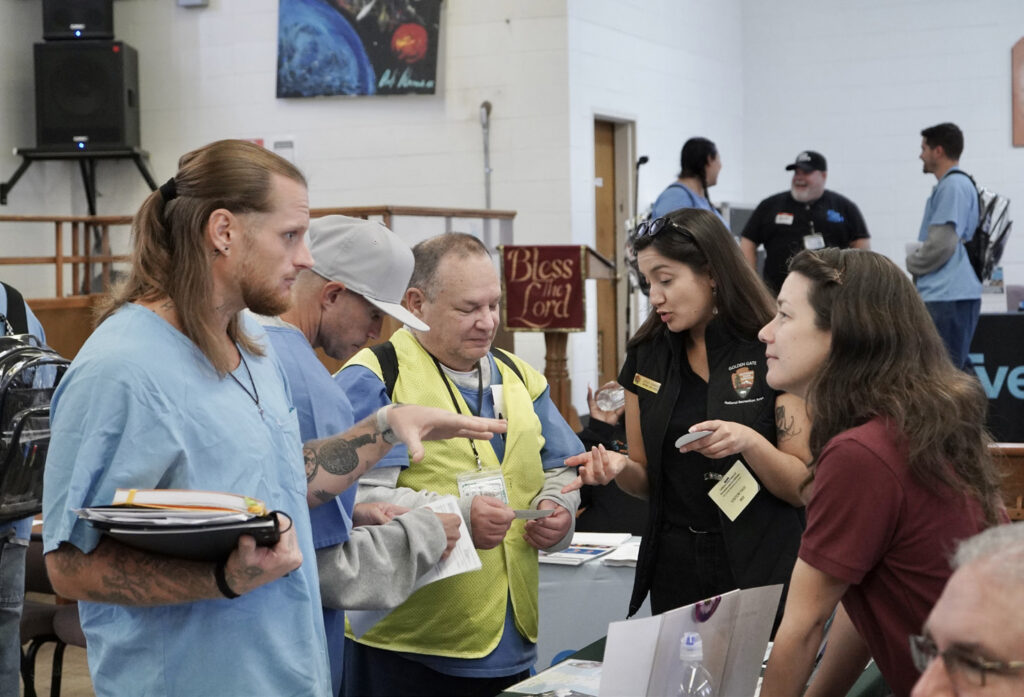
Programs designed to benefit members of the outside community as well as returning citizens were a recurring theme at San Quentin Rehabilitation Center’s 2026 Reentry Resource Fair in April.
Chapel B was buzzing with reentry resource providers and forward-looking incarcerated persons within minutes of the start of the event, which was organized by San Quentin’s People in Blue.
A rich and varied pool of vendor tables filled the big Chapel and the air was full of voices exchanging greetings and valuable reentry information. The room had a vibrant feel and each table was well attended by residents anticipating how to manage their return to the outside.
As participants circulated through the space talking to vendor representatives and picking up literature it soon became clear that the intended beneficiaries of the services were not only returning citizens.
Several of the programs had multi-pronged social goals. For example, Impact Justice presented an innovative program called the “home coming project.” The program connects returning citizens with qualifying homeowners or renters who have a furnished, spare room they are willing to let to a parolee. Such potential hosts must have “an extra room and an open mind” notes the program literature. The innovative arrangement provides transitional housing to one party and rental income to the other.
Another program at the reentry fair with multiple beneficiaries was Farming Hope, which offers an apprenticeship program in culinary skills to returning citizens. But the program also rescues food that would otherwise be thrown away and distributes it to “food-insecure neighbors.”
Steve Brooks of People in Blue said the diversity of vendors with varied social objectives was intentional, an effort by the group to make the fair holistic in reach and impact.
Some of the programs were focused on children of incarcerated parents. Community Works’ program called Project WHAT! (We’re here and talking) advocates for Bay Area children aged 12-17 who have incarcerated parents.
“Project WHAT! raises awareness about the effects of parental incarceration on children, lifting up their voices and stories, with the long-term goal of improving services and policies that impact them,” notes the program’s literature.
Project Avary provides zero-cost programs for children aged 8-18 whose parents are incarcerated. The program includes online after-school support groups and mentoring, leadership training with paid opportunities for teens, weekend adventure retreats and summer camp.
Other programs focus on adults in the free community who have incarcerated family members. The Essie Justice Group – Healing to Advocacy Program is a community of women with incarcerated loved ones. The program offers a nine-week course that promotes connection and provides advocacy training.
Women who complete the program will “… be forever connected to a community of women with incarcerated loved ones, who will continue to support each other and work together to advocate for what our communities need,” notes the program’s flyer.
Friends Outside provides visiting services, including emergency clothing, a place to freshen up, a sheltered place to wait for scheduled visits, children’s activities, transportation, and help resolving issues that might prevent a visit.
Of course, attendees looking for services directed at returning citizens were not disappointed. They found information on housing, employment, education, vocational training, mental health, social services navigation, substance use, healthcare, food resources, financial literacy, and other reentry matters.
Resident Juan Flores paused near one of the tables and looked around at the many offerings. He said he was sometimes frustrated at previous fairs because the vendors were so busy it was hard to get to them. Things were going better for him at this year’s event, which he described as “… more colorful, more interactive, more personalized, and [with] better availability of vendors.”
Strong attendance at the reentry fair by vendors and residents ensured that numerous connections were made and much useful information was disseminated to benefit not just returning residents but members of the outside community as well.
Corey McNeil, who paroled from San Quentin and successfully integrated to life outside, manned a table for his employer, Mount Tamalpais College. McNeil stressed the importance of preparing for reentry before an incarcerated person gains their freedom. “Reentry starts in here, not when you get out,” he said.